You just finished descaling your espresso machine, and there’s half a bottle of solution left. You shove it in a cabinet above the stove, next to the cooking oil. Three months later, you grab it, pour it in the tank, and your machine still sputters with limescale. What happened?
Most people never think about how to store coffee machine descaler. They assume a chemical in a plastic bottle lasts forever. It doesn’t. Heat, light, and air degrade the active acids — mostly sulfamic or citric acid — faster than you’d expect. This article covers the exact conditions that keep your descaler potent, how long it really lasts, and the mistakes that quietly ruin it.

IMPRESA
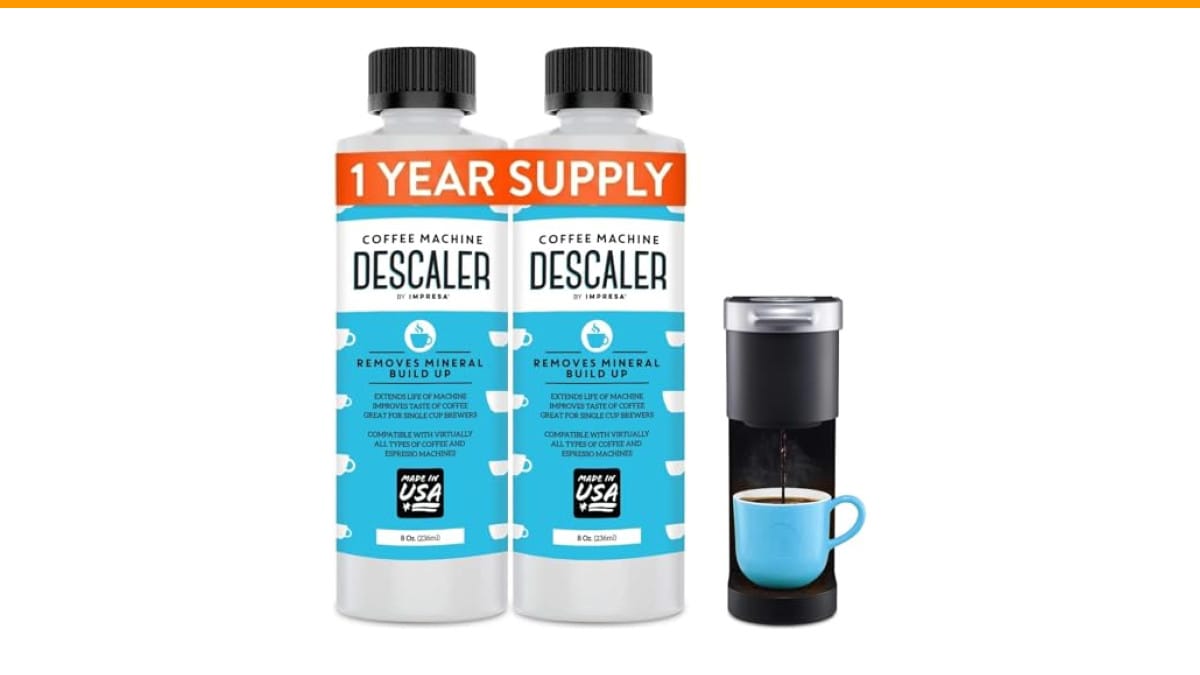
IMPRESA Coffee Machine Descaler, 2-Pack (1-Year Supply)…
- 2-Pack Coffee Descaler and Cleaner - Clean and rinse away residue and oil buildup in your coffee maker with Impresa's Coffee Desca…
- Highly Effective, Made in USA Formula - Unlike most common solutions, our coffee machine cleaner uses just 4 ounces (1/2 bottle) p…
- Preserves Your Machine - Using a coffee descaling solution eliminates limescale and mineral build-up to prevent corrosion, signifi…
As an Amazon Associate I earn from qualifying purchases.
You’ll walk away knowing precisely where to put that bottle, what container to use if you transfer it, and how to tell if your solution has gone bad before it touches your machine.
If you’re looking for a solid universal option to keep on hand, the IMPRESA Coffee Machine Descaler 2-Pack comes in two 8-ounce bottles, which gives you four descaling sessions. That’s a full year of maintenance for most home users, so proper storage matters more than with single-use packets.
The Temperature Window: Why Your Kitchen Cabinet Might Be Too Warm
Descaler is essentially a weak acid solution. Most brands, including IMPRESA, recommend storing it between 50°F and 80°F (10°C to 27°C). That range sounds broad, but many kitchens violate it without you noticing.
The cabinet above your refrigerator gets warm. The shelf right next to the oven or dishwasher gets hot. A sunny windowsill is the worst possible spot. Heat accelerates the breakdown of the acid, which means it loses strength before you ever open the cap.
The rule: store it below 80°F consistently. If your kitchen runs warm in summer, a pantry on an interior wall or a basement shelf works better.
Cold is less dangerous than heat, but don’t freeze it. Freezing can cause the liquid to expand and crack the bottle, or it can cause the active ingredients to precipitate out of solution. If you store it in a garage that dips below freezing, bring it inside.
Light and Air: The Silent Killers of Descaling Power
Most descaler bottles are opaque or dark plastic for a reason. UV light degrades organic acids. If you transfer your descaler to a clear glass jar for convenience, you’re shortening its shelf life significantly.
Air exposure is the other issue. Once you open a bottle, oxygen starts reacting with the solution. This doesn’t make it dangerous — it makes it weaker. A half-empty bottle stored for a year will struggle to dissolve heavy limescale.
Here’s a practical tip: squeeze the air out of the bottle before you seal it. If the bottle is flexible, compress it until the liquid reaches the neck, then cap it. This minimizes the oxygen inside and keeps the acid stronger for the next use.
Never pour descaler into a metal container. The acid will corrode it, and you’ll get metal ions in your solution. Stick with the original bottle or a food-grade plastic or glass container.
Myth-Buster: Does Expired Descaler Damage Your Machine?
This is the most common question I get. No, expired descaler won’t damage your coffee machine. It just won’t work well. The acid loses concentration over time, so it won’t dissolve limescale effectively. You’ll run a full descaling cycle, see no visible improvement, and assume your machine is broken.
The real risk is the opposite: using an expired solution and thinking you’ve maintained your machine when you haven’t. Scale builds up silently, and by the time you notice performance issues, you need a much stronger treatment — or worse, a new heating element.
Check the bottle for a production date or expiration date. Most liquid descalers last two years from the manufacturing date when unopened. Once opened, aim to use it within six months. If your bottle has no date, write the purchase date on it with a marker. This simple habit saves you from guessing later.
If the liquid has changed color, developed crystals, or smells different than when you bought it, toss it. Those are signs the formula is breaking down.
Comparing Storage Methods: What Works Best for Different Setups
Not everyone has a cool, dark pantry. Here’s a realistic comparison of storage options based on typical home conditions.
| Storage Location | Temperature Stability | Light Exposure | Verdict |
|---|---|---|---|
| Kitchen cabinet (interior wall) | Stable, usually 65-75°F | Dark when closed | Best spot for most homes |
| Under the sink | Stable but can get warm near pipes | Dark | Works if pipes don’t run hot; keep away from cleaning chemicals |
| Refrigerator door | Cold, 35-40°F | Dark when closed | Safe but unnecessary; risk of freezing if too close to vents |
| Garage shelf | Wide swings; freezing in winter | Varies | Risky. Only if climate-controlled |
| Windowsill or near stove | Hot and fluctuating | Direct sun | Avoid entirely. This ruins descaler fast |
The takeaway: a closed cabinet on an interior wall beats everything. If you don’t have one, a drawer in a cool bedroom or a closet shelf works fine. The goal is consistency, not extreme cold.
How to Store Opened vs. Unopened Bottles Differently
An unopened bottle is forgiving. It has a good seal, no air inside, and the manufacturer designed it for shelf storage. Keep it in a cool, dark place and it’ll last until the expiration date printed on the label.
An opened bottle is a different story. The seal is broken, and every time you open it, you introduce fresh air. Here’s how to handle it:
- Wipe the threads and cap before sealing — dried residue can prevent a tight seal.
- Squeeze out excess air before capping, as described above.
- Store it upright. A leaking cap can ruin cabinet shelves and corrode other items.
- Label it with the date you opened it. Six months from that date is your deadline.
If you buy a large bottle and use it slowly, consider decanting into smaller bottles. This reduces the air space in the main container. It’s a minor step, but it keeps the solution stronger for the final use.
Frequently Asked Questions About Storing Descaler
Does descaler freeze and is it ruined after thawing?
Yes, it can freeze, and it’s usually ruined. The water in the solution freezes first, leaving a concentrated acid slush. This can change the chemical balance and cause the active ingredients to drop out of solution. If it thaws and looks cloudy or has crystals, throw it out.
Can I store descaler in a metal or aluminum container?
No. The acid will react with most metals, especially aluminum and mild steel. This creates corrosive byproducts and weakens the solution. Use the original bottle or a food-grade plastic container. Glass works too, but only if it’s dark glass and you use it within a few months.
How long does an opened bottle of descaler really last?
Plan for six months. Some formulas last longer, but the acid concentration drops as air enters the bottle. After six months, the solution may still work on light scale, but it won’t handle heavy buildup. For a machine used daily, that’s plenty of time to finish a bottle.
Is it okay to keep descaler next to coffee beans or grounds?
Keep them apart. Descaler has a strong chemical smell, and coffee beans absorb odors easily. A sealed bottle won’t transfer smell, but if the cap is loose or you’ve spilled some, your beans will taste like a cleaning product. Store them in separate cabinets.
Can I mix old and new descaler together?
You can, but it’s not smart. The old solution is weaker, so mixing it with fresh solution just dilutes the new batch. You’ll end up with a medium-strength mix that may not fully descale. Use up the old bottle first, or toss it if it’s past six months opened.
What to Do If Your Descaler Has Gone Bad
If you open a bottle and it smells off, looks discolored, or has visible particles, don’t use it. Pour it down the drain with plenty of water — it’s a mild acid, so it’s safe for plumbing in small amounts. Rinse the bottle and recycle it if your local program accepts plastic containers.
Then buy a fresh bottle. The IMPRESA 2-pack is a good option because you can open one bottle and keep the second sealed until you need it. That way, the second bottle stays at full strength while you work through the first.
If you’re dealing with heavy buildup right now, check our guide on removing limescale for a step-by-step approach. And if you’re unsure about your cleaning schedule, our cleaning frequency guide will help you set a routine that prevents scale from getting this bad in the first place.
For a full maintenance plan, including storage of all your cleaning supplies, read our coffee machine maintenance guide.
Quick Storage Rules Worth Remembering
- Keep it below 80°F. A cool, interior cabinet beats a warm pantry.
- Never store near heat sources or in direct sunlight.
- Don’t freeze it. Cold is okay, freezing is not.
- Squeeze air out of the bottle before capping after each use.
- Mark the open date. Use within six months.
- Keep it away from coffee beans and grounds to avoid odor transfer.
- If the liquid looks or smells different, toss it and buy fresh.
Storing descaler correctly is a two-minute habit that saves you from wasted descaling cycles and a machine that slowly loses performance. The bottle is cheap. The heating element in your espresso machine isn’t. Treat the solution like the tool it is — keep it sealed, keep it cool, and keep it fresh.
Products related to this article
Sponsored / affiliate links. As an Amazon Associate I earn from qualifying purchases. I may earn additional commission from eligible campaigns.