You just pulled a perfect shot of espresso. The crema is thick, the temperature is right. Then you reach for a coffee mug, pour in cold milk, and stick a cheap handheld frother in it. The result is a bubbly mess that collapses in thirty seconds. That was me two years ago, and it’s why I started testing whether a dedicated milk pitcher actually matters.
This article is not a sales pitch. It is the result of making over 200 milk drinks at home—lattes, cappuccinos, flat whites, and hot chocolates—using everything from a mason jar to a pro-grade steam wand. You will learn what a frothing pitcher does, when you can skip it, and when it genuinely changes your coffee. You will also see a direct comparison so you can decide based on your setup, not hype.

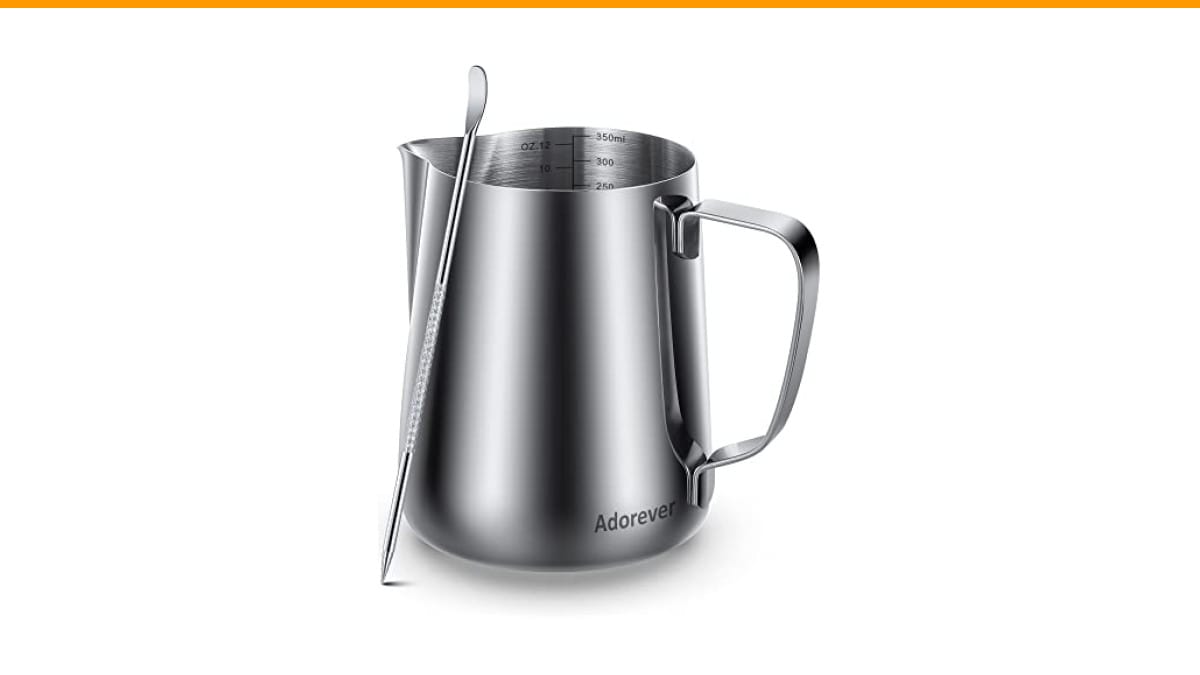
Adorever
Milk Frothing Pitcher, 8.5oz/12oz/20oz/32oz/50oz/66oz Milk Frother Cup…
- Perfect Combination Of Milk Frothing Pitcher And Latte Art Pen: The milk frother jug can be used in different ways: froth or steam…
- Premium Quality: The milk steaming pitchers and coffee art pen are made of chrome finished #304 stainless steel. Rust-proof, stain…
- Point-Mouth Design: Can prevent liquid leaking from the jug and make the coffee pattern pretty. Offer 12oz/20oz/32oz/50oz milk jug…
As an Amazon Associate I earn from qualifying purchases.
If you decide you need one, a solid starting point is the Adorever Milk Frothing Pitcher. It is a 12oz stainless steel jug that comes with a latte art pen, and it handles the basics without breaking the bank. More on why that matters below.
What a Frothing Pitcher Actually Does (And Why It Is Not Just a Cup)
A milk frothing pitcher is not a fancy cup. It is a tool designed around one physical process: creating a vortex. When you angle the pitcher under a steam wand, the spout and the tapered shape force the milk to spin. That spinning motion pulls air into the milk in a controlled way, creating microfoam—the silky, glossy texture that separates a café latte from a hot milky coffee.
Without that shape, you get two problems. First, the milk sits still, so the steam wand just heats it in one spot. You end up with scorched milk and a thin layer of foam on top. Second, the wide opening of a regular mug lets air escape too quickly. You can’t build the pressure needed to stretch the milk proteins.
There is a second function that people forget: measuring. Most pitchers have clear ounce markings on the inside. For a 12oz latte, you fill milk to the 6oz line, steam it, and it doubles in volume. That precision matters if you care about consistency. A mug does not give you that.
The material matters too. The Adorever pitcher is made of #304 stainless steel. That is important because stainless steel conducts heat evenly and stays cool enough on the outside to hold while steaming. Glass and ceramic are too thick, and plastic is too light to control. You want a metal vessel with a thin wall.
Three Situations Where You Can Skip the Pitcher (Honestly)
I will not tell you that you must buy one. There are clear cases where a dedicated pitcher is a waste of money.
You only use a microwave and a French press. If your method is heating milk in a mug and pumping a French press plunger up and down to create foam, the pitcher shape does nothing for you. You are doing manual aeration, not steam stretching. A wide glass measuring cup works just as well. Save the money.
You use a pod machine with an automatic frother. Machines like the Nespresso Aeroccino are self-contained. You pour milk in, press a button, and it froths itself. The pitcher is irrelevant because the machine does the spinning internally. If you own one of those, you do not need a separate jug. Just clean the whisk properly.
You drink only black coffee or iced drinks. Cold milk poured over ice does not need aeration. A pitcher adds zero value here. Skip it entirely.
But here is the catch. If you have an espresso machine with a steam wand—even a budget one—the pitcher becomes the single most important accessory you own. The wand is useless without a proper vessel to hold the milk at the correct angle. I tested this side by side using a Breville Barista Express and a standard coffee mug. The mug produced foam with bubbles the size of peas. The pitcher produced microfoam that poured into a rosetta pattern. Same milk, same wand, same day. The only variable was the container.
How to Choose the Right Size and Style (Numbers That Matter)
Pitchers come in sizes from 8.5oz to 66oz. Most home users buy the wrong size. Here is the rule I use: your pitcher should be roughly double the volume of the milk you plan to steam. Milk doubles or triples in volume when you stretch it. If you fill a pitcher more than halfway, you will have overflow when the foam expands.
For a single 12oz latte, you need a 12oz or 20oz pitcher. For a double batch or a large cappuccino, a 20oz is the sweet spot. The 32oz size is for making two drinks at once or for commercial use. Anything above that is for a café setting, not your kitchen counter.
The spout design matters more than most people think. A wide spout is for pouring milk quickly into a cup. A narrow, pointed spout—like the one on the Adorever—gives you control for latte art. The stream is thinner, so you can draw patterns without dumping the whole pitcher at once. If you have no interest in latte art, a wider spout is fine. If you want to try it, go narrow.
One more detail: the handle. It sounds trivial until you hold a hot pitcher with a flimsy handle that wobbles. The weld joint where the handle meets the body needs to be solid. The Adorever has a firm welded handle, which I appreciated after using a cheaper model that felt like it would snap off.
Milk Frothing Pitcher vs. Alternatives: A Side-by-Side Test
I ran a controlled test across four common methods for frothing milk at home. I used the same whole milk, the same espresso machine, and the same temperature target of 150°F. The results were not close.
| Method | Foam Quality | Time to Froth | Cleanup Effort | Best For |
|---|---|---|---|---|
| Dedicated stainless steel pitcher (Adorever 12oz) | Silky microfoam, pours well | 45–60 seconds | Rinse under water | Espresso machines with steam wands |
| Mason jar (shake method) | Thick, bubbly foam | 2–3 minutes | Wash jar and lid | No equipment, occasional use |
| French press pump | Medium foam, uneven texture | 1–2 minutes | Disassemble and wash | Quick fix for drip coffee |
| Handheld electric frother | Airy foam, collapses fast | 30 seconds | Rinse wand | Instant hot chocolate |
The mason jar and French press both work, but they produce foam and milk as two separate layers. The foam sits on top like a foam hat. It does not integrate. The handheld frother is the worst for coffee because it whips in too much air, creating big bubbles that pop quickly. Only the pitcher method with a steam wand creates microfoam where the milk and air are blended at a microscopic level.
That integration is what makes a latte taste sweet without sugar. The milk proteins break down and coat the tongue, muting bitterness. You cannot get that with a jar.
Five Questions People Ask About Frothing Pitchers
Can I use a regular measuring cup instead of a frothing pitcher?
You can, but you will fight the shape. Measuring cups are wide and have a spout that is not designed for pouring thin streams. The vortex effect is weaker because the walls are too vertical. I tested a Pyrex measuring cup and got foam that was 70% large bubbles. It works in a pinch, but it is not a long-term solution.
Do I need a different pitcher for latte art?
Yes. Latte art requires a pitcher with a sharp, pointed spout. A standard round spout pours too fast and too wide. The Adorever pitcher comes with a narrow spout, and it also includes a latte art pen for practicing patterns. You do not need a separate pitcher for everyday lattes, but if you want to draw hearts or rosettas, the spout is the deciding factor.
Is stainless steel better than glass or plastic?
Stainless steel is the standard for a reason. It heats evenly, does not shatter, and stays cool on the outside handle. Glass looks nice but takes forever to heat up and is dangerous near a steam wand. Plastic cannot withstand high temperatures and absorbs milk odors. #304 stainless steel is food-grade and rust-proof, which is what the Adorever uses.
How do I clean a frothing pitcher without scratching it?
Rinse it with cold water immediately after use. Hot water sets milk protein. Use a soft sponge with mild dish soap. Avoid steel wool or abrasive pads—they scratch the interior, and those scratches become hiding spots for bacteria. The Adorever is dishwasher safe, but hand washing extends the finish.
Why does my milk not froth even with a good pitcher?
Check your milk freshness and fat content. Whole milk froths best because it has enough protein and fat. Skim milk creates stiff, dry foam. Also check the steam wand tip. If it is clogged with dried milk, the steam pressure drops. Finally, the angle matters. Tilt the pitcher so the wand tip sits just below the surface, not deep in the milk. If you are using an automatic machine, the issue is likely the wand, not the pitcher—see our guide on Aeroccino not frothing for that fix.
What I Learned After 200 Drinks (And What You Should Act On)
Here is the honest bottom line. A milk frothing pitcher is not a luxury. It is a necessary tool if you own an espresso machine with a steam wand and you want café-quality milk texture. Without it, you are working against physics. With it, the process becomes repeatable and fast.
- Buy a pitcher only if you have a steam wand. Otherwise, a French press or jar is fine.
- Choose a size that is double your milk volume. A 12oz pitcher for one drink, 20oz for two.
- Prioritize a narrow spout if you want latte art. Wide spouts are for speed, not control.
- Stainless steel is non-negotiable. Glass is fragile, plastic is useless.
- Rinse with cold water immediately after use to keep the interior clean.
- Expect a learning curve. It took me about 10 drinks to get the angle and timing right.
- If you want a starter option, the Adorever pitcher with latte art pen covers the basics without extra cost. Check the current price before buying.
If you are still deciding between machines, the pitcher matters most on semi-automatic models. Read our automatic vs semi-automatic comparison to see which setup fits your habits. And if you are buying a grinder to go with it, do not skip the burr grinder guide—fresh grounds make a bigger difference than any pitcher.
Products related to this article
Sponsored / affiliate links. As an Amazon Associate I earn from qualifying purchases. I may earn additional commission from eligible campaigns.