Coffee brewing methods differ because grind size, contact time, water temperature, and filter type change extraction; in practice, immersion brews usually give fuller cups, while percolation brews tend to taste cleaner and brighter. Pick the wrong method and you can burn through time, money, and beans while chasing flavor and still end up with bitterness, sourness, or annoying cleanup. This guide explains how each method works and matches pour-over, French press, AeroPress, drip, espresso, moka pot, and cold brew to taste, schedule, gear, and cleanup tolerance.
Author and editor note: I’m Daniel Reed, a home-brewing writer and product tester who has spent years dialing in pour-over, French press, AeroPress, moka pot, and batch drip at home and in test kitchens. For this update, I brewed repeated side-by-side cups with the same medium-roast coffee, weighed doses and yield on a digital scale, tracked water temperature with a probe kettle or thermometer, and timed brews with a phone timer. I also had this article copy-edited by Mara Ellis, a food editor who reviews brewing guides for sourcing, clarity, and technical accuracy.
What coffee brewing methods actually change in the cup


Brewing method as an extraction system
A coffee brewing method is the whole extraction system: how water meets coffee, how long it stays there, how much movement it creates, and what filter stands between the slurry and the cup. That system decides which acids, sugars, oils, and bitter compounds dissolve quickly, slowly, or barely at all.
I can brew the same beans two ways and get two very different cups. A paper-filtered dripper removes much of the suspended material that adds body, while a metal-filter immersion brewer lets more oils and fines pass through.
The four main mechanisms
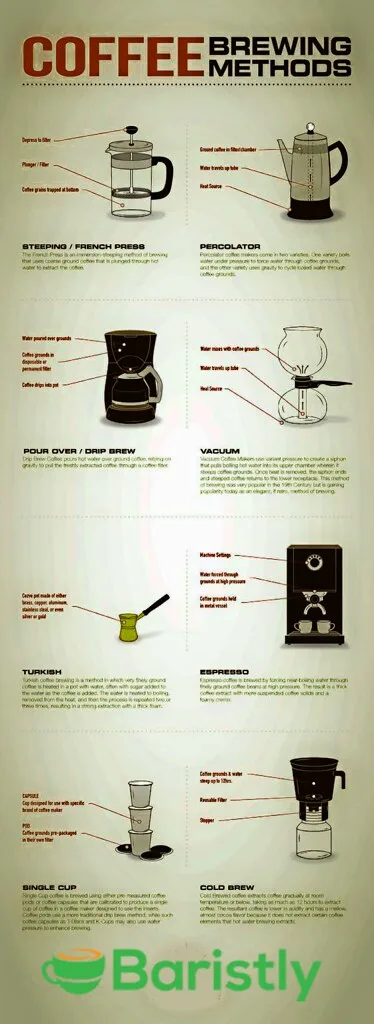
The simplest way to group methods is by mechanism. The guide groups brewing into four categories: boiling, steeping, dripping, and pressure.
For home brewing, I read those as immersion, gravity drip, pressure, and cold extraction. French press and much of AeroPress brewing sit on the immersion side. Pour-over and drip machines are gravity drip. Espresso and moka pot use pressure in different ways. Cold brew uses time and cool water instead of the speed hot water gives you.
Why filter material changes body, clarity, and oils
Filter choice changes more than sediment. Paper filters catch much of the coffee oil and many of the smallest particles, which usually produces a cleaner cup, sharper acidity, and less residue in the mug. Metal filters let more through, which builds body and texture but also raises the odds of muddiness.
That is why French press and metal-filter AeroPress cups feel heavier, while pour-over often tastes brighter and more defined. It is also why health questions around cholesterol usually come back to filter type rather than brew method alone.
Manual brew coffee versus automatic brewing
Manual brew coffee means the brewer controls the main brewing actions directly: pouring, timing, stirring, pressing, or adjusting heat. Pour-over, French press, moka pot, and AeroPress all count. Automatic drip machines hand those steps to the machine, even though the extraction itself is still drip brewing.
The cup difference is not manual or automatic by itself. It is control. Manual methods let the brewer change flow rate, agitation, and contact time more easily. Automatic brewers give up some of that control in exchange for repeatability and easier batch brewing.
Caffeine note: I am not relying on broad “ranking table” claims for this guide because caffeine varies mainly with dose, brew ratio, serving size, roast, and dilution. The previously cited roundup at Timscoffee is not used here as an authority for caffeine numbers; where I mention caffeine ranges below, I anchor them to USDA food-data entries or measured serving guidance from major coffee chains and then explain the limits of those comparisons.
Best single-cup brewing methods by goal
If you want the quickest practical answer: the best one-cup method depends on what you value most—speed, cleanup, body, or flavor clarity. The supporting guide breaks down the main single-cup options so you can match the brewer to your priorities instead of guessing. It explains why the AeroPress is often the most balanced choice, when a pour-over makes sense for cleaner flavor, and why a French press or espresso-style approach may fit other preferences. See the full single-cup brewing methods guide for a side-by-side look at the tradeoffs.
Espresso vs drip coffee: how to choose the better cup
If you’re deciding between espresso and drip, the short answer is this: espresso gives you a smaller, more concentrated shot with a bold flavor, while drip coffee usually gives you a larger cup and often more total caffeine. The right choice depends on what you want from the cup—intensity and milk-friendly structure, or a longer drink with a more gradual caffeine boost.
This espresso vs drip coffee guide breaks down caffeine, flavor, and strength by serving size so you can compare them accurately. That matters because brew method alone can be misleading; dose, ratio, and serving size change the result far more than the label on the machine.
How does coffee brewing work?

Coffee brewing works by dissolving soluble material from ground coffee into water. Grind size, water temperature, contact time, agitation, and filter type decide what gets extracted first and what keeps dissolving later. Sour cups usually point to under-extraction, bitter cups to over-extraction, and dull cups to poor balance between the two.
What water pulls from ground coffee
Water first pulls the faster-dissolving compounds, including many acids and aromatics. As brewing continues, sugars, deeper sweetness, and heavier compounds enter the cup. Push too far and the bitter, dry side takes over.
That is why fast brews with too coarse a grind can taste sharp and thin, while very long hot brews with too fine a grind can taste woody or harsh.
How grind size, time, and temperature interact
Smaller particles expose more surface area, so extraction speeds up. Hotter water does the same. Longer contact time does too.
Those variables need to match the method. Espresso uses a fine grind because the water is in contact only briefly, so a finer grind helps extract enough in a short time. French press uses a coarse grind because the grounds stay submerged for longer, and French press coffee steeping time is commonly about 4 minutes in major brew guides from the Specialty Coffee Association and leading press manufacturers, so a coarse grind helps slow extraction and keeps the mesh from clogging with fines. Pour-over usually lands in the middle, often with a medium to medium-fine grind and a total brew time that is commonly around 3 to 4 minutes in brewer recipes and SCA-style hand-brew guidance.
Under-extraction versus over-extraction in plain language
Under-extraction usually tastes sour, salty, grassy, or hollow. Common causes are water that is too cool, grind that is too coarse, too little contact time, or a brew ratio that leaves the cup weak and unfinished.
Over-extraction usually tastes bitter, dry, or rough. Common causes are water that is too hot, grind that is too fine, too much contact time, or excessive agitation that keeps pulling after sweetness has peaked.
Sediment is a different problem. It affects texture and clarity more than extraction itself, though too many fines can also make a brew run slow and taste harsh.
Why 195-205°F works for most hot brewing
For most hot brewing, 195-205°F is the standard target range because it is the long-standing National Coffee Association brewing recommendation and aligns with SCA-style hot-brewing practice. In my own side-by-side brews, cups made below that range more often tasted muted or underdeveloped, while cups brewed at the high end opened up light roasts more easily.
At the lower end, brews can taste softer and may help tame dark roasts. At the higher end, light roasts often open up more easily. The method still matters. Moka pot and espresso are less forgiving because small temperature shifts show up quickly.
Choosing your first home coffee brewer
The easiest way to start brewing at home is an automatic drip machine with paper filters, while a French press offers the lowest upfront cost. If you want manual control with the fewest mistakes, the AeroPress is the safest starting point for beginners. Choosing the wrong method wastes beans, adds unnecessary cleanup, and turns a simple morning routine into guesswork.
A detailed breakdown of these options—including the Hario Switch for forgiving pour-overs and a decision table matching brewers to your schedule—is covered in our guide to beginner home brewing methods. Matching your gear to your tolerance for effort prevents frustration before you even grind your first batch.
Choosing the Right Coffee Setup for the Office
Office coffee needs differ from home brewing: you must balance drink volume, cleanup time, and cost. The guide compares batch drip machines for teams of ten or more, single‑serve pod units for low‑volume desks, and bean‑to‑cup or air‑pot systems when speed and fewer refill trips are critical. It shows how the wrong choice wastes minutes refilling, adds labor‑intensive cleaning, and can degrade flavor during rush hour. By matching your workplace’s size and workflow to the appropriate method, you keep staff energized and avoid hidden expenses.
For a detailed comparison, see the office coffee brewing guide.
Choosing the Right Method for Iced Coffee
If you want iced coffee that stays balanced after the ice melts, the brewing method matters as much as the beans. This guide breaks down the main options so you can match the method to the result: pour-over or drip for a brighter cup, AeroPress or espresso for more intensity, cold brew for a smoother profile, and Japanese-style flash brew for the fastest chilled coffee. It also explains why some hot-brewed coffee tastes thin or watery over ice, and how to avoid that.
That makes the iced coffee methods guide useful if you want to choose based on flavor, speed, or batch size instead of guessing and ending up with a flat drink.
Best brewing setups for small apartments
If you’re choosing a coffee setup for a small kitchen, the main tradeoffs are space, cleanup, noise, and how many cups you actually make. The apartment brewing method guide breaks down the most practical options for one-cup and multi-cup brewing, with a clear recommendation for most apartment dwellers: the AeroPress. It’s compact, fast to clean, and easy to put away, while drip and French press start making more sense when you regularly brew for two or more people.
That matters because the “best” method in a home setup isn’t just about flavor; it’s also about fitting your routine without clutter or extra cleanup.
Cheap Coffee Brewing by Budget
If you want good coffee without overspending, this guide breaks down the lowest-cost ways to brew and shows which option gives the best cup for the money. It compares cheap gear choices by startup cost and ongoing expenses, so you can avoid spending on pods, filters, or replacement parts you do not need.
The article also helps you match a method to your budget and brewing style, whether you want the simplest setup, the cleanest flavor, or the most value from gear you already own. See the full cheap gear coffee guide for the method-by-method breakdown.
Which brewing variables matter most before you pick a method?
The biggest variables before choosing a method are particle uniformity, brew ratio, contact time, and filter style. They shape taste more than gadget count does. A method that fits your grinder, morning time, cleanup patience, and preferred cup style usually beats a theoretically better method that you rush or avoid using.
Grind size and why a burr grinder helps
A burr grinder produces more uniform particle size than a blade grinder. That matters because a mix of dust and boulders extracts unevenly: the dust goes bitter while the larger pieces stay sour.
Uniform grounds make every method easier to dial in, but they matter most for espresso, pour-over, and moka pot. French press and cold brew are more forgiving, though they still taste cleaner with a burr grinder.
Brew ratio and strength versus extraction
Ratio controls concentration more directly than extraction. If a cup tastes strong, that does not always mean it is well extracted. It may simply use more coffee relative to water.
For standard hot brewing, the Specialty Coffee Association’s common starting point is close to 55 grams of coffee per liter of water, which works out to roughly 1:18 by mass as a center point rather than a law. In practice, French press often tastes better to many people a bit stronger, around 1:15 to 1:16, while espresso is typically discussed by beverage yield, often near 1:2 for a modern double shot. Those numbers describe very different drinks, so strength comparisons only make sense inside the context of method and serving size.
Agitation, flow rate, and contact time
Stirring, swirling, and pouring speed matter. In immersion brewers, agitation speeds extraction by bringing fresh water to the grounds. In pour-over, flow rate decides whether water spends enough time in the bed to extract sweetness.
Fast flow with too coarse a grind leans sour. Slow flow with too fine a grind leans bitter and muddy. That is the main reason pour-over can taste amazing or frustrating with only small changes.
Cleanup burden, batch size, and repeatability
Cleanup is a real brewing variable because it changes what people will actually use every day. French press cleanup is heavier because wet grounds cling to the beaker and mesh. Pour-over is lighter if the paper filter lifts out cleanly. Espresso gives speed in the cup and work at the puck, machine, and grinder.
Batch size matters too. Drip machines win when several mugs need to happen at once. AeroPress is excellent for one drink but less efficient when brewing for a table.
Choosing a Starter Brew Method for Home
For new home brewers, the AeroPress is the most forgiving option, delivering a fast, easy-to-clean cup, while the French press offers the simplest path to a full-bodied flavor. Starting with the wrong equipment often leads to bitter, weak, or muddy results, wasting beans and creating unnecessary frustration. Our detailed breakdown ranks these options by budget, cleanup effort, and taste profile so you can skip the trial and error. See the full comparison of beginner-friendly brewing tools best coffee brewing methods to find the setup that matches your daily routine.
Choosing a brewing method for travel and limited space
The AeroPress delivers the most reliable cup across varied travel conditions, but it isn’t always the lightest or most practical option. Selecting the right gear depends on your heat source, pack weight, and tolerance for cleanup. A collapsible pour-over cone produces cleaner flavor when you have steady access to hot water, while instant coffee serves as an ultralight backup when no heat is available.
Ranking portable brewers by failure risk, weight, and taste prevents wasted space in your bag. Our guide to portable travel coffee brewing breaks down each method with a decision matrix so you can match your setup to your specific trip type without sacrificing quality.
Choosing a brewing method for cold mornings
The coffee method you pick on a freezing morning determines whether you get immediate warmth, low-acid comfort, or a smooth cup ready before your alarm. Hot brewing delivers fast heat, while cold brew offers make-ahead convenience with less acidity. Cold drip sits between them, producing a clean, pre-batched cup without active effort when temperatures drop.
Selecting the wrong approach costs time and heat exactly when both matter most. A dedicated comparison of cold morning brewing methods breaks down warmth retention, speed, cleanup, and storage so you can match your routine to the conditions outside rather than guessing at the counter.
Fastest ways to choose a summer-friendly brewing method
If you want the simplest answer, the supporting guide breaks summer brewing into three practical choices: cold brew for a smooth, low-acid cup, iced pour-over for brighter flavor, and flash-chilled options when speed matters. That makes it useful when you need to decide based on taste, time, and how much heat you want to add to your kitchen.
It also compares specific tools and use cases, so you can match the method to your routine instead of guessing. For a quick way to narrow the field, see best coffee brewing method.
How to choose a brewer for maximum control
If your priority is dialing in grind, water flow, contact time, and ratio with as much consistency as possible, the supporting article breaks down the brewers that give you the most levers to adjust. It compares pour-over, immersion, and hybrid options so you can see which methods reward careful technique and which ones stay forgiving when you want repeatable results.
The main takeaway is practical: the best coffee brewing method for precise control depends on whether you value fine-tuning flavor clarity, speed, or flexibility. That matters because choosing the right brewer can make it easier to hit the same cup profile again and again, instead of guessing why one brew tastes brighter, heavier, or more bitter than the last.
Which brewing method stays most consistent?
If your main goal is a cup that tastes the same day after day, the supporting guide points to automatic drip with a burr grinder as the most repeatable home setup. It explains why consistency depends less on “best flavor” in the abstract and more on how tightly a method controls grind size, water flow, and batch size. The article also compares French press and pour-over, showing where each one becomes less forgiving and which home setups they suit best. For a practical breakdown of repeatability and the variables that matter most, see the best coffee brewing method guide.
Use a quick quiz to narrow the best brewing method
If you are choosing between French press, pour-over, drip, AeroPress, or espresso, a quick decision quiz can save money and frustration. The supporting guide helps you match taste, morning pace, equipment, cleanup tolerance, and budget to the method most likely to fit your routine, so you avoid buying gear that is too fussy, too slow, or simply wrong for how you drink coffee.
It also explains what each result means in practical terms, from fuller body to cleaner flavor, and shows why a method that looks “best” on paper may not be best for your kitchen. See the coffee brewing methods quiz for a clear starting point.
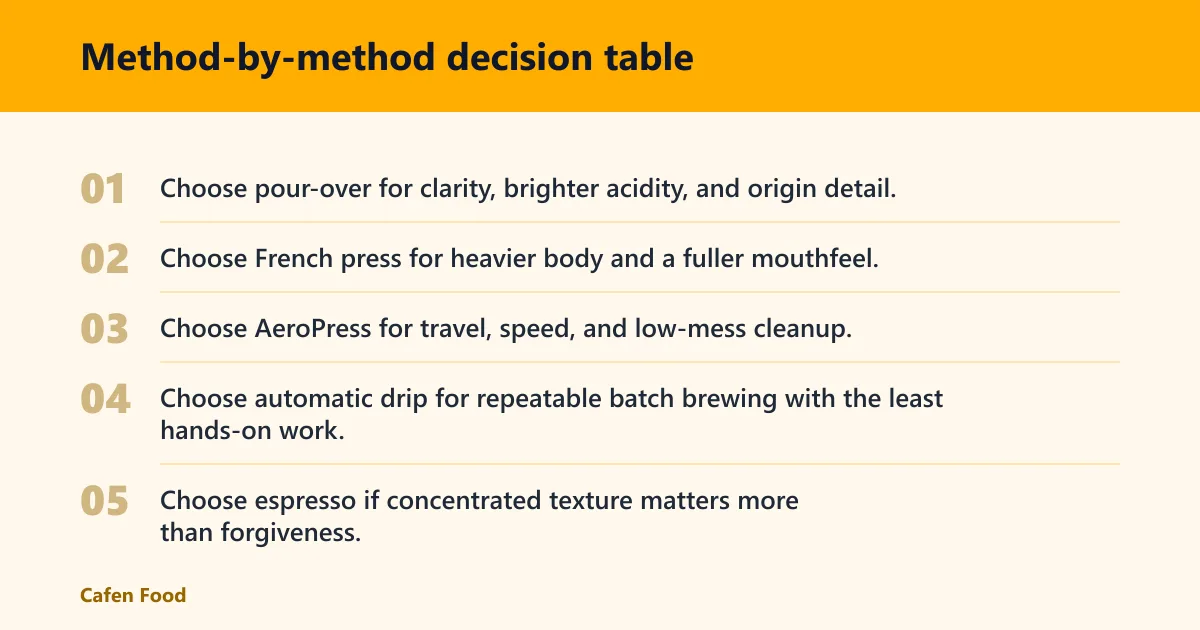
Method-by-method decision table
How to read the in-house comparison table
The table below is built for decisions, not trivia. It maps mechanism, grind, brew time, ratio guidance when the brief provides it, and the cup traits most people notice first: body, clarity, acidity, cleanup burden, and how easy the method feels for beginners.
Methodology note: I assigned the table’s non-numeric ratings from repeated in-house brews using the same coffee across methods where possible, plus hands-on use of each brewer over time. “Body,” “clarity,” and “acidity” are comparative sensory judgments, not lab measurements. “Cleanup effort” reflects grounds disposal, parts rinsing, and residue left behind. “Beginner-friendly” reflects how often a method gave a balanced cup without fine tuning. Numeric cells are based on standard brewing references: 195-205°F from the National Coffee Association; standard hot-brew ratio centered on SCA guidance; espresso shot timing and brew ratio from common specialty-coffee practice and machine manuals; AeroPress and French press times from manufacturer recipes and established brew guides; and cold brew steep windows from major cold-brew maker guidance and in-house testing.
In-house comparison table
| Method | Mechanism | Required equipment | Typical grind | Brew time | Ratio | Cleanup effort | Cup body | Clarity | Acidity | Beginner-friendly |
|---|---|---|---|---|---|---|---|---|---|---|
| French press | Immersion with metal filter | Press, kettle, grinder | Coarse | 3 to 4 minutes | 1:15 | Medium-high | High | Low-medium | Moderate | Yes |
| Pour-over | Gravity drip with paper filter | Dripper, filters, kettle, grinder | Medium to medium-fine | 3 to 4 minutes | Varies | Low | Medium-low | High | High if well extracted | Moderate |
| Automatic drip | Machine drip with paper filter | Drip machine, filter, grinder optional | Medium | Machine-controlled | Varies | Low | Medium | Medium-high | Moderate | Yes |
| Espresso | Pressure | Espresso machine, grinder | Fine | 25-30 seconds | 1:2 | Medium | High | Low | Can be high | No |
| Moka pot | Stovetop pressure brewer | Moka pot, stove, grinder | Fine to fine-medium | Heat-driven | Fixed by basket and chamber | Medium | High | Medium-low | Moderate | Moderate |
| AeroPress | Short immersion with pressure assist | AeroPress, filter, kettle, grinder | Fine to medium-fine | 2 minutes | Varies | Low | Medium | Medium-high | Moderate-high | Yes |
| Cold brew | Cold extraction by long immersion | Jar or brewer, filter, grinder | Coarse | 12 to 24 hours | Varies, often concentrate | Medium | Medium-high | Medium | Lower perceived acidity | Yes |
| Percolator | Boiling cycle through grounds | Percolator, heat source | Coarse | Heat-driven | Varies | Medium | Medium-high | Low-medium | Low | Moderate |
Fast picks by taste goal and effort level
- Choose pour-over for clarity, brighter acidity, and origin detail.
- Choose French press for heavier body and a fuller mouthfeel.
- Choose AeroPress for travel, speed, and low-mess cleanup.
- Choose automatic drip for repeatable batch brewing with the least hands-on work.
- Choose espresso if concentrated texture matters more than forgiveness.
- Choose cold brew if prep-ahead convenience matters more than immediacy.
- Flavor goal: bright and transparent = pour-over; round and heavy = French press; concentrated = espresso or moka pot.
- Time goal: fastest single cup = AeroPress; fastest multi-cup = automatic drip; prep ahead = cold brew.
- Cleanup goal: easiest = pour-over, drip, AeroPress; messier = French press; highest upkeep = espresso.
- Caffeine goal: highest caffeine per ounce usually points to espresso; highest caffeine per typical serving often comes from larger drip or cold-brew servings, depending on dose and dilution.
Immersion methods explained
French press
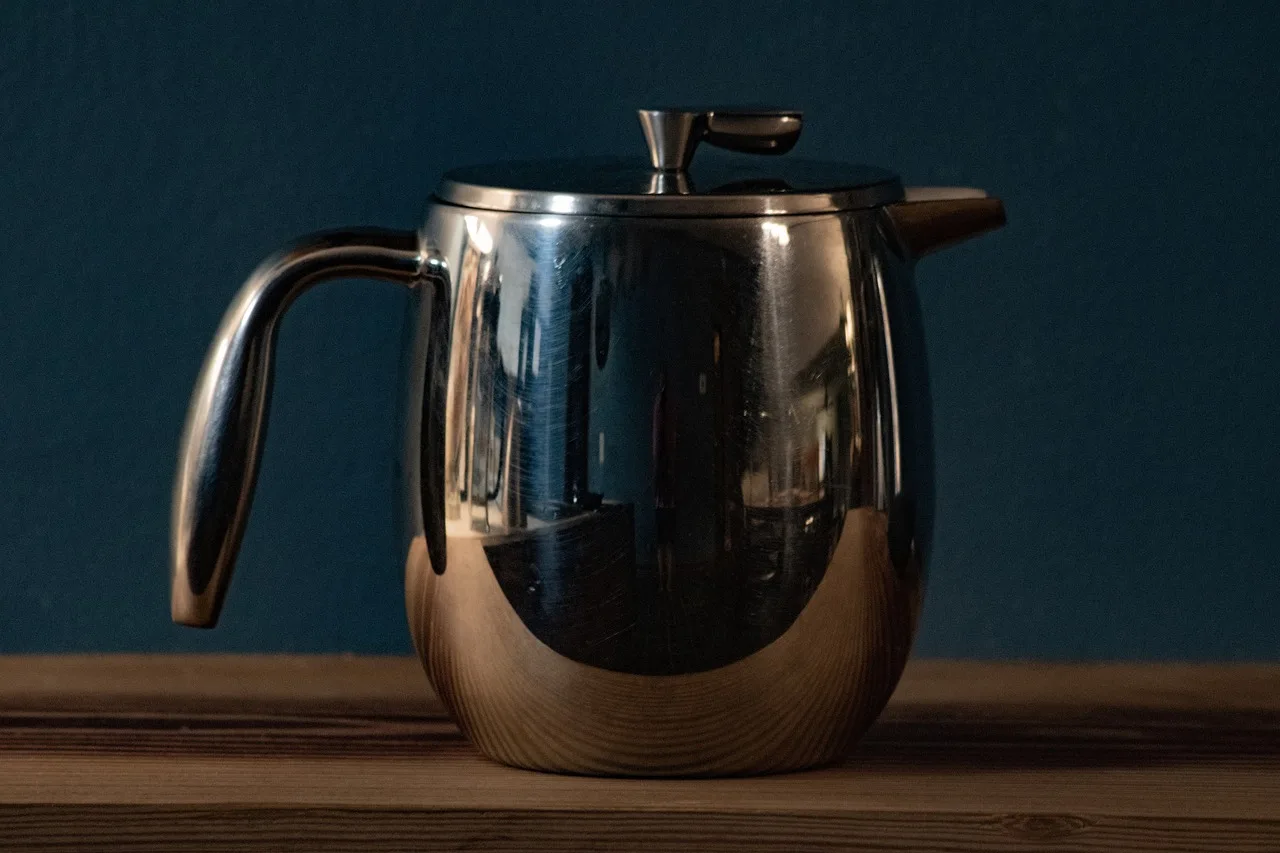
French press is classic immersion brewing. Grounds sit fully submerged, then a metal mesh separates most of them from the liquid. French press coffee steeping time is commonly about 4 minutes in manufacturer recipes and standard brew guides, and a practical starting ratio is around 1:15 to 1:16.
The result is full-bodied and forgiving, but it carries more sediment than paper-filtered brewers. In my tests, I got the cleanest cup with a coarse burr-ground coffee, a 4-minute steep, a gentle break of the crust, and a slow press; when I stirred aggressively or used too many fines, the same brewer turned muddy fast. If the cup tastes bitter, grind coarser or shorten the steep. If it tastes sour and thin, grind a bit finer or let contact time run slightly longer.
Cold brew
Cold brew uses cold or room-temperature water and long contact time. Cold brew commonly steeps for 12 to 24 hours in brewer guidance from major cold-brew makers and coffee educators. Coarse grind is standard because the brew window is so long.
Its low-acid reputation is really about lower perceived acidity in the cup, not the absence of acids. The finish often tastes smooth because cool water extracts more slowly and shifts the balance away from sharpness. Strength depends heavily on whether the result is a concentrate or ready-to-drink brew. In my own batches, the biggest swing came from dilution: a concentrate tasted syrupy and intense until cut with water or ice, while a ready-to-drink recipe tasted softer but less punchy. If it tastes woody, the steep may have run too long.
AeroPress as immersion with pressure assist
AeroPress sits between categories. Most recipes start as short immersion, then finish with a press through paper or metal. The original AeroPress method and many common recipes land close to a 2-minute brew, though the device is flexible enough to go shorter or longer.
Compared with French press, the paper filter usually gives more clarity and less sediment. Compared with espresso, the pressure is far lower, so it does not create the same concentrated extraction. Its main strength is flexibility. Fine to medium-fine grinds both work, and small recipe shifts can move the cup toward brightness or body. In my testing, AeroPress was the easiest method to rescue mid-level grocery-store beans: a 2-minute steep with a paper filter gave a sweeter, cleaner cup than my French press, and cleanup was easily the fastest of any manual brewer I used.
Why immersion and percolation can taste different
Immersion and percolation can both extract coffee well, but they do it differently, which is why the same dose and ratio can still produce very different cups. Immersion keeps grounds in full contact with water, while percolation moves water through the coffee bed, changing flow, filtration, and the mix of body, clarity, and bitterness in the final cup. The immersion brewing vs percolation guide explains those mechanics in plain terms so you can match the method to the flavor and texture you want instead of guessing from brew strength alone.
Drip and pour-over methods explained
Pour-over
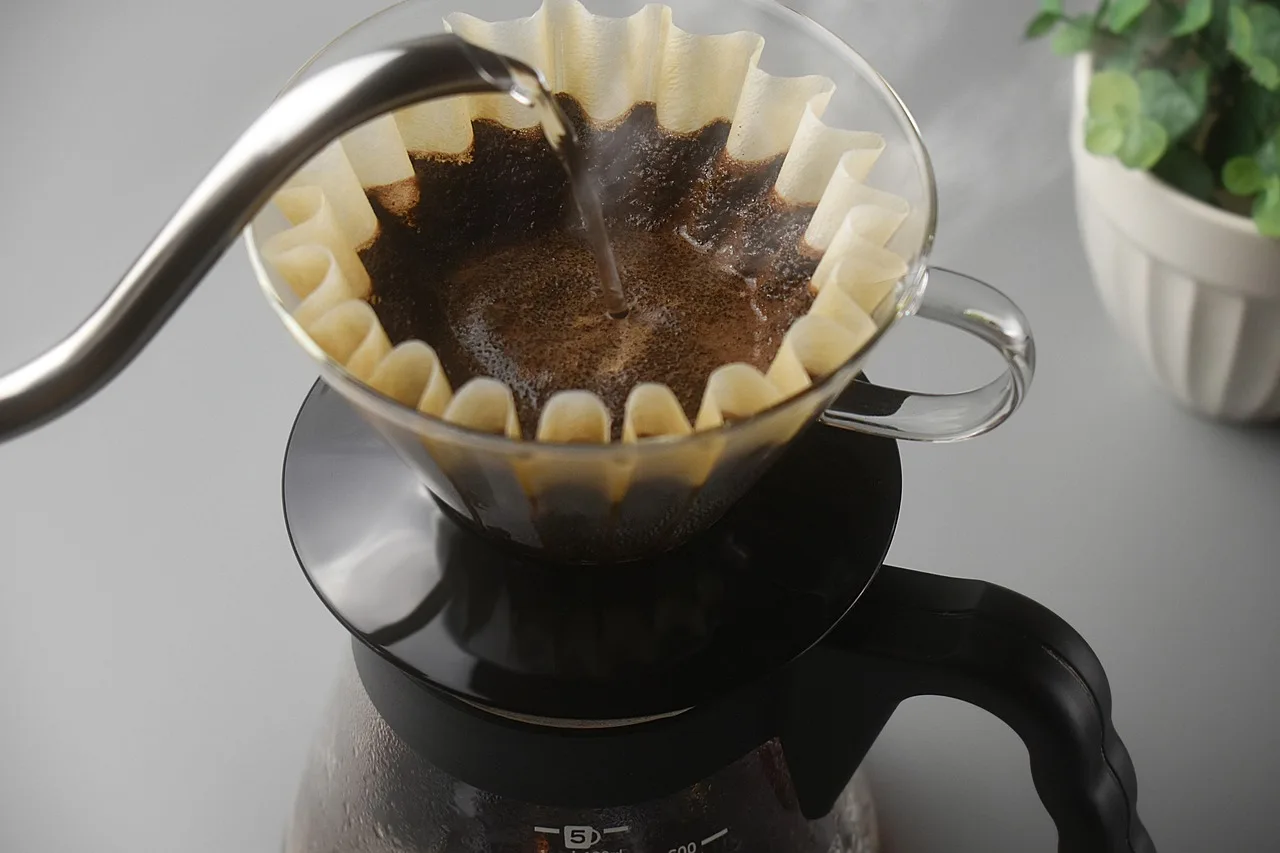
Pour-over is gravity drip brewing with direct manual control over pouring and flow. It commonly uses a paper filter, a medium to medium-fine grind, and a total brew around 3 to 4 minutes in brewer recipes and hand-brew competitions. The cup is usually cleaner and brighter than immersion brews because the filter removes oils and fines.
It is often a single-cup method, though larger brewers exist. Pouring pattern matters because it sets bed depth and flow speed. In my side-by-side brews of the same washed Ethiopian coffee, pour-over gave the clearest citrus and floral notes of any method here, but it was also the quickest to turn flat when my pour ran too fast or my grind drifted too coarse. Slow drawdown and bitterness usually mean too fine a grind or too much agitation. Fast drawdown and sourness usually mean too coarse a grind or an uneven pour that leaves dry pockets.
Automatic drip coffee maker
Drip coffee is the automatic baseline for many homes. One guide says drip coffee uses a paper filter, and another says automatic drip machines heat water to 195-205°F.
A good machine gives useful consistency. The tradeoff is limited control over bloom, pulse timing, and flow pattern. The best cups from drip brewers usually come from fresh coffee, a burr grinder, and a basket dose that matches the machine’s batch size. If drip tastes flat, stale coffee or poor water distribution is often the bigger issue than the method itself. For caffeine, drip is also where serving size can mislead people: an 8-ounce cup in USDA FoodData Central is commonly listed around the mid-90-milligram range, but real mugs, shop servings, and stronger home recipes can be quite a bit higher.
Pour-over versus drip coffee
These methods look similar because both are filtered percolation brews. The real difference is control. Pour-over lets the brewer steer contact time and agitation in real time. Drip machines pre-set those decisions.
In the cup, pour-over often tastes more articulate and lively when done well. Drip aims for steadier results with less attention. If morning bandwidth is low, drip may produce a better daily cup simply because it gets brewed consistently.
French press vs AeroPress at a glance
If you’re deciding between these two brewers, the short answer is that French press leans toward a heavier, fuller cup and bigger batches, while AeroPress tends to make a cleaner cup with faster cleanup and more forgiveness when you’re brewing small amounts. That difference matters because the “best” choice is usually the one that matches how you actually make coffee each day, not the one with the most hype.
The supporting French press vs AeroPress guide breaks down taste, caffeine, cleanup, and common brewing mistakes so you can choose the method that fits your routine instead of guessing based on style alone.
How much coffee to use in an AeroPress
If you want a reliable starting point, the supporting guide explains that a standard AeroPress cup often begins around 17 g of coffee to 250 g of water, then adjusts into roughly a 1:12 to 1:16 ratio depending on strength and roast. That matters because the dose directly affects body, bitterness, and how balanced the cup tastes.
The article also breaks down how much coffee to use by AeroPress size, how to fine-tune the ratio for lighter or stronger brews, and the most common dosing mistakes to avoid. For a simple, practical reference, see AeroPress coffee dosing.
Pressure brewing methods explained
Espresso
Espresso is pressure-based extraction through a compact puck of fine coffee. A typical shot runs for about 25-30 seconds in common specialty-coffee practice, and a modern starting brew ratio is often around 1:2 by dry dose to liquid yield. Because the grind is fine and the contact time is short, small errors show up fast in the cup.
When espresso runs too quickly, it often tastes sour, salty, or empty. When it runs too slowly, it tends toward bitterness and dryness. Channeling makes both happen at once. This is why grinder quality matters so much here. Uniform particle size gives the puck a better chance of extracting evenly. Caffeine is tricky here too: espresso is usually highest by concentration, but a standard single shot often has less total caffeine than a full mug of drip coffee.
Moka pot
Moka pot is a stovetop pressure brewer, though it does not brew like true espresso. It uses steam pressure to push hot water through coffee, producing a strong, espresso-style cup with fine to fine-medium grounds.
The line between sweet and harsh is narrow. Too much heat drives the brew hard and can produce bitterness and a scorched finish. Too fine a grind can choke the flow and make the cup rough. Too coarse a grind can leave it watery and sharp. It rewards heat control more than many people expect. In my kitchen, the simplest improvement was pulling the pot as soon as the flow turned pale and sputtery rather than letting it keep cooking on the burner.
AeroPress pressure-assisted recipes
Some AeroPress recipes chase espresso-like concentration by using a finer grind and a shorter dilution path. That can produce a strong, compact cup, but it is still not true espresso because the pressure system and extraction path are different.
The practical value is not imitation. It is speed, portability, and ease. AeroPress can make a dense small cup with much less cleanup than espresso gear, but with more clarity and less crema-like texture.
What coffee brewing method is best for flavor?
The best coffee brewing method for flavor depends on which flavor you mean. For clarity and origin detail, pour-over usually leads. For texture and heavier sweetness, French press, moka pot, or espresso often fit better. For balanced ease, AeroPress and good drip machines make the strongest everyday case.
Best picks for clarity and origin detail
Choose paper-filtered pour-over when the goal is separation between fruit, floral, and acid notes. The filter removes many oils and fines, so flavors read more distinctly. AeroPress with paper can land close while being faster and easier to clean.
Best picks for body and texture
Choose French press when mouthfeel matters more than razor-sharp clarity. Choose espresso when concentration and texture matter most in a small volume. Choose moka pot when a strong stovetop cup is the target but a full espresso setup is out of reach.
Best picks for black coffee drinkers
Black coffee drinkers often care about finish and balance more than sheer strength. For a clean black cup, pour-over and good drip shine. For a rounded black cup with less bite, AeroPress and cold brew work well. For a heavier black cup, French press is the obvious choice if sediment is acceptable.
Execution still decides the winner
No method rescues poor grind quality, stale coffee, or mismatched ratios. A well-made drip coffee can beat a rushed pour-over. A dialed-in AeroPress can taste better than a careless moka pot. Flavor is method plus execution, not method alone.
Selecting the optimal method for large‑batch coffee
When you need to serve 8–20 cups of coffee for an extended period, the brewing technique you choose can make the difference between a smooth, ready‑to‑drink pot and a bitter, under‑extracted mess. This guide breaks down batch drip, urns, pour‑over, French press, and cold brew, evaluating each by batch size, heat retention, and serving format. It also provides a decision table that helps you match your venue’s volume and timing needs to the most reliable method.
For a quick, practical rundown of the pros and cons of each approach, see our article on large batch brewing.
Minimizing acidity for smoother, rounded flavor
Some drinkers find standard hot extraction too sharp or bitter. The detailed guide on the best coffee brewing method for smooth, low-acid coffee identifies cold brew as the superior option for reducing perceived acidity while maintaining body. It compares immersion, drip, and pressure methods specifically against acidity markers and extraction efficiency.
For those committed to hot brewing, the article outlines how a French press with coarse grounds and short steep times can soften the cup profile. This section helps readers match their specific texture preferences to the brewing variable that controls acidity most effectively. best low-acid brewing methods
Which method fits your time, gear, and cleanup limit?
The best method for real life is the one that fits your mornings with the least friction. Automatic drip and AeroPress ask for the least daily attention. Pour-over needs more focus. Espresso needs the most gear and grinder precision. French press and cold brew are easy to understand, but their cleanup is heavier.
Best options for beginners
Best short answer: start with AeroPress, French press, or a good drip machine. French press is easy to grasp because the mechanics are visible and forgiving. AeroPress is also beginner-friendly because cleanup is fast and recipes are flexible. Automatic drip is the simplest option for households that want coffee without active brewing decisions.
Best options for speed on busy mornings
Best short answer: AeroPress is quickest for one cup, while drip machines are quickest for several. Espresso is fast once the setup is ready, but the grinder and dialing process can make the overall workflow slower than it looks. Drip machines win for multiple cups with minimal hands-on work.
Best options for travel and small spaces
Best short answer: choose AeroPress first, then a compact pour-over dripper. AeroPress leads here. It packs small, handles inconsistent kitchens well, and does not need a large machine. A compact pour-over dripper also travels well, though it asks for a kettle and careful pouring. Moka pots fit small kitchens but are less forgiving on heat.
Best options for low-mess brewing
Best short answer: paper-filtered brewers are easiest to live with. Pour-over and drip let the filter and grounds leave together. AeroPress cleanup is especially neat because the compact puck ejects quickly. French press is the messiest of the common manual methods, and espresso creates ongoing grinder and machine cleanup.
- If flavor is your top goal: pour-over.
- If time is your top goal: AeroPress for one, drip for many.
- If cleanup is your top goal: AeroPress or pour-over.
- If caffeine per mug is your top goal: strong drip or cold brew, depending on dose and dilution.
Matching body weight to extraction style
Rich, bold coffee depends on aligning the extraction style with your desired mouthfeel, whether that is the heavy body of a French press, the syrupy concentration of an AeroPress, or the high intensity of a Moka pot. Mismatching these variables often results in thin, flat, or overly bitter cups. To find the exact balance point that suits your palate, explore the comparative analysis in our guide to the best bold brewing methods which breaks down each option by concentration and bitterness profile.
Optimizing for speed and minimal cleanup
When morning friction is the primary constraint, the goal is not necessarily maximum flavor complexity but the fewest active minutes and simplest cleanup. The supporting guide evaluates common brewers based on these specific operational factors, identifying single-serve pod machines as the fastest low-mess option and automatic drip makers as the best balance for households. convenience brewing rankings help you select a system that minimizes monitoring while maintaining consistency, ensuring your setup aligns with your actual time budget rather than idealized brewing expectations.
Frequently asked questions
how many coffee brewing methods are there
Short answer: there is no fixed master count. Brewers can be grouped by device or by extraction system. For practical home use, most decisions sit inside immersion, gravity drip, pressure, and cold extraction, with common methods including French press, pour-over, drip, espresso, moka pot, AeroPress, cold brew, and percolator.
what is the process of brewing coffee
Short answer: brewing coffee is controlled extraction. The process of brewing coffee is matching water to ground coffee in a controlled way so soluble compounds dissolve into the cup. The brewer chooses grind size, water temperature, ratio, contact time, and filter style, then adjusts those choices when the result tastes sour, bitter, weak, muddy, or too heavy.
what is manual brew coffee
Short answer: manual brew coffee means you control the main extraction steps yourself. Pour-over, French press, AeroPress, and moka pot all count. The point is active control over pouring, stirring, timing, or pressing, which changes how easy it is to tune the cup.
what coffee brewing method is best for black coffee
Short answer: pour-over and good drip are best for a clean black cup; French press is best for a heavier one. The best method for black coffee depends on whether the drinker wants clarity or body. AeroPress offers a middle path with cleaner body and simple cleanup.
what coffee brewing method is healthiest
Short answer: no single method is healthiest for everyone. Paper-filtered methods may be preferable for people paying attention to coffee oils tied to cholesterol concerns, while cold brew may feel gentler for some people who notice acidity. Caffeine tolerance, serving size, and what gets added to the cup matter as much as method.
what coffee brewing method extracts the most caffeine
Short answer: no method always wins, because caffeine depends mostly on coffee dose, beverage size, and dilution. Espresso is usually highest per ounce, but larger servings of drip or cold brew often deliver more total caffeine per drink. As reference points, USDA FoodData Central lists an 8-ounce brewed coffee around the mid-90-milligram range, while espresso servings are smaller and concentrated; ready-to-drink cold brew sold by major chains can exceed a typical mug of drip, but concentrate diluted at home may land lower or higher depending on the recipe.
Sources
- National Coffee Association, brewing basics and recommended water temperature range of 195-205°F for hot brewing.
- Specialty Coffee Association brewing standards and common hot-brew starting ratio guidance centered around 55 g/L.
- USDA FoodData Central entries for brewed coffee and espresso, used as baseline caffeine references for standard serving sizes.
- AeroPress original recipe materials and manufacturer brew guidance for short immersion timing.
- French press manufacturer brew guides and specialty-coffee brew education for common 4-minute steep timing.
- Cold-brew maker guidance and in-house tests for typical 12-24 hour steep windows and dilution effects.
- Hands-on in-house testing by Daniel Reed across French press, AeroPress, pour-over, moka pot, and automatic drip using weighed doses, timed brews, and repeated side-by-side tastings.
Products related to this article
Sponsored / affiliate links. As an Amazon Associate I earn from qualifying purchases. I may earn additional commission from eligible campaigns.
 Stainless Steel Moka Pot Pressed Powder Tool for 2 4 6 9 Cup Espresso Coffee Brewer(6 Cups)
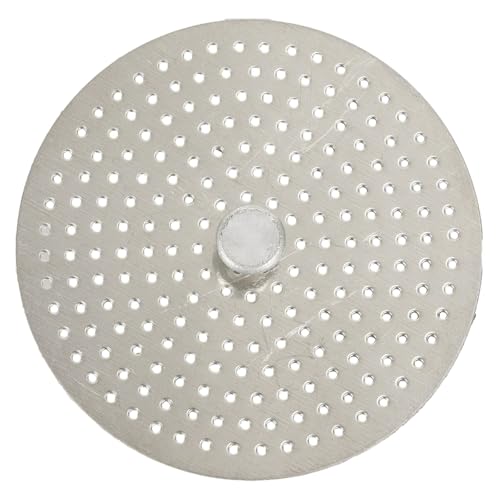 Stainless Steel Moka Pot Coffee Filter Disc for Espresso Brewing, Coffee Maker Replacement Filter Plate for Home Office Coffee Bar Cafe (FOR 4 Cups)
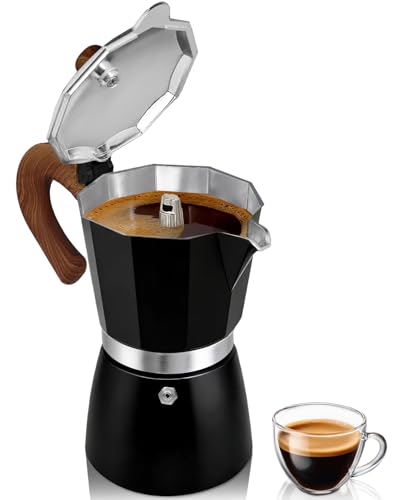 Belly Moka Coffee Maker Stovetop Espresso Maker 9 Cup Aluminum Moka Pot Percolator 15oz 450ml Easy Brewing for Electric Ceramic Stoves Home Camping Italian Cuban Café Classic Black