You grind your beans, pull the shot, and the whole kitchen sounds like a jackhammer. The espresso machine with grinder making loud noise is a classic problem. Most people panic, assume the machine is dying, and start shopping for a replacement. That’s usually a mistake.
In my years testing and repairing these machines, I’ve learned that noise is information. A rattle means one thing. A high-pitched whine means another. This guide teaches you to listen, isolate the source, and fix it without throwing parts at the problem. You’ll leave with a clear plan, whether that’s a ten-minute cleaning or a decision to call a professional.
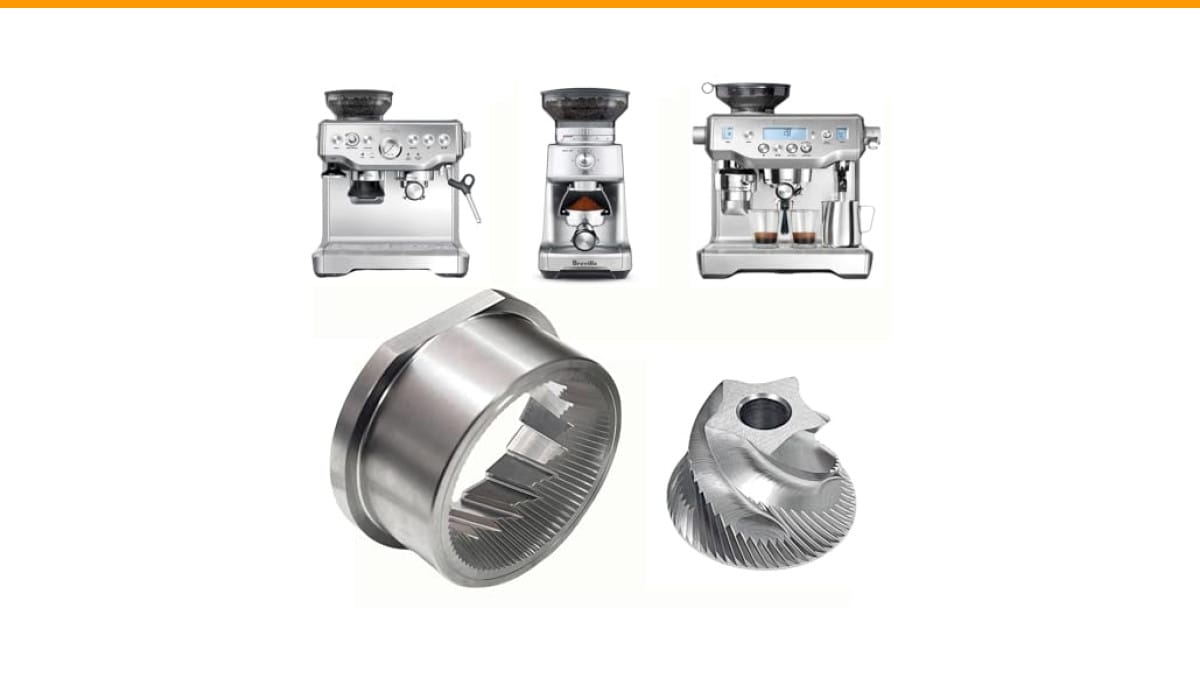
If you own a Breville model like the 870 or 878, a worn burr set is a common culprit. A quality replacement like this conical grinder burr set can restore quiet, consistent grinding when the originals have dulled. We’ll cover when that’s the right move.
Quick Diagnosis: Is It the Grinder or the Machine?
Before you do anything, isolate the noise. Run the grinder without any beans in the hopper. Listen carefully. Then run a blank shot (water only) with the portafilter in place. Does the noise happen during grinding, during brewing, or both?
If the noise only happens when the burrs spin, your problem is in the grinder. If it happens during the brew cycle, you’re dealing with the pump or valves. If it happens during both, you might have two separate issues, or a loose component that vibrates regardless of what’s running.
Take a screwdriver and hold the handle against your ear, then touch the tip to different parts of the machine. It’s an old mechanic’s trick. It lets you pinpoint where the vibration is strongest. The grinder is usually on top, the pump is on the bottom left, and the boiler is on the right.
Pro tip: A phone recording helps. You can slow it down and identify the frequency of the noise, which tells you a lot about the rotating speed of the part making it.
Grinder Noise: The Usual Suspects
Grinder issues are the most common cause of an espresso machine grinder getting loud. Here’s what to check in order of likelihood.
Foreign Objects and Hard Beans
A single pebble or an over-roasted bean can cause a horrible screeching sound. It’s the most common issue I see. If you hear a sudden, sharp grinding noise that wasn’t there yesterday, stop the grinder immediately.
Unplug the machine. Remove the hopper and inspect the burrs. You’re looking for a small stone, a piece of chaff that got stuck, or a bean that’s too hard to crack. You’ll often find it wedged between the upper and lower burr.
Remove the object with tweezers. If the burrs aren’t chipped, you can put everything back together and it should run quiet again.
Dull Burrs and Alignment Issues
Burrs wear out. It’s a fact of life. After 500-1000 pounds of coffee, the cutting edges become rounded. Instead of slicing beans, they crush them. This creates more friction, more heat, and a louder, deeper rumble. Your shots will also start tasting bitter because the grind is inconsistent.
Check the burrs for visible wear. Look at the sharp edges. If they feel smooth or shiny, they’re dull. If you see uneven wear, where one side is shiny and the other isn’t, your burrs are misaligned. This causes the burrs to touch on one side, producing a rhythmic metal-on-metal scraping sound.
For Breville machines, replacing the burrs is straightforward. The replacement burr set I mentioned fits the 870, 878, 880, and several other models. It’s a direct swap, no shims needed. A fresh set of stainless steel conical burrs will run quieter and grind more evenly.
Motor and Bearing Wear
If the noise is a low growl or a whine that changes pitch with the grind setting, suspect the motor bearings. These are sealed units that eventually dry out. You can’t lubricate them easily, and it’s often not worth the effort.
Another sign of motor trouble is heat. If the grinder housing feels hot to the touch after just a few seconds of use, the motor is working too hard. This usually means the burrs are too tight, or the motor itself is failing.
If you’ve replaced the burrs and still have a loud grinder, the motor is the next suspect. At that point, you need to weigh the cost of a new grinder against the age of your machine.
Machine Noise: Pump, Valve, and Boiler Issues
If the grinder is silent, your noise is coming from the hydraulics. This is a different set of problems.
The Vibratory Pump Rattle
Most home espresso machines use a vibratory pump. It’s a small electromagnetic piston that pulses 60 times per second. It makes a distinct buzzing or rattling sound. That’s normal. It’s when the rattle gets excessive that you have a problem.
The pump is mounted on rubber grommets to dampen vibration. Over time, these grommets harden or crack. The pump then vibrates directly against the chassis, creating a loud, metallic rattle.
You can test this by pressing your hand firmly on the machine’s case while it’s pumping. If the noise stops or changes, you’ve found the issue. The fix is replacing the rubber mounts. It’s a cheap part, but it requires opening the machine.
Air in the lines can also cause a loud, sputtering pump. This happens after you run the boiler dry or change the water filter. Run water through the steam wand for a few seconds to purge the air.
Solenoid Valve Clicking and Hissing
The solenoid valve controls water flow. A rapid clicking sound, like a fast ticking, means the valve is struggling. This is often caused by scale buildup. The valve can’t fully close or open, so it chatters.
Hissing or a high-pitched squeal after you stop the shot is also common. That’s the solenoid releasing pressure. A little hiss is normal. A loud, sustained screech means the valve is clogged.
Descaling often fixes this. If you have hard water, scale builds up on the valve’s internal components. A proper descaling solution, not vinegar, will dissolve it. If descaling doesn’t help, the solenoid coil might be weak and need replacement.
You can read more about automatic espresso machine loud noise issues in our dedicated guide.
Steam Wand Whistling and Banging
A whistling steam wand is almost always a blocked tip. Milk residue dries and hardens inside the small holes. The steam is forced through a tiny gap, creating a whistle. Soak the tip in hot water and a cleaning solution, then poke out the holes with a pin.
Banging or hammering sounds from the boiler are more serious. This is often water hammer, where steam bubbles collapse against the boiler walls. It can also indicate a faulty water level sensor. If you hear a loud thumping, turn the machine off and let it cool. This one is worth a professional look.
The Step-by-Step Grinder Deep Clean
Regular cleaning prevents most noise issues. Here’s the process I recommend every few weeks, especially if you use oily beans.
- Unplug the machine. Always.
- Remove the hopper. Twist it counterclockwise and lift it off.
- Empty the bean hopper. Use a brush to get out leftover beans and chaff.
- Remove the upper burr. On Breville machines, it’s held by a single screw or a bayonet lock. Check your manual.
- Brush the burrs. Use the brush that came with the machine. Get into every groove. Do not use water or soap on the burrs. It causes rust.
- Vacuum the grind chamber. A small handheld vacuum works best. Remove all loose grounds.
- Inspect the burrs. Look for chips, dull edges, or uneven wear. This is your chance to catch problems early.
- Reassemble. Make sure the upper burr is seated correctly. A misaligned burr will cause noise.
If the burrs look worn, don’t try to sharpen them. It’s a waste of time. Just replace them. For a step-by-step on cleaning, check our coffee grinder cleaning guide.
The Maintenance Schedule That Prevents Noise
Most noise is a symptom of neglect. A simple schedule keeps things quiet.
| Task | Frequency | Prevents |
|---|---|---|
| Brush burrs & empty chute | Weekly | Clogs, stale grounds |
| Deep clean grinder (steps above) | Monthly | Foreign object damage, dulling |
| Backflush with water | Weekly | Oily residue buildup |
| Backflush with cleaning tablet | Monthly | Clogged solenoid valve |
| Descale machine | Every 3-6 months | Scale on pump & valve |
| Replace burrs | Every 500-1000 lbs of coffee | Grinder motor strain, noise |
Water hardness matters. If your water is hard, descale more often. Use filtered water to reduce scale. It’s the single best thing you can do for the pump and solenoid.
When to Call a Professional vs. When to Replace
Not every problem is a DIY fix. Here’s my rule of thumb.
If the issue is grinder burrs, a foreign object, or a clogged steam wand, fix it yourself. These are simple, and the parts are cheap. A new burr set costs less than a few bags of specialty coffee.
If the problem is the pump, solenoid valve, or boiler, and descaling doesn’t fix it, that’s a job for a technician. Opening the machine’s hydraulics requires experience. You can cause more damage if you don’t know what you’re doing.
Consider the machine’s age. If it’s over five years old and the repair estimate is more than half the cost of a new machine, replace it. A new machine comes with a warranty and modern features. If it’s under two years old, repair it. The parts are likely still available, and the machine has years of life left.
Before you buy anything, read our comparison of automatic vs semi-automatic machines to know if an upgrade is right for you.
Frequently Asked Questions
Why does my espresso grinder sound like it’s struggling?
That struggling sound is usually the motor working against resistance. The most common cause is a clogged chute or a build-up of oily grounds between the burrs. Clean the grinder thoroughly. If it persists, the burrs are likely dull and need replacing.
Is it safe to use my espresso machine if it’s making a loud noise?
Short answer: no. A loud noise indicates friction or vibration that can cause further damage. A foreign object can chip a burr. A failing pump can overheat. Turn the machine off and diagnose the problem before running it again.
Can I lubricate the grinder burrs to stop the noise?
Never lubricate burrs. The oil will mix with coffee grounds and create a paste that ruins the grind and can damage the motor. Burrs are designed to run dry. If they’re making noise, they’re either dirty, misaligned, or worn, and lubrication is not the fix.
Why is my espresso machine loud only when the pump runs?
This points to the vibratory pump or the solenoid valve. Check the rubber mounting grommets on the pump first. If they’re worn, the pump rattles against the case. If the noise is a click or hiss, the solenoid valve may have scale buildup and need descaling.
How often should I replace the burrs in my Breville grinder?
For home use, plan on replacing them every 1-2 years, depending on how much coffee you drink. If you grind a pound a week, that’s about 500 pounds over two years. The burrs will be dull by then. If your shots taste bitter and the grind looks uneven, replace the burrs.
The Bottom Line: Listen Before You Panic
A loud espresso machine is rarely a death sentence. It’s a diagnostic clue. You just have to figure out what it’s telling you.
- Isolate the noise: run the grinder and the pump separately.
- Check for foreign objects first. It’s the easiest fix.
- Clean the grinder burrs and chamber regularly. It prevents most issues.
- Replace dull burrs. It’s cheaper than a new machine.
- Descale your machine to keep the pump and valve quiet.
- Replace worn rubber mounts to stop vibration rattles.
- Call a professional for anything involving the boiler or internal electronics.
Take your time, work through the steps, and you’ll likely save yourself a few hundred dollars. Your machine will thank you with a smooth, quiet shot.
Products related to this article
Sponsored / affiliate links. As an Amazon Associate I earn from qualifying purchases. I may earn additional commission from eligible campaigns.
 Coffee Espresso Machine Handle Replacement Parts, Cafe Bracket Handle for Lidl Silvercrest CM4621 CM4218 KF5002 KF500S Barista (for 51mm Portafilter Basket - Not included)
 Linnkyfloa Coffee Espresso Maker Handle Replacement for Stovetop Moka Pot or Percolator, Black Plastic for Spare Part Compatible with Italian(9-12 Cup)
 HomeBeyond Espresso Coffee Maker 12 Cups, Classic Stovetop Espresso Maker, 600ml / 20oz Coffeemaker for Gas & Ceramic Stovetops (Silver)