You pull a shot, knock the puck, and glance at the group head. There’s a smear of dark, oily residue clinging to the shower screen. You grab the nearest brush — probably the one you use for the grinder — and give it a quick scrub. That’s the mistake.

RhinoWare
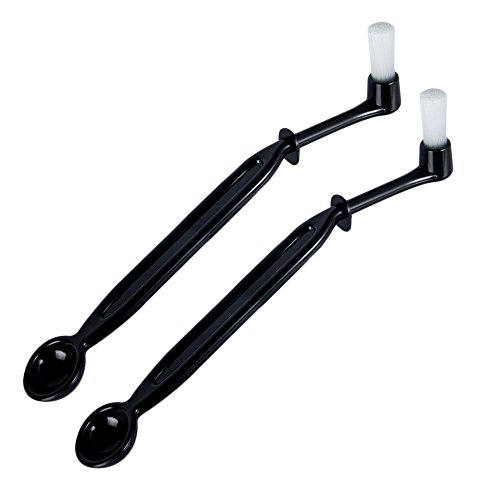
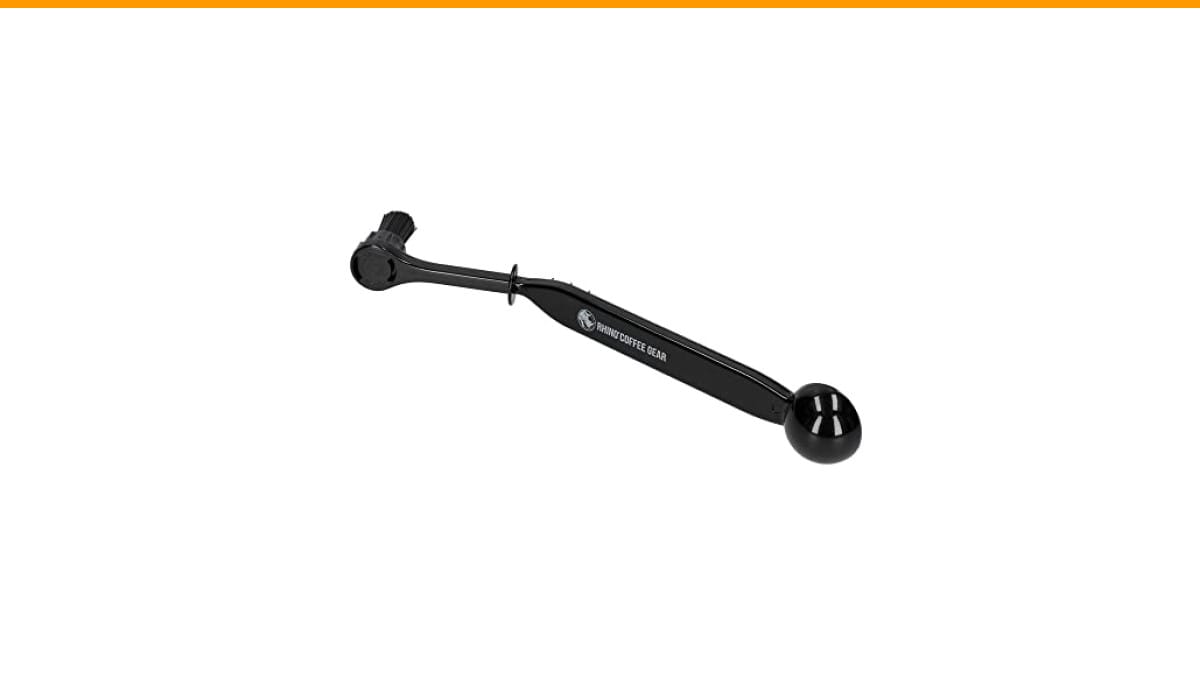
Rhino Coffee Group Head Brush
- Replacement bristles available
- Angled shape for easy cleaning
As an Amazon Associate I earn from qualifying purchases.
Using one brush for both jobs is a shortcut that costs you flavor. Coffee grinder brushes pick up fine, dry particles and old bean oils. Those particles get transferred straight into your espresso machine’s group head. The next shot you pull runs through that residue. You taste it, even if you don’t realize it.
This is a toolbox audit for home baristas. We’re comparing the espresso group head brush vs coffee grinder brush — not to crown a winner, but to show why each one belongs in your routine. I tested the Rhino Coffee Group Head Brush (B0BKJN42KS) alongside a standard grinder brush, and the differences go beyond the handle color.
Why a Dedicated Brush Matters for Coffee Equipment
Every coffee tool collects a different kind of mess. Your grinder accumulates dry, static-charged grounds in the chute and around the burrs. Your espresso machine’s group head collects wet, compressed coffee oils and fine sludge. These are not the same problem.
A grinder brush has softer, finer bristles meant to sweep fragile coffee particles without scratching metal. A group head brush needs stiffer bristles and an angled head to dig into the shower screen and gasket area. The Rhino brush uses a angled shape for easy cleaning — that angle is the whole point. It lets you reach the horizontal surfaces where residue cakes on.
Mixing the two means you’re smearing stale, oxidized coffee oils into places you thought you were cleaning. That’s not a minor detail. That’s the difference between a bright shot and one with a dull, bitter edge. If you want to dig deeper into grinder maintenance, our grinder cleaning guide covers the full process.
Espresso Group Head Brush: Design and Best Use Cases
The Rhino Coffee Group Head Brush is built for one task: scrubbing the group head after every shot. Its angled shape reaches the shower screen and the ridge where the gasket sits. Straight brushes miss those corners. You end up wiping the flat part of the screen and leaving the edges coated.
In testing, the Rhino brush handled wet, sticky residue without bending or splaying. The bristles held their stiffness after repeated use, which matters because soft bristles just push coffee oils around instead of lifting them. Replacement bristles are available, which extends the brush’s life significantly. Most brushes get tossed when the bristles wear out. This one doesn’t have to be.
Use it immediately after locking in the portafilter and pulling a shot. The group head is still warm, and the residue is soft. A quick three-second scrub with the Rhino brush clears the screen. Then run a blank shot to rinse. That’s the entire routine.
Coffee Grinder Brush: Design and Best Use Cases
A coffee grinder brush serves a different purpose. It’s designed for dry, powdery grounds and hard-to-reach crevices in your grinder’s chute, burr carrier, and dosing funnel. The bristles are typically longer and more flexible, letting you sweep out the fine dust that settles in the threads and corners.
Grinder brushes are not meant for wet surfaces. The moment you use one on a group head, it absorbs moisture and coffee oils. Those oils cling to the bristles and go rancid. Next time you brush your grinder, you’re distributing rancid oil into your fresh beans. That’s a flavor killer.
Use a grinder brush during your weekly deep clean. Remove the hopper and burrs, then sweep out the chute and chamber. It also works well for cleaning a dosing funnel and the area around the grind setting dial. For the complete routine, check our burr grinder comparison to see why the burr style affects how much residue accumulates.
Head-to-Head: Group Head Brush vs. Grinder Brush
| Feature | Group Head Brush (Rhino) | Grinder Brush |
|---|---|---|
| Bristle Stiffness | Stiff, for wet oils and compressed residue | Soft-to-medium, for dry grounds |
| Handle Length | Short, angled for tight spaces | Longer, straight for deep chutes |
| Primary Use | After every shot | Weekly deep clean |
| Bristle Replacement | Available for Rhino model | Usually not replaceable |
| Wet Use | Yes | No |
Bristle Stiffness and Material
Group head brushes need firm bristles to break up the sticky film that forms on the shower screen. The Rhino brush delivers that stiffness. Grinder brushes, by contrast, use finer bristles to avoid scratching the burrs and to reach into narrow gaps without bending.
Handle Length and Reach
The Rhino brush’s angled handle is its standout feature. It fits under the group head at an angle that straight brushes can’t match. Grinder brushes have longer, straight handles because they need to reach down into the grinder’s chute. Different geometry for different jobs.
Cleaning Frequency Requirements
Group head brushing happens after every single shot. Grinder brushing happens weekly, or when you notice the grind setting drifting. That’s a big difference in wear. A group head brush takes daily abuse, so the replaceable bristles on the Rhino model make practical sense.
The Hidden Danger of Using the Wrong Brush
Cross-contamination is the real issue. When you use a grinder brush on a group head, you pick up wet coffee oils and old grounds. Those oils go rancid. When you then use that same brush on your grinder, you’re spreading rancid oil into the burrs and chute. Your next batch of beans gets flavored by yesterday’s mistakes.
There’s also the physical risk. Wet grounds are abrasive. A grinder brush’s fine bristles aren’t designed for that. They wear down faster and can shed bristles into your espresso machine. Nobody wants a nylon bristle in their shot.
The reverse is also true. Using a stiff group head brush on your grinder’s burrs can scratch the cutting edges. Scratched burrs produce inconsistent particle sizes. That leads to channeling and sour shots. It’s a slow, silent degradation of your equipment.
How to Clean and Maintain Your Brushes
The brushes themselves need cleaning. The Rhino group head brush should be rinsed under hot water after each use. Let it air dry. Don’t soak it — the wood or plastic handle can degrade over time.
Grinder brushes need a different approach. Tap them out to remove loose grounds, then wash with mild soap and water. Make sure they’re completely dry before storing. Moisture in a brush stored near your grinder is an invitation for mold.
For the Rhino brush, check the bristles monthly. If they start to splay or lose stiffness, order replacement bristles. That’s a feature most brushes don’t offer. You’ll save money over time by not replacing the whole brush.
Top Picks for Each Brush Type
Best Group Head Brushes
The Rhino Coffee Group Head Brush is the one I’d recommend for home use. The angled shape is practical, not gimmicky. The replaceable bristles are a genuine value. Check the current price on Amazon to see if it fits your budget.
Best Grinder Brushes
Look for a brush with a long handle and a narrow head. Many home baristas use a simple pastry brush as a substitute, but a dedicated grinder brush with stiff, fine bristles works better. The key is keeping it separate from your group head brush.
If you’re still deciding between grinder types, our espresso machine comparison can help you understand how much cleaning your setup will require.
Final Verdict: Do You Need Both?
Yes. The espresso group head brush vs coffee grinder brush question isn’t about choosing one. It’s about recognizing they solve different problems. The Rhino brush handles the daily, wet, sticky mess on your group head. A grinder brush handles the weekly, dry, powdery mess in your grinder.
Buying one brush is a compromise that leads to stale coffee. The cost of two brushes is trivial compared to the cost of a ruined bag of beans or a damaged grinder burr. The Rhino brush’s angled design and replaceable bristles make it a solid daily driver. Pair it with a decent grinder brush, and your equipment stays clean.
Your shots will taste cleaner. Your grinder will produce more consistent grounds. And you won’t be wondering why that bitter note keeps showing up. That’s worth the drawer space.
Frequently Asked Questions
Can I use a coffee grinder brush on my espresso machine’s group head?
You can, but you shouldn’t. The grinder brush will pick up wet coffee oils and transfer them back to your grinder. Those oils go rancid and ruin the flavor of your next batch. Use a dedicated group head brush like the Rhino for wet cleaning.
How often should I brush my group head?
After every shot. It takes three seconds. The warm residue comes off easily. Let it cool and dry, and you’ll need a much more aggressive scrub later.
Are Rhino brush replacement bristles easy to install?
The design makes swapping bristles straightforward. You don’t need tools. Just remove the old bristle head and push in the new one. It’s a simple system that extends the brush’s life.
Can I put my group head brush in the dishwasher?
Hand wash it. The hot water and detergent in a dishwasher can warp the handle and weaken the bristles. A quick rinse under hot tap water after each use is all it needs.
What’s the difference between a group head brush and a portafilter brush?
A group head brush is angled to clean the shower screen and gasket area inside the machine. A portafilter brush is usually smaller and straight, designed to scrub the basket. The Rhino brush focuses on the group head, which is the harder area to reach.
Ready to buy? Check the latest price on Amazon