You buy a bottle of descaler, follow the instructions, and a week later your espresso machine starts leaking from the group head. Or the steam wand sputters. Or the machine just stops heating water. Did the descaler do that?
It’s a fair question. Descaler is acid, and acid sounds scary. The truth is more nuanced. A good descaling solution, used correctly, will not damage your machine. It will extend its life. But misuse it—wrong concentration, too long, too often—and you can absolutely wreck seals, boilers, and heating elements. This article is a damage prevention manual. You’ll learn exactly what goes wrong, how to spot it, and how to rescue a machine mid-disaster.

IMPRESA
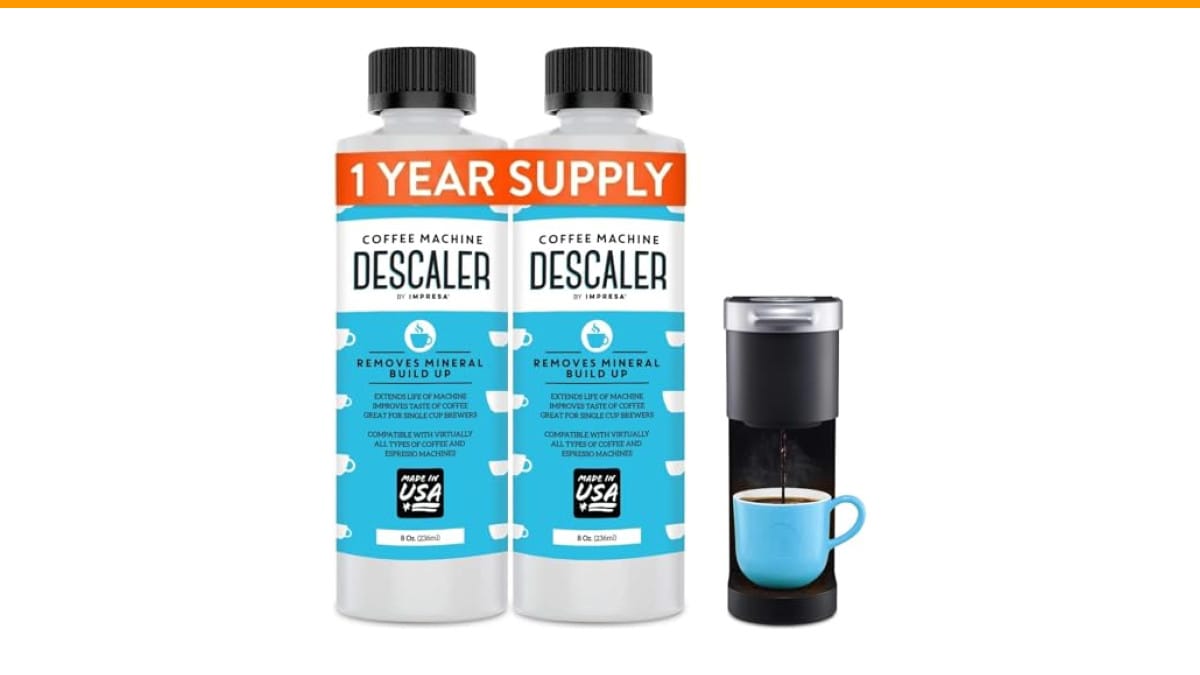
IMPRESA Coffee Machine Descaler, 2-Pack (1-Year Supply)…
- 2-Pack Coffee Descaler and Cleaner - Clean and rinse away residue and oil buildup in your coffee maker with Impresa's Coffee Desca…
- Highly Effective, Made in USA Formula - Unlike most common solutions, our coffee machine cleaner uses just 4 ounces (1/2 bottle) p…
- Preserves Your Machine - Using a coffee descaling solution eliminates limescale and mineral build-up to prevent corrosion, signifi…
As an Amazon Associate I earn from qualifying purchases.
I’ve tested dozens of machines and descalers side by side. I’ve also made the mistakes below so you don’t have to. Let’s get into it.
If you need a reliable descaler that works across most home machines, the IMPRESA Coffee Machine Descaler, 2-Pack is a solid choice. It’s a US-made formula that only needs 4 ounces per session, so one bottle covers two descales. It’s compatible with Keurig, Breville, Nespresso, DeLonghi, and most other single-serve and espresso machines.
The Short Answer: Yes, But Only If You Make These Mistakes
Descaler itself isn’t the enemy. The enemy is how you use it. Think of it like bleach. Used properly, it sanitizes. Chug it, and you’re in the ER. Same principle.
Here’s what actually causes damage:
- Using a solution that’s too strong for your machine’s materials
- Leaving it in the system for hours instead of minutes
- Descaling every week when you only need it twice a year
- Not flushing the solution out completely afterward
- Using a descaler designed for a different type of machine
Each of these is avoidable. The rest of this article explains why they happen and how to prevent them.
The Chemistry of Damage: How Acids Attack Your Machine’s Components
Descaling solutions are acidic. Most use citric acid, sulfamic acid, or a blend. They work by dissolving limescale—calcium carbonate—which is alkaline. Acid plus alkaline scale equals neutralized salts that wash away. That’s the goal.
The problem starts when the acid has nothing left to dissolve. Once the scale is gone, the acid starts looking for other things to react with. That’s when you get trouble.
Your machine’s internal parts aren’t all inert. Aluminum boilers are common in budget espresso machines. Aluminum is amphoteric—it reacts with both acids and bases. Leave a strong acid in contact with an aluminum boiler for too long, and you’ll get pitting and corrosion. That’s permanent damage.
Stainless steel boilers are more resistant, but the seals and gaskets holding them together aren’t. Rubber O-rings and silicone seals can swell, crack, or degrade when exposed to concentrated acid for extended periods. A swollen O-ring won’t seal properly, which leads to leaks. A cracked seal lets water where it shouldn’t go, which can short out electronics.
The Specific Parts at Risk (Seals, Valves, and Boilers)
Let’s break it down by component, because not all damage looks the same.
- O-rings and gaskets: These are the first to fail. They’re rubber or silicone. Acid attacks the polymer bonds. Symptoms: leaks around the group head, water dripping from the portafilter, or a hissing sound during brewing.
- Check valves: These small one-way valves control water flow. Scale buildup can make them stick. Acid can also degrade the plastic or rubber inside them. A stuck valve means inconsistent pressure or water flowing backward.
- Aluminum boilers: As mentioned, aluminum reacts with acid. Over-descaling an aluminum boiler can cause pitting. That pits then trap coffee oils and scale, making future cleaning harder. In severe cases, the boiler can develop pinhole leaks.
- Heating elements: These are usually coated in a protective layer. Strong acid can eat through that coating, exposing the bare metal. This leads to corrosion and, eventually, a short circuit. A dead heating element means your machine won’t heat water.
- Plastic tubing: Most internal tubing is nylon or PTFE, which are acid-resistant. But cheap machines sometimes use PVC or other plastics that can become brittle after repeated acid exposure.
Here’s the thing: none of these parts fail instantly. Damage from descaling is cumulative. It builds up over months or years of bad habits.
The 5 Critical Errors That Cause Descaling Damage
These are the specific mistakes I see people make, both in online forums and in my own testing. Avoid these and you’re 90% safe.
Error 1: Using the Wrong Concentration
Descaler comes in different strengths. A commercial-grade solution meant for a cafe machine is too strong for a home drip coffee maker. The label will tell you the dilution ratio. Follow it.
Some people think “if a little works, more works better.” That’s wrong. Double-strength acid doesn’t descale twice as fast. It just attacks your seals twice as fast. The reaction rate doesn’t scale linearly. You get the same scale removal, plus extra corrosion.
The IMPRESA solution I mentioned earlier uses 4 ounces per session. That’s half a bottle. That’s a measured amount. Use it as directed.
Error 2: Leaving the Solution in Too Long
Most descaling instructions say to run the solution through, then let it sit for 15–30 minutes. That’s the sweet spot. It gives the acid time to dissolve scale without attacking the machine’s internals.
Leaving it overnight is a disaster. I’ve seen photos of group heads that looked like they went through a chemical bath. The chrome plating was gone, the brass underneath was pitted, and the O-rings were mush. All because someone forgot to finish the cycle.
Set a timer. Don’t walk away. If you have to leave the house, drain the machine first.
Error 3: Descaling Too Frequently
More isn’t better. Descaling every month when you have soft water is just acid damage waiting to happen. Your machine doesn’t need it that often.
Check your water hardness. If you’re on city water, it’s probably moderate. If you’re on a well, it might be hard. If you use a water softener, it’s probably soft. The chart below will show you how often to descale based on that.
Descaling too often also strips away any protective coatings inside the machine. It’s not just about removing scale. It’s about not removing everything else.
Error 4: Not Rinsing Thoroughly
The rinse cycle is as important as the descaling cycle. You need to run fresh water through the machine until all traces of acid are gone. That’s usually 2–3 full tanks of water.
Residual acid doesn’t stay active forever, but it does keep working while it’s in there. It will slowly eat at seals and heating elements even at low concentration. And it will make your coffee taste terrible. A sour, metallic taste in your brew is a sign you didn’t rinse enough.
Run a full tank through, then taste the water. If it tastes like anything other than plain water, run another tank. Simple.
Error 5: Using the Wrong Descaler for Your Machine Type
Not all machines use the same materials. A cheap drip coffee maker with an aluminum heating tube needs a milder descaler than a stainless steel espresso machine.
Some descalers are specifically formulated for aluminum. Some are not. Read the label. If it says “safe for aluminum boilers,” it’s fine. If it doesn’t mention it, assume it’s not safe.
Also, don’t use vinegar. Vinegar is acetic acid, which is weaker than citric acid but harsher on rubber. It can also leave a lingering smell and taste. There’s a reason dedicated descalers exist. Use them.
How to Tell If You’ve Damaged Your Machine (Diagnostic Checklist)
So you’ve already made a mistake. How do you know if the damage is from descaling or just normal wear? Here’s a checklist I use when evaluating machines.
- Check for leaks after descaling. If the machine didn’t leak before and now drips from the group head or base, suspect seal damage.
- Listen for unusual noises. A gurgling sound during heating could mean air in the system from a bad seal. A grinding noise could mean scale debris in the pump.
- Taste the water. If it’s sour or metallic after a thorough rinse, you have residual acid or corrosion. That’s chemical damage.
- Look at the brew water flow. If it’s slower than before, you might have dislodged scale blocking a line. That’s mechanical blockage, not chemical damage. It’s fixable with a second descale, ironically.
- Check the heating time. If the machine takes twice as long to heat, scale is still coating the heating element. The descale didn’t work, or it wasn’t strong enough.
Here’s the key distinction: chemical damage from acid shows up as corrosion, pitting, or degraded rubber. Mechanical blockage shows up as slow flow or poor pressure. They have different fixes. Chemical damage is often permanent. Mechanical blockage can be cleared.
If you see white or greenish powder around the boiler, that’s corrosion. If you see scale flakes in the water, that’s just dislodged scale. Don’t confuse the two.
The Emergency Rescue Protocol: What to Do If You Mess Up
You left the descaler in overnight. Or you used double strength. Don’t panic. You can still save the machine. Here’s what to do right now.
- Stop the machine immediately. Unplug it. If the solution is still in the reservoir, pour it out.
- Flush with cold water. Fill the reservoir with plain cold water and run it through the machine without a filter or coffee. Do this until the tank is empty. Repeat.
- Neutralize the acid. Mix one tablespoon of baking soda per quart of water. Run this through the machine. Baking soda is alkaline, so it neutralizes any remaining acid. Let it sit for 10 minutes.
- Flush again. Run two full tanks of fresh water through the machine to clear out the baking soda solution.
- Dry it out. Leave the reservoir off and the water tank open. Let the machine air dry for 24 hours before using it again.
This neutralization step is the most important. Baking soda stops the acid from doing more damage. It’s the difference between a machine that survives and one that doesn’t.
If the machine still leaks or won’t heat after this, the damage is likely permanent. At that point, check your warranty. If the damage is clearly from chemical misuse, the warranty probably won’t cover it. But it’s worth a call.
The Safe Descaling Frequency Chart (Based on Water Hardness)
How often should you actually descale? It depends on your water. Here’s a practical chart based on general water hardness levels.
| Water Hardness | TDS Level (ppm) | Descaling Frequency |
|---|---|---|
| Soft (city water, filtered) | 0–60 | Every 6–8 months |
| Moderate (typical tap) | 60–120 | Every 3–4 months |
| Hard (well water) | 120–180 | Every 2–3 months |
| Very hard (high mineral content) | 180+ | Every 1–2 months |
These are starting points. If you use a water filter like a Brita, you’re probably in the soft range. If you have a whole-house water softener, same. If you’re on a private well, test your water. A cheap TDS meter costs less than a bottle of descaler and tells you exactly where you stand.
Also, pay attention to your machine’s manual. Some manufacturers have specific recommendations. Follow those first. The chart is a general guide, not a replacement for the manual.
How to Descale Without Damage: The Perfect Step-by-Step Process
Here’s the process I use for every machine I test. It’s safe, effective, and won’t void your warranty (assuming you follow the manufacturer’s instructions as well).
- Empty the machine. Remove any coffee grounds, pods, or filters. Run a cycle of plain water to warm the machine and loosen loose debris.
- Prepare the solution. Mix the descaler according to the label. For the IMPRESA solution, that’s 4 ounces mixed with water to fill the reservoir. Use room temperature water, not hot.
- Run the solution through. Start the descaling cycle if your machine has one. If not, run a normal brew cycle without coffee. Stop halfway and let it sit for 15 minutes.
- Restart and finish. Complete the remaining half of the cycle. The solution should now be fully drained.
- Rinse, rinse, rinse. Fill the reservoir with fresh water and run at least two full cycles. Then run a third cycle with a mixture of water and a tablespoon of baking soda to neutralize any remaining acid.
- Final flush. Run one more full tank of plain water. Taste the water from the spout. If it tastes clean, you’re done.
- Wipe down the exterior. Descaler can be corrosive to the outside of the machine too. Wipe up any spills immediately.
This whole process takes about 30 minutes. Most of that is waiting. It’s not hard, but it requires attention. Don’t multitask during the descaling cycle.
One note: if your machine has a steam wand, you need to descale that too. Run the solution through the steam wand for a few seconds, then flush it with water. Scale loves to hide in the wand.
The Bottom Line: Maintenance vs. Destruction
Descaling is not optional. It’s the single most important maintenance task for any coffee machine. But it’s also the easiest to botch.
The difference between maintenance and destruction comes down to three things: concentration, time, and frequency. Get those right, and your machine will last for years. Get them wrong, and you’re shopping for a new one.
Here are the takeaways to remember:
- Use a descaler specifically designed for your machine type. Check the label for aluminum safety.
- Follow the dilution ratio exactly. More is not better.
- Never leave descaler in the machine for more than 30 minutes. Set a timer.
- Descale based on your water hardness, not a calendar. Soft water means fewer descales.
- Always neutralize with a baking soda rinse after descaling.
- If you mess up, flush immediately and neutralize. Don’t wait.
- If your machine is leaking or tasting bad after a descale, check for chemical damage before blaming normal wear.
For more in-depth guidance, check out our descaling guide and maintenance tips for keeping your machine running longer. And if you’re dealing with stubborn scale, our limescale removal guide covers the tough cases.
Descaling doesn’t have to be scary. It’s just chemistry. Respect the acid, and it will respect your machine.
Products related to this article
Sponsored / affiliate links. As an Amazon Associate I earn from qualifying purchases. I may earn additional commission from eligible campaigns.
 Coffee Espresso Machine Handle Replacement Parts, Cafe Bracket Handle for Lidl Silvercrest CM4621 CM4218 KF5002 KF500S Barista (for 51mm Portafilter Basket - Not included)
 Commercial Meat Cutting Machine Stainless Steel Meat Cutter With Casters And Detachable 4.5mm Stainless Steel Cutting Blades 110V 750W 400KG/H for Institutional Kitchens Meat Retailers And Wholesalers
 KARHDIR 15" Walk Behind Floor Scrubber Machine, 23" Squeegee