The shot starts pulling, and within three seconds it’s a gushing, pale waterfall. Or worse, it barely drips out, turning your morning into a two-minute exercise in patience. You’ve cleaned the portafilter, checked the water level, and maybe even cursed the machine. But the real culprit often isn’t the machine at all. It’s the grinder sitting on top of it.
Many home espresso setups fail because the grinder and the brewer are treated as one unit. They aren’t. The grinder has its own set of failure points, and the brewer has its own. This guide walks you through the most common espresso machine with grinder problems and fixes, using a diagnostic approach. You’ll learn how to trace a symptom back to its root cause, whether that’s a mechanical failure, a water chemistry issue, or simply a stale bag of beans.

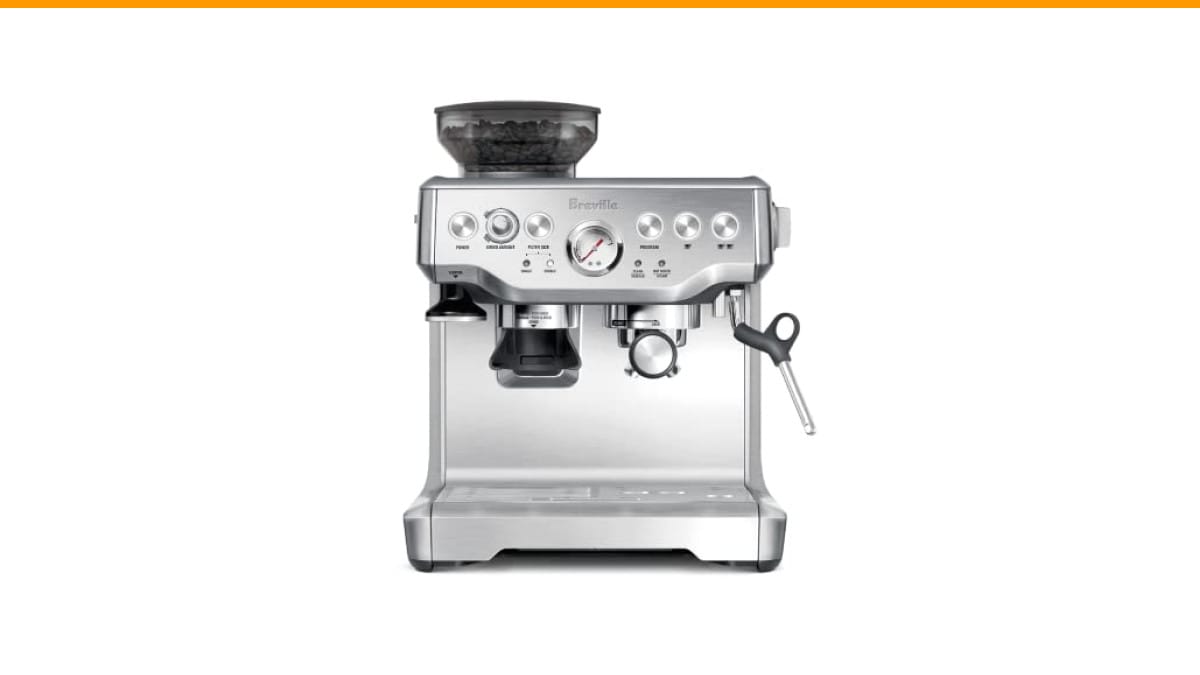
Breville
Breville BES870XL Barista Express Espresso Machine, Brushed…
- MANUAL HAND-TEXTURED MICROFOAM: The powerful steam wand on this cappuccino maker and latte machine is designed to quickly turn mil…
- PRECISE DOSE GRINDING: Integrated precision conical burr grinder on bean-to-cup espresso machine grinds on demand to deliver corre…
- WATER PRESSURE: Low pressure pre-infusion gradually increases pressure at the start and draws out all the flavors evenly during th…
As an Amazon Associate I earn from qualifying purchases.
We’ll cover the grinder first because that’s where most extraction problems start. Then we’ll move to flow rate, taste, leaks, and a maintenance schedule that prevents most of these issues from ever appearing. If you are shopping for a new unit, the Breville Barista Express is a popular all-in-one that includes a conical burr grinder and a 54mm portafilter, which makes it a good reference point for the fixes below.
Diagnosing the Problem: A Quick Checklist
Before you take anything apart, run through this list. It takes two minutes and saves you from fixing the wrong part.
- Is the machine turning on? Check the outlet, the power switch, and the reset button (if present). A tripped GFCI outlet is a common culprit in older kitchens.
- Is water coming out of the group head? If not, check the water tank. Many machines have a sensor that prevents operation if the tank is slightly misaligned.
- Is the portafilter locked in properly? A loose lock can cause pressure to escape, resulting in a weak, fast shot.
- What does the puck look like after the shot? If it’s muddy, your grind is too fine. If it’s cracked or has channels, your tamp is uneven or your dose is too low.
- When did you last clean the machine? If you can’t remember, that’s likely your problem. Old coffee oils go rancid and clog everything.
This checklist points you toward the general area. Now we’ll dig into the specific components.
Grinder Problems: The Root of Most Extraction Issues
The grinder is where most espresso problems begin. If the grind size is inconsistent, the water will find the path of least resistance. This creates channeling, where water blasts through one part of the puck and leaves the rest dry. You get a sour, weak shot with no crema.
Dull Burrs vs. Wrong Grind Size
There is a difference between a grinder set incorrectly and a grinder that is physically worn out. A wrong grind size produces a shot that is too fast (sour) or too slow (bitter). You can fix that by adjusting the dial. Dull burrs, however, produce a mix of fine powder and large chunks. No dial setting can fix that inconsistency.
How do you tell the difference? Look at the grounds. Spread them on a dark plate. If you see a uniform, sand-like texture, the burrs are fine. If you see boulders (large pieces) and dust, the burrs are likely dull. Another test: if your shot time changes drastically between two identical bags of beans, the burrs are suspect.
Dull burrs also cause the grinder to run slower and sound higher-pitched. Most home burrs last 500–800 pounds of coffee. That sounds like a lot, but a 2-pound bag every two weeks adds up to roughly 5–7 years of daily use. When they go dull, replace them. Sharpening them at home rarely works well because the cutting edges need precise angles.
If the grind size is wrong, adjust it. A finer grind increases resistance and slows the shot. A coarser grind speeds it up. Make small changes—one or two steps on the dial—and pull another shot.
Hopper Jams and Static Clumping
Sometimes the grinder stops producing coffee entirely. The motor hums, but nothing comes out. This is usually a hopper jam. Oily, dark-roast beans can stick together, especially in humid weather. Tap the hopper gently with the handle of a wooden spoon. If that doesn’t work, empty the hopper and wipe the inside with a dry cloth.
Static is a different issue. In dry climates, ground coffee sticks to the chute and the container. It clumps together, which causes uneven extraction. A common fix is the burr grinder trick: add a single drop of water to the beans before grinding. It sounds counterintuitive, but the moisture neutralizes the static. You can also use an anti-static ionizer if your machine has one, but most home units don’t.
If your grinder is jamming frequently, check the burr alignment. A misaligned burr can cause the motor to strain and stall. This is more common after you’ve cleaned the grinder and reassembled it incorrectly. Consult your manual for the correct seating position.
Fixing Flow Rate Issues (Too Fast/Too Slow)
Flow rate is the time it takes to pull a shot. A standard double shot should take 25–30 seconds from the moment the pump engages. If it’s 15 seconds, your extraction is too fast. If it’s 45 seconds, it’s too slow. Both produce bad coffee.
The Dial-In Process: Adjusting Grind and Dose
Here is a systematic way to dial in your espresso. It works for any machine, including the Breville Barista Express grinder problems you might encounter.
- Start with a baseline dose. For a 54mm portafilter, use 18 grams. For a 58mm, use 18–20 grams. Use a scale if you have one. Guessing the dose makes everything else impossible.
- Grind a small amount and feel it. It should feel like fine table salt, not powdered sugar. If it’s too powdery, you’re grinding too fine.
- Tamp with consistent pressure. Aim for 30 pounds of pressure. More important than the exact number is consistency. Tamp level, not hard.
- Pull the shot and time it. If it runs fast (under 20 seconds), grind finer. If it runs slow (over 35 seconds), grind coarser.
- Adjust one variable at a time. Change the grind, pull a shot. Change the dose, pull a shot. Never change both at once.
This process takes 3–4 shots to dial in a new bag of beans. That’s normal. Even commercial baristas go through a few shots when they change beans.
If you’re consistently getting fast shots with a fine grind, your pump pressure might be low. Standard espresso machines run at 9 bars of pressure. If your pump is failing, it might only deliver 6–7 bars. You can test this with a pressure gauge attached to the portafilter, but most home users won’t have one. A simpler sign: the water stream from the group head (without a portafilter) looks weak and dribbly instead of a strong, steady flow.
Fixing Taste Issues (Sour, Bitter, Weak)
Taste is the final arbiter. If your espresso is sour, it’s under-extracted. The water didn’t pull enough flavor out of the grounds. If it’s bitter, it’s over-extracted. The water pulled out the harsh, woody compounds. Weak espresso usually means the dose is too low or the grind is too coarse.
Temperature and Water Chemistry
Temperature plays a huge role. If your water is too cold (under 195°F), extraction slows down, and you get sour shots. If it’s too hot (over 205°F), you get bitterness. Many home machines have temperature fluctuations of 5–10°F during a shot. If your machine has a PID controller, set it to 200°F and leave it there.
Water chemistry is the ignored variable. Hard water with high mineral content causes scale buildup inside the boiler. Scale insulates the heating element, causing temperature swings. It also restricts water flow, reducing pump pressure. If you live in an area with hard water, use filtered or bottled water with a moderate mineral content. Distilled water is too aggressive and can leach metals from the boiler. Aim for water with 100–150 ppm of dissolved solids.
If your espresso tastes burnt, the issue might be the beans, not the machine. Very dark roasts have a thin window between perfectly extracted and charred. Try a medium roast next time. You can read more about why espresso tastes burnt in our dedicated guide.
Mechanical and Leak Fixes
Sometimes the problem is physical. Water leaks and pressure issues are common, but they’re usually fixable at home.
Water Leaks from Group Head and Portafilter
A leak around the portafilter during extraction means the seal is failing. The rubber gasket (O-ring) inside the group head wears out after a year or two. It hardens and loses its grip. Replacing it is a 10-minute job. You need a flathead screwdriver to pry out the old gasket, and you can push the new one in with your thumb. Check for cracks in the portafilter ears as well. If they’re chipped, the portafilter won’t lock in tightly.
Leaks from the bottom of the machine are more serious. If you see water pooling under the drip tray area, it could be a loose hose connection or a cracked boiler. Inspect the hoses for splits. If the boiler is leaking, that’s a job for a technician, not a DIY fix.
Steam Wand and Pump Pressure Problems
A steam wand that sputters instead of producing dry steam usually has a clogged tip. Milk residue bakes onto the inside of the wand. Soak the tip in a descaling solution for 30 minutes, then use the pin tool to clear the hole. If the wand doesn’t heat at all, the heating element might be dead.
Pump pressure issues manifest as weak shots or no water flow. The pump is a vibrating piston that can fail over time. If you hear the pump running but no water comes out, check the inlet filter on the water line. It might be clogged with scale. If the pump is silent, it might be electrically dead. Replacing a pump is possible, but it requires opening the machine’s chassis. If you’re not comfortable with that, call a professional. A loud, rattling pump noise often indicates air in the line. Prime the pump by running water through the steam wand for 30 seconds.
The Preventative Maintenance Schedule
Most espresso machine problems are preventable. Here’s a schedule that keeps things running.
| Frequency | Task | Why It Matters |
|---|---|---|
| Daily | Rinse the group head and wipe the steam wand after each use. | Prevents old coffee oils from going rancid and milk from baking on. |
| Weekly | Backflush with water (no detergent). | Clears coffee residue from the group head and shower screen. |
| Monthly | Backflush with espresso cleaning detergent. | Removes oils that water alone can’t dissolve. |
| Monthly | Clean the grinder burrs with a brush. | Removes trapped coffee powder that goes stale and affects flavor. |
| Quarterly | Descale the boiler and steam wand. | Removes scale that causes temperature swings and pressure loss. |
| Yearly | Replace the group head gasket and shower screen. | Maintains a proper seal and even water distribution. |
| Every 500–800 lbs | Replace grinder burrs. | Restores consistent grind size. |
Use filtered water. It cuts down on scale buildup dramatically. If you have very hard water, consider a water softener for your whole house or a dedicated espresso water filter.
When to Call a Professional Technician
DIY fixes save money, but some jobs require a pro. Here’s a decision tree.
Call a technician if:
- There’s an electrical issue. The machine trips the breaker, or you smell burning plastic. Do not open the machine. Capacitors can hold a lethal charge.
- The boiler is leaking. Boiler repairs involve welding or replacement. It’s not a beginner job.
- The machine is under warranty. Opening the case usually voids it. Check your warranty terms first. The Breville Barista Express, for example, has a 1-year limited warranty.
- The pump is dead and you’re not comfortable with electrical work. Pump replacement is doable, but it involves disconnecting high-voltage wires.
DIY is fine for:
- Replacing the group head gasket.
- Cleaning the grinder burrs.
- Descaling.
- Clearing a clogged steam wand tip.
- Replacing a shower screen.
If you’re on the fence, take a photo of the problem and email it to a repair shop. Most techs can give you a quick answer on whether it’s a simple fix.
Frequently Asked Questions
Why is my espresso machine with grinder not producing any crema?
No crema usually means the beans are stale. Fresh beans (roasted within the last 2–3 weeks) produce a thick, golden crema. Stale beans produce almost none. It can also mean your grind is too coarse, allowing water to rush through without building pressure. Check your bean roast date first, then adjust the grind finer.
How often should I clean the grinder on my espresso machine?
Brush out the burrs and chute every time you empty the hopper, or at least once a month. Use a stiff brush designed for grinders. Do not use water or cleaning tablets on the burrs unless your manual specifically allows it. Water can rust the burrs and cleaning tablets can leave a residue that taints the next few shots.
Can I use pre-ground coffee in a machine with a grinder?
Technically yes, but you lose the ability to dial in the grind size. Pre-ground coffee is usually ground for drip machines, which is too coarse for espresso. Your shots will run fast and taste sour. If you must use pre-ground, look for an espresso-specific grind, but be prepared for inconsistent results.
Why is my espresso machine leaking water from the bottom?
This is rarely a simple fix. It could be a loose hose clamp, a cracked reservoir, or a failed boiler. Start by checking the hoses inside the machine if you’re comfortable opening it. If you don’t see an obvious loose connection, call a technician. Running the machine with an internal leak can cause electrical shorts.
My grinder is clogged. How do I unclog it?
Unplug the machine. Empty the hopper. Remove the upper burr (if accessible) and brush out the chute. Use a can of compressed air to blow out any remaining powder. If the chute is blocked with oily coffee, wipe it with a dry cloth. Do not use water. If the motor won’t turn, the clog might be jamming the burrs directly. Try turning the lower burr by hand to break up the blockage.
What You Should Do Next
You don’t need to fix everything at once. Pick the one problem that’s ruining your morning coffee and solve that first.
- Start with the grinder. Dull burrs ruin every shot, no matter how good the machine is.
- Dial in your grind using the timed process above. It takes 15 minutes and fixes most taste issues.
- Check your water source. Hard water is the silent killer of espresso machines.
- Replace the group head gasket if you see leaks. It’s cheap and easy.
- Set a monthly reminder to backflush and descale. Your machine will last years longer.
- If you’re shopping for a new machine, consider a model with a built-in grinder like the Breville Barista Express for convenience, but check the automatic vs semi-automatic differences before you buy.
- If you’re dealing with a leaking machine, read our guide on automatic espresso machine leaking water for more specific steps.
Products related to this article
Sponsored / affiliate links. As an Amazon Associate I earn from qualifying purchases. I may earn additional commission from eligible campaigns.
 Coffee Espresso Machine Handle Replacement Parts, Cafe Bracket Handle for Lidl Silvercrest CM4621 CM4218 KF5002 KF500S Barista (for 51mm Portafilter Basket - Not included)
 Linnkyfloa Coffee Espresso Maker Handle Replacement for Stovetop Moka Pot or Percolator, Black Plastic for Spare Part Compatible with Italian(9-12 Cup)
 Cutter Grinder Machine, Universal Grinding Machine, U2 Universal Cutter Tool Grinder Sharpener Holder, For Lathes & Factories, Workshops, Green