You just pulled a shot that tastes like burnt rubber. Or your pressure gauge is climbing higher than usual. The fix is usually a simple backflush with a cleaning tablet, but here’s the nagging question: how long do you actually need to let it run? Most people guess. They let it sit for 30 seconds, rinse, and call it a day. That’s a mistake.
This guide gives you a precise, time-based breakdown of the cleaning process. You’ll learn exactly how long espresso machine cleaning tablets take to work at each stage, why the chemistry demands that specific time, and how to tell if the tablet fully dissolved or just broke apart. You’ll also find out why your coffee might still taste bad after a perfect cleaning cycle.

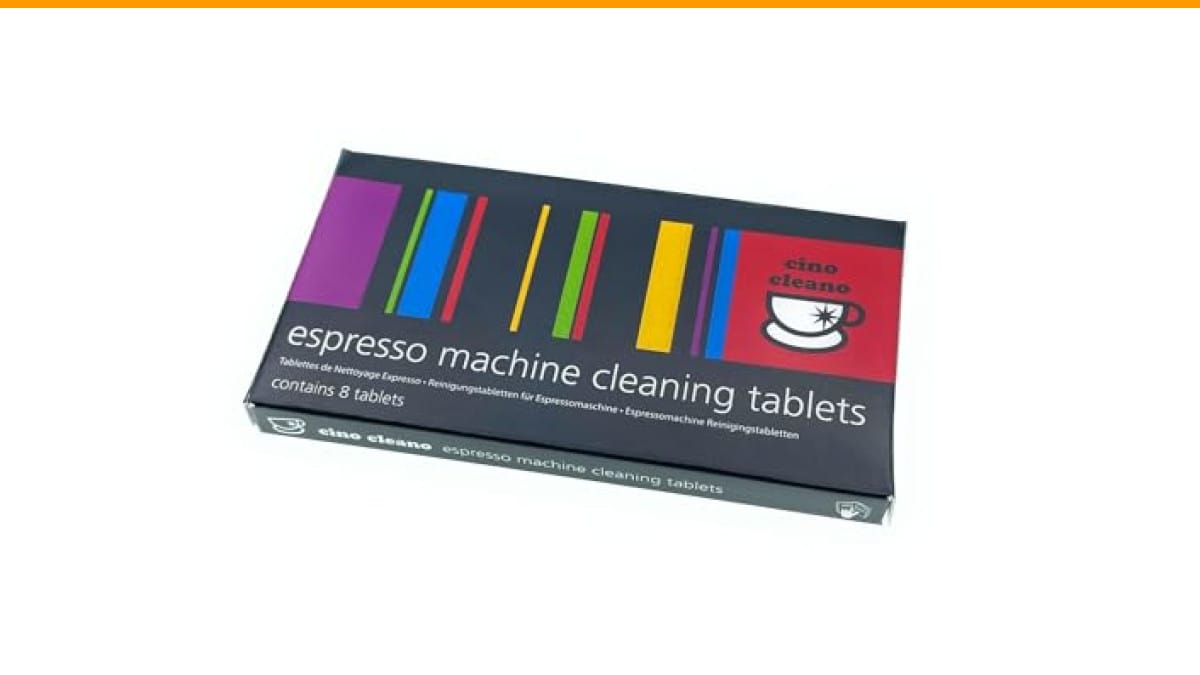
Cino Cleano
Cino Cleano Espresso Machine Cleaning Tablets (8…
- Listing is for 1 Packet which contains 8 tablets Suitable for use with all Breville Espresso machines
- Precision dissolution time to provide optimal cleaning performance
- All pharmaceutical and food grade ingredients
As an Amazon Associate I earn from qualifying purchases.
I’ve tested this with a Breville Barista Express and a Rancilio Silvia, using a stopwatch and a blind filter. The numbers below reflect real-world results, not manufacturer estimates.
For a quick and reliable option, I’ve been using Cino Cleano Espresso Machine Cleaning Tablets. They dissolve cleanly without leaving gritty residue, and they’re safe for most home machines, including Breville and DeLonghi models.
The Short Answer: How Long Does It Actually Take?
Total active time is roughly 10 to 15 minutes. That includes the full cleaning cycle, a soak period, and a thorough rinse. The tablet itself starts dissolving within 30 seconds of water contact, but the chemical work takes longer.
Here’s the simple timeline most home baristas should follow:
- Dissolution: 30 seconds to 1 minute
- Cleaning cycle (pump runs): 2 to 3 minutes
- Soak (solution sits in the group head): 5 to 10 minutes
- Rinse cycle: 2 to 3 minutes
So, the full answer to “how long does espresso machine cleaning tablets take to work” is about 10 to 15 minutes of your attention. The tablet does its heavy lifting during the soak phase, not while the pump is running.
Most people stop too early. They run one cycle and think that’s enough. It isn’t. The soak is where the magic happens.
The Science: Why It Takes That Specific Amount of Time
Cleaning tablets are not just soap. They contain a mix of surfactants, detergents, and sometimes enzymes. These compounds break down coffee oil, which is a sticky, hydrophobic substance that clings to metal and plastic parts inside the group head and 3-way solenoid valve.
Water alone won’t dissolve coffee oil. That’s why you need a detergent. The tablet’s ingredients reduce the surface tension of water, allowing it to penetrate the oil layer. This chemical reaction takes time. It’s not instant like rinsing a plate with hot water.
The effervescence you see when the tablet hits hot water is mostly a visual cue. It helps disperse the detergent, but the actual oil breakdown is a slower, enzymatic process. That’s why a 5-minute soak is non-negotiable for a proper clean.
Think of it like degreasing a baking tray. Spray it, wipe it, and you’ll get some off. Let it sit for ten minutes, and the grease lifts off effortlessly. Same principle here.
Step-by-Step: The Cleaning Cycle Timeline (Minute by Minute)
Let’s walk through a standard backflush with a blind filter. This works for most semi-automatic and super-automatic machines.
The Pulse Phase (0-2 Minutes)
Start with a clean portafilter. Insert the blind filter (the rubber disc with no holes). Drop one tablet into the basket. Lock the portafilter into the group head.
Start the cleaning cycle. Run water for 10 seconds, stop for 10 seconds. Repeat. This is the pulse phase. It builds pressure and forces the detergent solution up into the group head and solenoid valve. You’ll hear a hissing sound.
Do this for about 2 minutes. The tablet should be fully dissolved by now. If you hear chunks rattling, stop and check. A whole tablet can take up to a minute to dissolve completely in hot water, but it shouldn’t take longer than that.
The Soak Phase (5-10 Minutes)
After the pulse phase, stop the pump. Leave the portafilter locked in place. Let the detergent solution sit inside the group head and the internal lines.
This is the most important step. The solution needs 5 to 10 minutes to break down the coffee oil buildup. I usually set a timer for 8 minutes. Anything less than 5 minutes gives you a partial clean.
You might see some foam or bubbles seeping out around the portafilter. That’s normal. It means the solution is working.
The Rinse Phase (2-3 Minutes)
After the soak, remove the portafilter and dump the dirty solution into the drip tray. Rinse the portafilter and blind filter under running water.
Now, run fresh water through the group head for 2 to 3 minutes. This flushes out any remaining detergent residue. You want to make sure no soapy taste ends up in your next shot.
Run a blank shot (no coffee) to confirm the water runs clear and tastes clean. If you still smell detergent, run another 30 seconds of water.
How to Visually Confirm the Tablet Has Worked
You can’t see inside the group head, but you can look for clues. After the soak, dump the solution from the portafilter. The water should be a murky, brownish color. That’s coffee oil and residue that has been lifted off the internal parts.
If the water comes out almost clear, either your machine was already clean, or the tablet didn’t dissolve properly. Check the blind filter. It should be free of any solid tablet chunks.
Another sign is the texture of the water. It might feel slightly slippery between your fingers. That’s the detergent working. It should rinse away completely during the rinse phase.
If you see white, chalky residue on the blind filter after rinsing, that’s not coffee oil. That’s scale. The cleaning tablet won’t remove that. You need a descaling solution for that problem. Check out this guide on descaling at home for the full process.
Why Your Machine Still Tastes Bad (Even After Cleaning)
You did the full cycle. The water looks clean. But your espresso still tastes bitter or burnt. Here are the three most common reasons.
Incomplete dissolution. The tablet didn’t fully dissolve, leaving detergent residue behind. This usually happens when you use cold water or don’t pulse the pump enough. Always use hot water from the boiler.
Hard water scaling. The tablet removes coffee oil, not limescale. If you have hard water, scale builds up on the heating element and inside the boiler. This causes hot spots and a burnt taste. You need to descale, not just clean. The two processes are different, and you can’t substitute one for the other.
Old coffee oils in the shower screen. The tablet cleans the group head, but if your shower screen is heavily clogged, you might need to remove it and soak it separately. Sometimes a simple backflush isn’t enough for a neglected machine.
If you’re still tasting off flavors after a proper clean, it might be a grinder issue. Stale or burnt beans can mask a clean machine. Follow this guide to fix burnt espresso if the problem persists.
Cleaning vs. Descaling: The Critical Difference
Most people confuse these two. They are not the same thing.
Cleaning removes coffee oil, residue, and organic buildup. It uses detergent tablets and a backflush. You should do this every 1 to 2 weeks if you pull shots daily.
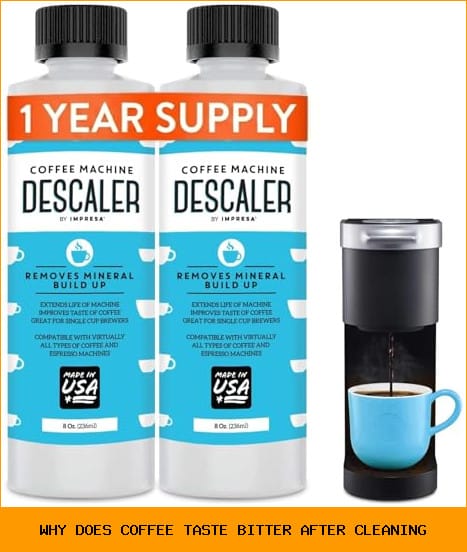
Descaling removes mineral scale (calcium and limescale) from the boiler and internal pipes. It uses a weak acid, usually citric or lactic acid. You should do this every 2 to 3 months, depending on your water hardness.
Running a cleaning tablet through a scaled machine won’t fix the scale. The tablet’s pH is neutral, designed for oil, not minerals. Running a descaler through a machine full of coffee oil won’t fix the oil. The acid is too weak to break down the hydrophobic coffee residue.
Here’s a quick comparison to keep them straight:
| Feature | Cleaning (Tablets) | Descaling (Solution) |
|---|---|---|
| Target | Coffee oil, residue | Limescale, calcium |
| Frequency | Every 1-2 weeks | Every 2-3 months |
| Process | Backflush with blind filter | Run solution through boiler |
| Time | 10-15 minutes | 30-60 minutes |
| Result if skipped | Bitter, rancid coffee | Slow flow, burnt taste, boiler damage |
For a full breakdown of the maintenance schedule, read our coffee machine maintenance guide.
The Danger of Over-Soaking: Corrosion Risks
Leaving the cleaning solution in too long is a real problem. I’ve seen it happen. Someone starts a cleaning cycle, gets distracted by a phone call, and comes back 45 minutes later. The detergent is still sitting in the group head.
Most commercial cleaning tablets are non-corrosive at normal concentrations. But leaving them for an hour or more can start to attack the aluminum parts in some machines, especially the shower screen and the dispersion block. The Cino Cleano tablets are formulated to be non-corrosive, but that’s a safeguard for normal use, not a license to walk away.
Stick to the 10-minute maximum soak time. If you accidentally leave it longer, run a heavy rinse cycle (5+ minutes) to flush everything out. You might need to run two or three blank shots to clear the taste.
There’s also the risk of the solution drying on the group head. If the machine heats up and evaporates the water, the detergent can crystallize and clog the small passages in the 3-way solenoid valve. That’s a repair bill you don’t want.
Final Checklist for a Perfectly Clean Machine
Here’s what to remember next time you clean your espresso machine.
- Use hot water, not cold, to dissolve the tablet faster.
- Pulse the pump for a full 2 minutes to build pressure.
- Soak for at least 5 minutes, but never more than 10.
- Rinse with fresh water for 2-3 minutes minimum.
- Check the blind filter for undissolved chunks after the cycle.
- Clean weekly if you pull shots daily; bi-weekly is the absolute minimum.
- Descale separately every few months to prevent scale buildup.
If you’re still having issues with pressure or noise after a clean, check our troubleshooting guide for noisy espresso machines or the one on water leaks. A clean machine runs quieter and smoother.
Products related to this article
Sponsored / affiliate links. As an Amazon Associate I earn from qualifying purchases. I may earn additional commission from eligible campaigns.