You brew one cup every morning. The machine sits on your counter, plugged in, waiting. At some point you glance at your electric bill and wonder: is that little pod brewer quietly eating my money?
The honest answer surprises most people. A single serve coffee maker uses roughly 0.1 to 0.2 kWh per day of actual brewing. That translates to about $4 to $8 a year for the coffee itself. But the standby power, the little LED lights and the internal clock, can double that number. The machine you leave on 24/7 often costs more than the coffee it makes.
This guide breaks down the real wattage numbers for popular models like Keurig and Nespresso, separates brewing energy from idle drain, and gives you a simple formula to calculate your exact annual cost. No vague estimates. Just math you can use.
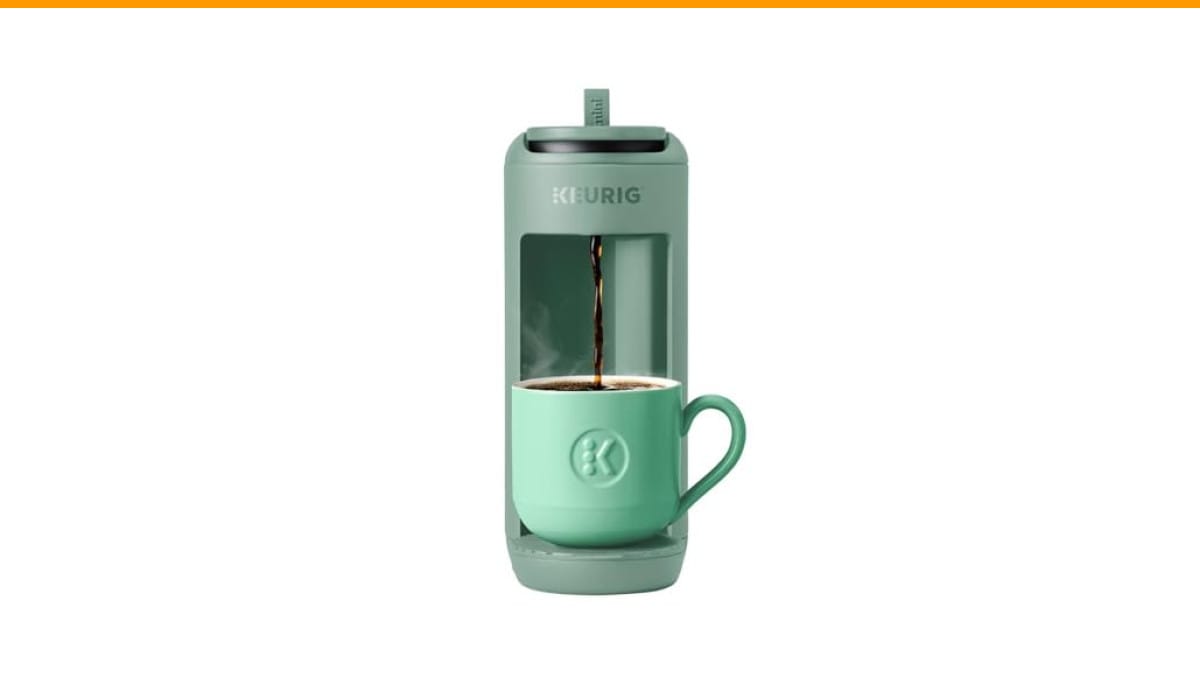
If you are shopping for a compact option, the Keurig K-Mini Mate Single Serve K-Cup Pod Coffee Maker fits the bill. It is only 4 inches wide, brews up to a 12 oz cup, and fits a travel mug up to 7.25 inches tall. Its small footprint means less internal volume to heat, which helps keep energy use on the lower end of the scale.
The Short Answer: How Much Does It Really Cost?
Let’s cut through the noise. A typical single serve coffee maker draws between 900 and 1,500 watts during the brewing cycle. That cycle lasts about 60 to 90 seconds. The math works out to roughly 0.02 to 0.03 kWh per cup.
At the U.S. average electricity rate of about 16 cents per kWh, one cup costs less than half a cent in electricity. Brew one cup daily, and your yearly brewing cost lands between $1.50 and $3.00. That is less than the price of a single latte.
But that number excludes standby power. Most machines keep a heating element warm or maintain a small display. That draw is small, usually 20 to 50 watts, but it runs 23 hours a day. Over a year, that idle drain adds $25 to $40 to your bill. The machine costs more doing nothing than it does making coffee.
Breaking Down the Wattage: Brewing vs. Standby Power
Your brewer has two distinct energy phases. Understanding the split helps you target savings where they actually exist.
The Brewing Cycle: Fast and Furious
During brewing, the machine pulls maximum wattage to heat water quickly. A Keurig K-Mini uses about 1,200 watts. A Nespresso Vertuo pulls around 1,350 watts. The heating element does the heavy lifting, bringing water from tap temperature to near boiling in under a minute.
The pump and pressure stage uses far less. For a Keurig, the pump draws maybe 100 watts. For a Nespresso, the 19-bar pump is similar. The energy split is roughly 90% heating, 10% pumping. That means the water temperature you start with matters. Cold tap water in winter costs more to heat than room-temperature water in summer.
The brewing cycle is short enough that total energy use stays low. A 90-second brew at 1,200 watts equals 0.03 kWh. That is a negligible load on your home’s electrical system.
The Hidden Cost of ‘Ready’ Mode (Vampire Power)
Here is where the money leaks. Most single serve machines do not fully power off. They enter a standby state that keeps the internal electronics alive. The Keurig K-Elite, for example, draws about 25 watts in standby. The Nespresso Vertuo Plus draws closer to 40 watts.
Leave a 30-watt machine plugged in for a full year, and you consume 262.8 kWh. At 16 cents per kWh, that is $42.05. That is more than the annual brewing cost for most heavy users. The machine’s auto-off feature, which usually kicks in after 2 hours, reduces but does not eliminate this drain.
Unplugging the machine when not in use is the single most effective way to cut its electricity bill. A simple smart plug with a timer can automate this if you forget.
Single-Serve vs. Drip: The True Cost Per Cup
People assume drip machines are cheaper to run. They are, but not for the reason you think. A standard 12-cup drip maker uses 800 to 1,200 watts, but it runs for 10 to 15 minutes to brew a full pot. That is 0.15 to 0.3 kWh per pot.
Divide that by 12 cups, and a drip coffee maker uses about 0.012 to 0.025 kWh per cup. That is nearly identical to a single serve brewer. The real difference is the carafe. A drip machine with a glass carafe on a hot plate draws 100 to 200 watts for hours, keeping the coffee warm. That is where drip machines lose the efficiency battle.
A single serve brewer heats only the water you need, for the time you need it. There is no warming plate. For a single cup drinker, the single serve machine is often the more efficient choice. For a household brewing a full pot, the drip machine wins because the per-cup energy is slightly lower, provided you turn off the hot plate after pouring.
The table below compares the real-world energy profile of common brewing methods.
| Method | Wattage Range | Energy Per Cup (kWh) | Standby Drain | Annual Cost (1 cup/day) |
|---|---|---|---|---|
| Single Serve (Keurig) | 1,200 – 1,500 W | 0.02 – 0.03 | 20 – 40 W | $1.50 – $3.00 (brew only) |
| Single Serve (Nespresso) | 1,250 – 1,350 W | 0.02 – 0.03 | 30 – 40 W | $1.50 – $3.00 (brew only) |
| Drip (Glass Carafe) | 800 – 1,200 W | 0.015 – 0.025 | 1 – 5 W (clock) | $1.00 – $2.00 (brew only) |
| Drip (Thermal Carafe) | 800 – 1,200 W | 0.015 – 0.025 | 1 – 5 W (clock) | $1.00 – $2.00 (brew only) |
| French Press (Electric Kettle) | 1,000 – 1,500 W | 0.05 – 0.08 | 0 W | $3.00 – $5.00 |
How to Calculate Your Exact Annual Cost (Simple Formula)
You do not need a degree in electrical engineering to figure this out. Grab your electric bill and a calculator. The formula takes three steps.
- Find your machine’s wattage. It is printed on the bottom label. Most single serve brewers list between 900 and 1,500 watts.
- Convert watts to kilowatts. Divide by 1,000. A 1,200-watt machine is 1.2 kW.
- Multiply by hours used per day. Brewing takes 0.025 hours (90 seconds). Multiply 1.2 kW by 0.025 hours to get 0.03 kWh per brew.
Now multiply that by your cost per kWh, found on your bill. Then multiply by 365 days. For a daily brewer at 16 cents per kWh, the math looks like this: 0.03 kWh x $0.16 x 365 = $1.75 per year.
Add standby power the same way. A 30-watt draw is 0.03 kW. Multiply by 24 hours, then by 365 days, then by your rate. That is 262.8 kWh per year, or $42 at 16 cents. The formula is identical, just with a longer run time.
Most people find the standby cost is 10 to 20 times higher than the brewing cost. That single number changes how you view the appliance.
The Biggest Energy Hogs: Specific Keurig & Nespresso Models
Not all single serve machines are created equal. Here is the specific wattage for popular models, based on manufacturer specs and independent testing.
- Keurig K-Mini: 1,200 watts brewing, 20 watts standby. The auto-off kicks in after 90 seconds of inactivity, which is excellent.
- Keurig K-Elite: 1,500 watts brewing, 25 watts standby. The stronger heating element brews faster but uses slightly more energy per cup.
- Keurig K-Café: 1,500 watts brewing, 30 watts standby. The milk frother adds a separate motor that draws 50 watts when used.
- Nespresso Vertuo Next: 1,350 watts brewing, 40 watts standby. The centrifusion extraction uses more power during the spin cycle.
- Nespresso Essenza Mini: 1,260 watts brewing, 15 watts standby. This is the most energy-efficient Nespresso model available.
The pattern is clear. Machines with faster heating elements use more watts but finish quicker, so the total energy per cup stays similar. The standby draw is where models diverge significantly. The Essenza Mini’s 15-watt standby costs about $21 a year. The Vertuo Next’s 40-watt standby costs about $56 a year. That is a $35 difference for the same daily cup of coffee.
If you are comparing models, ignore the peak wattage. Look at the standby power spec. That is the number that determines your annual electricity cost.
5 Actionable Tips to Slash Your Coffee Electricity Bill
You do not need to give up your morning ritual to save a few dollars. These five changes cut the waste without changing the taste.
- Unplug the machine when not in use. This eliminates the entire standby drain. A power strip with a switch makes this a one-touch habit.
- Use the auto-off feature. Most Keurig models have a setting that powers down after 2 hours. Enable it if you forget to unplug.
- Brew only what you drink. A 12 oz cup uses 33% more energy than an 8 oz cup. That is a small difference per brew, but it adds up over a year.
- Start with hot tap water. If your tap water is warm, the machine uses less electricity to reach brewing temperature. Do not use boiling water, as it can damage the machine.
- Descale regularly. Mineral buildup makes the heating element work harder and longer. A clean machine brews faster and uses less energy. Check our vinegar descaling guide for the proper method.
Frequently Asked Questions
Does using a smaller cup size save electricity?
Yes, but the savings are modest. An 8 oz brew uses about 0.02 kWh, while a 12 oz brew uses about 0.03 kWh. That is a difference of 0.01 kWh, or about 0.16 cents per cup. Over a year of daily brewing, you save about 58 cents. The machine heats the same amount of water regardless of cup size, so the savings come only from the reduced brew time.
Is it cheaper to use a French press or pour-over?
It depends on how you heat the water. A French press with an electric kettle uses about 0.05 to 0.08 kWh per cup, which is more than a single serve brewer. That is because the kettle heats a full liter of water, not just the 8 oz you need. A pour-over on the stove uses gas or electric heat, which is harder to compare. In pure electricity terms, a single serve brewer is usually more efficient per cup than a kettle-based method.
Does descaling improve energy efficiency?
Yes, and it is measurable. A layer of calcium scale acts as an insulator on the heating element. The element has to run longer to transfer the same heat to the water. A heavily scaled Keurig takes 25% longer to brew a cup. That translates to 25% more energy per brew. Descaling every 3 to 6 months removes that penalty. For the best results, follow our proper cleaning routine.
Does a single serve coffee maker use more electricity than a drip machine?
For a single cup, no. A single serve brewer uses about 0.02 to 0.03 kWh per cup. A drip machine uses about 0.015 to 0.025 kWh per cup. The difference is negligible. The drip machine becomes less efficient if you leave the hot plate on to keep the carafe warm. That plate draws 100 to 200 watts and can run for hours. A single serve brewer has no equivalent waste.
Is it worth buying an Energy Star certified single serve maker?
Most single serve coffee makers do not carry Energy Star certification. The category is small, and the certification focuses on standby power. If you find a model with the label, it typically uses less than 1 watt in standby mode. That is a significant improvement over the 20 to 40 watt average. However, the certification is rare. Your better bet is to check the manual for the standby wattage and compare models directly.
What You Should Remember About Coffee Machine Power
Here is the short version for anyone skimming.
- A single serve brewer uses about 0.02 to 0.03 kWh per cup, costing less than half a cent at average rates.
- Brewing energy is negligible. The standby drain, 20 to 40 watts, costs $25 to $56 a year if left plugged in.
- Unplugging the machine or using a smart plug eliminates the vampire power entirely.
- Drip machines are not cheaper per cup. They only win if you brew a full pot and turn off the hot plate.
- Smaller cup sizes save about 0.01 kWh per brew, which is pennies per year.
- Descaling every few months cuts brew time and energy use by up to 25%.
- The wattage rating on the box is less important than the standby power spec. Compare that number first.
The takeaway is simple. Your coffee maker is not the energy hog on your counter. The refrigerator, the water heater, and the HVAC system dwarf it. But the standby drain is pure waste, and it is the easiest $40 a year you will ever save. Unplug the machine, brew your cup, and plug it back in. Your wallet will not notice the difference, but your electric bill will.
Products related to this article
Sponsored / affiliate links. As an Amazon Associate I earn from qualifying purchases. I may earn additional commission from eligible campaigns.
 HomeBeyond Espresso Coffee Maker 12 Cups, Classic Stovetop Espresso Maker, 600ml / 20oz Coffeemaker for Gas & Ceramic Stovetops (Silver)
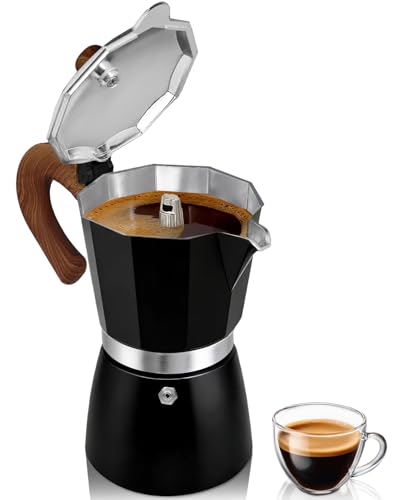 Belly Moka Coffee Maker Stovetop Espresso Maker 9 Cup Aluminum Moka Pot Percolator 15oz 450ml Easy Brewing for Electric Ceramic Stoves Home Camping Italian Cuban Café Classic Black
 Belly Moka Coffee Maker Stovetop Espresso Maker 6 Cup Aluminum Moka Pot Percolator 10oz 300ml Easy Brewing for Electric Ceramic Stoves Home Camping Italian Cuban Café Classic Silver