You bought a great bag of beans, dialed in your grinder, and the coffee still tastes flat or muddy. The problem might not be the beans. It might be the paper filter sitting in your dripper.
Most people grab whatever filters are on sale and never think about how the paper changes the brew. But filter thickness, pore size, and shape directly control how fast water moves through the coffee bed. That speed determines extraction, body, and clarity. This guide walks you through the science of choosing the right paper filter, matching it to your brewer, and fixing common brew problems by switching filters.

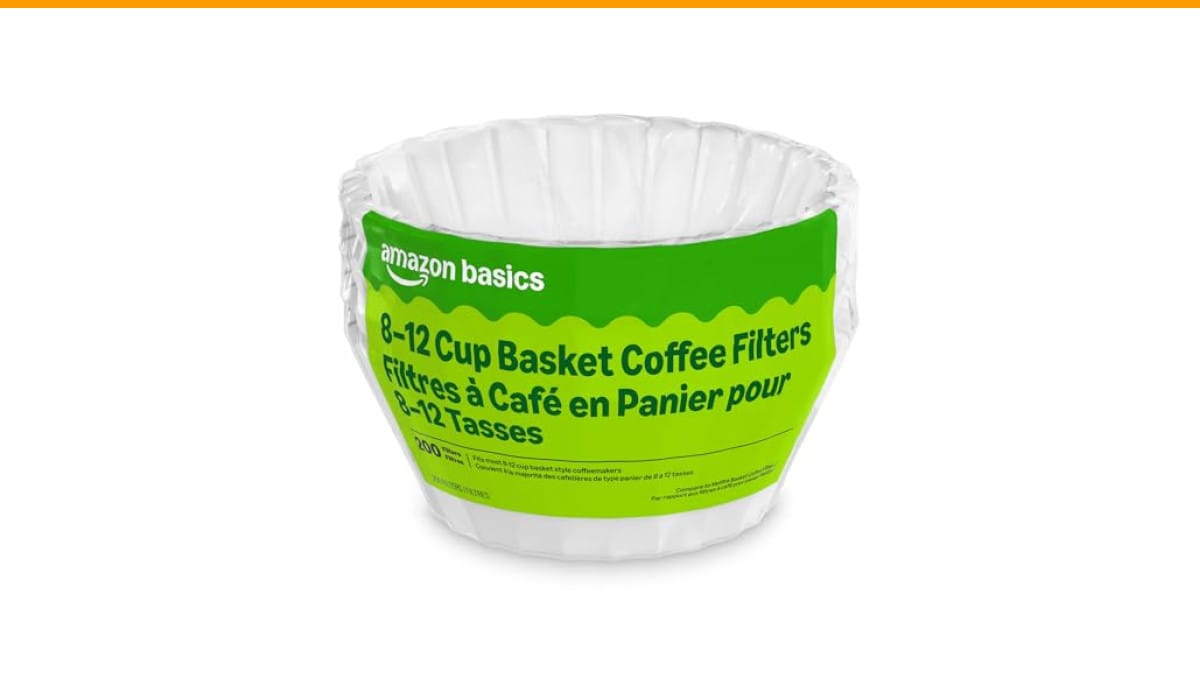
Amazon Basics
Amazon Basics Basket Coffee Filters for 8-12…
- SHIPMENT CONTAINS: 200 white basket coffee filters that fit most 8-12 cup basket coffeemakers
- SUPERIOR FILTRATION: Provides excellent coffee filtration that eliminates gritty sediment while allowing the great coffee taste to…
- INDUSTRIALLY COMPOSTABLE DESIGN: Filter meets ASTM D6868-11 standard and can be composted where municipal or industrial composting…
As an Amazon Associate I earn from qualifying purchases.
You’ll learn the difference between cone, flat-bottom, and basket filters, what bleached vs unbleached actually means, and how to diagnose a stalled or papery brew. By the end, you’ll know exactly which filter to buy for your setup.
If you use a standard drip machine, a solid starting point is the Amazon Basics Basket Coffee Filters — 200 white basket filters that fit most 8-12 cup coffeemakers. They offer consistent filtration without the hefty price tag of specialty brands.
Why the Paper Filter Matters More Than Your Grinder
Your grinder gets all the credit, but the filter is the unsung hero of brew clarity. A paper filter traps coffee oils and fine particles that metal or cloth screens let through. Those oils carry flavor compounds, but they also carry bitterness and sediment.
Think of it this way: your grinder determines how much surface area the water touches. The filter determines what ends up in your cup. A paper filter with tight pores produces a clean, bright cup with no grit. A coarse or damaged filter lets fines through, which over-extract and taste harsh.
Paper filters also affect flow rate. Thicker paper slows water down, increasing contact time. Thinner paper speeds things up, which can under-extract if your grind is too coarse. This is why choosing a filter is not just about fit — it’s about matching the paper’s behavior to your brew recipe.
For French press lovers who want to try paper filtration, you can use a paper filter in an AeroPress or even layer one on top of a metal screen in a pour-over. The result is a cleaner cup with less body, which some people prefer for light roasts.
Anatomy of a Filter: Thickness, Pore Size, and Flow Rate
All paper filters are not created equal. The two main variables are thickness and pore size. Thickness controls how much water can pass through per minute. Pore size controls what particles get through.
Standard paper filters range from about 0.2 mm to 0.5 mm thick. A thicker filter like the Chemex (about 0.4 mm) slows flow dramatically, which is why Chemex brews take longer and produce a very clean, tea-like cup. A thinner V60 filter (around 0.2 mm) flows faster, giving you more control over extraction through pour rate.
Pore size is measured in microns. Most paper filters have pores between 10 and 20 microns. Metal filters have pores around 100 to 300 microns, which is why they let so much more through. Cloth filters sit somewhere in between, around 50 microns.
Here’s what that means practically: a tight filter (small pores, thick paper) removes more oils and fines. You get less body, more clarity, and fewer bitter compounds. A loose filter (larger pores, thinner paper) lets more oils through. You get a heavier mouthfeel and more complexity, but also more sediment and potential bitterness.
Pro tip: if your brew tastes hollow or thin, try a slightly thicker filter to slow extraction. If it tastes muddy or gritty, switch to a tighter filter with smaller pores.
Conical vs. Flat-Bottom vs. Basket: Matching the Filter to Your Brewer
The shape of the filter determines the shape of the coffee bed. That geometry changes how water flows through the grounds. Using the wrong shape is the most common mistake home brewers make.
Conical (V60, Kalita Wave)
Conical filters have a 60-degree angle, which creates a deep, narrow coffee bed. Water flows through the center faster than the edges, which is why V60 brewing requires a gooseneck kettle and careful pouring technique. The depth of the bed means more extraction from the same amount of coffee, so you can use a slightly coarser grind.
Kalita Wave filters are also conical but have a flat bottom with three small holes. That design evens out flow rate and makes the brewer more forgiving. If you’re new to pour-over, a Kalita Wave filter is a better starting point than a V60.
Matching the right filter to the right dripper matters. A V60 filter only fits V60 drippers. Kalita filters fit Kalita and some other flat-bottom brewers, but not all. Check the diameter of your dripper before buying.
Flat-Bottom (Melitta, Beehouse)
Flat-bottom filters sit flat in the dripper, creating a shallow, wide coffee bed. Water flows through the entire bed at a more even rate, which makes these filters more forgiving than cones. They work well with medium to medium-fine grinds.
Melitta filters are the most common flat-bottom option. They come in sizes 1, 2, and 4, which correspond to the amount of coffee you’re brewing. A size 2 fits most single-serve drippers. Size 4 fits larger brewers and batch brewing.
Beehouse drippers also use flat-bottom filters, but they’re less common. If you have a Beehouse, buy filters specifically designed for it — standard Melitta filters may not fit properly.
Basket (Drip Machines)
Basket filters are for automatic drip coffee makers. They’re flat and rectangular with wavy edges. Most machines take either a #4 basket filter or a cone filter, but not both. Never force a cone filter into a basket machine — it won’t seal properly and water will channel around the edges.
Basket filters come in two styles: flat-bottom and v-shaped. Flat-bottom baskets are the standard for 8-12 cup machines. V-shaped baskets are less common but found in some older models. Measure your basket before ordering.
The Amazon Basics basket filters are a reliable choice for most standard drip machines. They’re thick enough to trap fines but not so thick that they stall the brew cycle.
Bleached vs. Unbleached vs. Bamboo: The Real Difference
This is where a lot of misinformation lives. Bleached filters are not inherently bad, and unbleached filters are not automatically better. Here’s what actually matters.
Bleached filters use oxygen or chlorine dioxide to whiten the paper. Oxygen-bleached filters (often labeled as “oxygen whitened”) are the standard for specialty coffee brands. They produce no dioxins and are safe to use. Chlorine-bleached filters are less common now but still exist in cheap brands. They can leave a faint chemical taste if not rinsed properly.
Unbleached filters are brown and have a more noticeable paper taste. That taste comes from lignin, the natural glue in wood fibers. Rinsing the filter with hot water before brewing eliminates most of it. The trade-off is that unbleached filters are slightly more porous, so they flow a bit faster.
Bamboo filters are a newer option. They’re made from bamboo pulp, which grows faster than trees and requires less water. In testing, bamboo filters flow similarly to wood pulp filters but can be harder to find in specialty sizes. They also cost more per filter.
For compostability, check the label. Filters that meet ASTM D6868 standards are industrially compostable. That means they break down in municipal composting facilities, not necessarily in your backyard pile. Wood pulp filters are generally compostable, but bleached ones may take longer to break down.
My honest take: buy oxygen-bleached filters for the cleanest taste and easiest rinsing. Buy unbleached if you want to avoid any chemical processing and don’t mind the papery flavor after rinsing. Bamboo is a niche choice — good for the environment, but not worth hunting down unless you specifically want it.
The Size Chart You Actually Need (With Common Misfit Pitfalls)
Filter sizes are not standardized across brands. A #2 Melitta filter fits a Melitta dripper, but a #2 Chemex filter is a completely different shape. Here’s a practical chart for common brewers.
| Brewer | Filter Shape | Common Size | Notes |
|---|---|---|---|
| Hario V60 | Conical (60°) | 01, 02, 03 | Size 02 is most common for 1-2 cups |
| Kalita Wave | Conical, flat bottom | 185, 155 | 185 fits 2-4 cups, 155 fits 1-2 cups |
| Melitta | Flat-bottom | #1, #2, #4 | #2 fits most single drippers |
| Chemex | Conical, thick | Square, Half, 8-cup, 10-cup | Folded square filters for classic models |
| Beehouse | Flat-bottom | #2, #4 | Similar to Melitta but not identical |
| Standard drip machine | Basket | #4 basket, 8-12 cup | Measure your basket width first |
| AeroPress | Disc | Standard round | Fits AeroPress and AeroPress Go |
Common misfit pitfalls: buying a #4 cone filter when you need a #4 basket. They are not interchangeable. Also, some European brands use different sizing — a size 4 from one brand may not fit another brand’s dripper. When in doubt, measure the diameter of your dripper’s bottom and compare it to the filter’s flat width.
For Chemex, you can fold the square filters yourself, but it takes practice to get the fold right. Pre-folded filters are easier and worth the extra cost if you brew daily.
How Filter Choice Changes Your Cup: Body, Clarity, and Acidity
Here’s the part that most guides skip. The filter isn’t just a sieve — it’s an extraction tool. Changing your filter changes the coffee’s flavor profile in measurable ways.
Body refers to the weight and texture of the coffee on your tongue. Metal filters produce a heavy, syrupy body because they let oils through. Paper filters produce a light, clean body. Cloth filters fall in the middle. If you like a full-bodied cup, paper filters will feel thin. If you prefer a crisp, wine-like cup, paper is the way to go.
Clarity is how distinct individual flavor notes are. Tight paper filters remove sediment and oils, which sharpens the perception of acidity and floral notes. Loose filters blend everything together, making the cup taste more uniform. For light-roast single origins, clarity matters a lot. For dark roasts, body matters more.
Acidity is not just about pH — it’s about perceived brightness. Paper filters highlight acidity because they remove the bitter compounds that mask it. That’s why a V60 brew tastes more acidic than a French press brew with the same beans.
If you want to experiment, brew the same coffee with a paper filter and a metal filter side by side. The difference is obvious. The paper brew will be cleaner and brighter. The metal brew will be heavier and more complex, but with more sediment at the bottom of the cup.
Troubleshooting: Why Your Brew Stalled (Or Tastes Papery)
Two common problems: your brew stalls (water sits on top of the grounds for minutes) or your coffee tastes like wet cardboard. Both are fixable by changing your filter.
Stalling usually means the filter is too thick or the grind is too fine. If you’re using a Chemex filter with a fine grind, water will pool and take forever to drain. Fix it by grinding coarser or switching to a thinner filter. A V60 filter flows faster than a Chemex filter, so if you’re using a Chemex-style thick filter in a V60, that’s your problem.
Another cause of stalling is using a filter that’s too small for the dripper. If the filter doesn’t sit flush against the walls, water bypasses the coffee bed and flows down the sides. That produces weak, under-extracted coffee. Make sure the filter fits snugly and is fully unfolded.
A papery taste comes from not rinsing the filter. Always rinse your paper filter with hot water before adding coffee. This wets the paper, removes loose fibers, and eliminates the paper flavor. For unbleached filters, a longer rinse (30 seconds) is better.
If you still taste paper after rinsing, switch to an oxygen-bleached filter. Some unbleached brands have a stronger flavor than others, and it varies batch to batch.
For a clogged coffee maker, a separate issue, check out our cleaning guide — a dirty machine can also slow your brew cycle.
The Cost-Per-Brew Breakdown: Paper vs. Metal vs. Cloth
Let’s talk money. Paper filters are a recurring cost, but they’re cheap. Metal and cloth filters cost more upfront but last for years. Here’s the math for a daily brewer (30 cups per month).
Paper filters cost between 2 and 10 cents per filter, depending on brand and whether you buy in bulk. A good oxygen-bleached filter from a specialty brand runs about 5 cents each. At 30 brews per month, that’s $1.50 per month, or $18 per year.
Metal filters cost $15 to $30 upfront. They last for years if you clean them regularly. After one year, you’ve spent $15 to $30 total, which is cheaper than paper. After two years, the savings are clear. The catch is that metal filters let through oils and fines, so your cup will be different. You also have to clean them after every use — a quick rinse under hot water, plus a deeper clean with a brush every week.
Cloth filters cost $5 to $15 each and last about 6 to 12 months with proper care. They need to be boiled or soaked in baking soda regularly to prevent mold. That’s a hassle, but cloth filters produce a unique cup — more body than paper, more clarity than metal.
For most home users, paper filters are the best value because they’re cheap, consistent, and disposable. If you want to save money in the long run and don’t mind the cleaning, a metal filter pays for itself within a year.
Final Verdict: The Best Filter for Your Brewing Style
Here’s a quick decision tree to find your filter.
- You use a drip machine: buy basket filters. Start with a standard white filter like the Amazon Basics basket filters — they’re consistent and inexpensive.
- You use a pour-over and want clarity: buy V60 filters (size 02) or Kalita Wave filters. Go with oxygen-bleached for the cleanest taste.
- You want a full-bodied cup: skip paper entirely and use a metal filter. Or use a paper filter with a coarser grind to increase flow and leave more oils in.
- You want zero waste: buy a metal filter or a cloth filter. Be ready to clean them regularly.
- You’re on a tight budget: unbleached paper filters cost the least and work fine if you rinse them well.
One last tip: buy filters in bulk. They don’t expire, and the per-filter cost drops significantly. A 200-count box lasts most home brewers months.
If your coffee still tastes off after switching filters, the problem might be your machine. A dirty brewer can ruin even the best beans. Check our proper cleaning guide and our maintenance tips to keep your equipment in shape.
How often should I replace my paper coffee filter?
Use a fresh filter for every brew. Paper filters are single-use. Reusing them will produce a weak, stale cup and can harbor bacteria. If you want to reduce waste, switch to a metal or cloth filter instead of reusing paper.
Does the color of the filter (white vs. brown) affect the taste?
Not directly. The color comes from the bleaching process. White filters are bleached; brown filters are unbleached. Unbleached filters can taste papery if not rinsed, but after a proper rinse, the taste difference is negligible. The bigger factor is the paper’s thickness and pore size, not its color.
Can I use a cone filter in a basket coffee maker?
No. Cone filters and basket filters have different shapes and sizes. A cone filter won’t sit flat in a basket brewer, causing water to bypass the coffee and produce weak, watery brew. Always match the filter shape to your brewer’s basket.
Are bamboo paper filters better for the environment than wood pulp filters?
Bamboo grows faster than trees, so bamboo filters have a smaller land footprint. However, the manufacturing process still uses energy and chemicals. Look for filters certified by the Sustainable Forestry Initiative (SFI) or similar programs. The Amazon Basics basket filters are SFI-certified, which means the wood pulp comes from responsibly managed forests.
Why does my coffee taste bitter even with a paper filter?
Bitterness usually comes from over-extraction, not the filter. Your grind is too fine, your water is too hot, or your brew time is too long. Try a coarser grind or a faster filter. Also, make sure you’re using the right filter size — a filter that’s too small can cause channeling, which leads to uneven extraction.
Three Common Mistakes to Avoid
- Buying the wrong shape. Check your brewer’s basket shape before ordering. Cone and basket filters are not interchangeable.
- Skipping the rinse. Always rinse your paper filter with hot water before brewing. This removes paper taste and preheats your dripper.
- Ignoring filter thickness. A thick filter like Chemex needs a coarser grind. A thin V60 filter needs a finer grind. Match your grind to your filter’s flow rate.
Choosing the right paper filter is a small change that makes a big difference. Take five minutes to measure your brewer, check your current filter’s shape, and try a different brand if your coffee isn’t tasting right. Your morning cup will thank you.
Products related to this article
Sponsored / affiliate links. As an Amazon Associate I earn from qualifying purchases. I may earn additional commission from eligible campaigns.
 HomeBeyond Espresso Coffee Maker 12 Cups, Classic Stovetop Espresso Maker, 600ml / 20oz Coffeemaker for Gas & Ceramic Stovetops (Silver)
 Stainless Steel Moka Pot Coffee Filter Disc for Espresso Brewing, Coffee Maker Replacement Filter Plate for Home Office Coffee Bar Cafe (FOR 4 Cups)
 Quick Heating Cup Warmer, Three Temperature Settings, Splashproof and Portable, for Coffee, Milk, Lightweight ABS Material