You bought a nice bag of beans, ground them fresh, and used your fancy dripper. The coffee still tasted flat and slightly burnt. The problem might not be your beans. It might be the water you poured over them.
An electric gooseneck kettle gives you two things a regular kettle cannot: precise temperature control and a slow, steady pour. But owning one doesn’t automatically make better coffee. You have to use it correctly. This article covers the specific mistakes people make with these kettles and how to fix them, so you can actually taste the difference in your cup.

Cosori
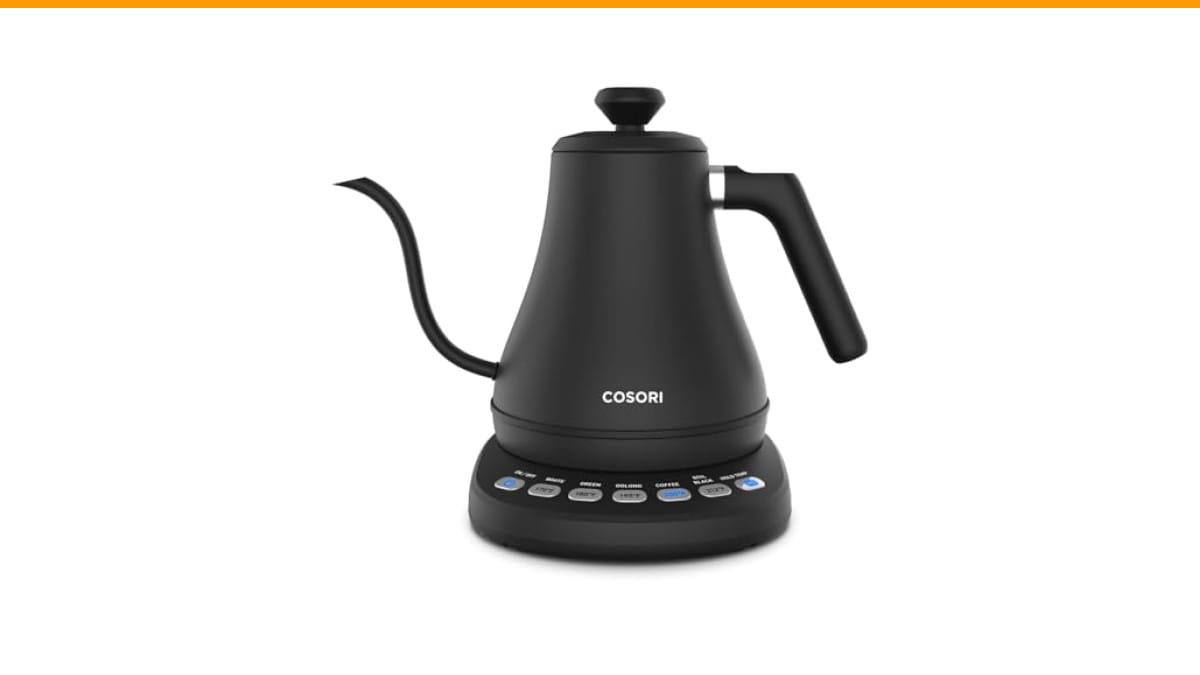
Cosori Gooseneck Electric Kettle with Temperature Control,…
- 5 𝑶𝑵𝑬-𝑻𝑶𝑼𝑪𝑯 𝑷𝑹𝑬𝑺𝑬𝑻𝑺: Your Gooseneck Electric Kettle features 5 precise temperature presets. These accurate presets make brewing co…
- 1-𝑯𝑶𝑼𝑹 𝑲𝑬𝑬𝑷 𝑾𝑨𝑹𝑴: Use the HOLD TEMP function to keep the contents of your kettle warm for up to 1 hour so that you can enjoy your…
- 𝑬𝑹𝑮𝑶𝑵𝑶𝑴𝑰𝑪 𝑫𝑬𝑺𝑰𝑮𝑵: Refined ergonomic design allows for precise water flow control for perfect pour-over brewing
As an Amazon Associate I earn from qualifying purchases.
If you are shopping for a kettle, the Cosori Gooseneck Electric Kettle with Temperature Control handles the basics well. It has five presets and a hold-temp function to keep water within 5°F of your target. The 304 stainless steel interior means no plastic taste leaching into your water, which matters more than you might think.
Myth: Boiling Water Is Always the Right Choice
Most people press the boil button and pour immediately. That is a mistake. Water at a rolling boil sits around 212°F (100°C) at sea level. Pouring that directly onto coffee grounds extracts too much bitterness and burns the delicate oils.
Specialty coffee associations recommend brewing between 195°F and 205°F (90°C to 96°C). The sweet spot for most medium roasts is 200°F to 205°F. Dark roasts prefer cooler water, around 195°F, because they are less dense and extract faster.
Here is what happens at different temperatures:
- 195°F to 200°F: Best for dark roasts and blends. Slower extraction, less bitterness.
- 200°F to 205°F: Ideal for medium roasts. Balanced sweetness and acidity.
- 205°F to 212°F: Only for light roasts. They need the heat to extract properly.
If your kettle lacks a temperature display, let boiled water sit for 30 to 60 seconds before pouring. That simple pause drops the temperature roughly 10°F. It is not precise, but it beats pouring boiling water straight onto your grounds.
Related reading: bitter coffee causes often trace back to water temperature issues, so check that if your cup tastes harsh.
Myth: More Watts Means Better Extraction
People assume a kettle with higher wattage heats faster and somehow brews better coffee. Heating speed has nothing to do with extraction quality. Wattage only affects how quickly you reach your target temperature.
A 1500-watt kettle boils water in about three minutes. A 1000-watt kettle takes closer to five. Both produce identical water at the same temperature. The difference is convenience, not flavor.
What actually matters is temperature stability during the pour. A good gooseneck kettle maintains its set temperature while you pour, rather than dropping significantly. The Cosori model holds within 5°F, which is acceptable for home brewing. Professional kettles hold tighter, but you will not notice the difference unless you are doing competition-level pour-overs.
One thing to watch: if your kettle has a hold temp function, do not reboil water repeatedly. Reboiling removes dissolved oxygen and makes the water taste flat. The coffee will taste dull, no matter what beans you use.
How Your Pouring Technique Changes the Flavor
The gooseneck spout exists for a reason. It gives you control over flow rate, which directly affects extraction.
When you pour fast and aggressively, you agitate the coffee bed too much. Fine particles migrate to the bottom and clog the filter. The brew stalls, over-extracts, and tastes bitter. When you pour too slowly, the water temperature drops and the coffee comes out weak and sour.
Here is a practical approach for a standard 12-ounce pour-over:
- Bloom: Pour 50 grams of water over the grounds and wait 30 to 45 seconds. This releases carbon dioxide and preps the bed.
- Main pour: Pour in slow, concentric circles starting from the center. Keep the stream thin and consistent.
- Pulse pours: Instead of one continuous pour, do three or four smaller pours. This keeps the water temperature more stable and prevents over-agitation.
- Finish time: Aim for a total brew time between 2:30 and 3:30. If your brew finishes faster, grind finer. If it takes longer, grind coarser.
The kettle spout also affects your pour accuracy. A gooseneck lets you hit the same spot repeatedly without splashing. That consistency is what separates a good cup from a great one.
If you notice your coffee tastes inconsistent, check your coffee grinder cleaning routine. Stale oils on burrs can ruin a brew just as fast as bad water temperature.
Water Quality Is Half the Battle
Your kettle only heats whatever you put in it. Tap water with high mineral content leaves scale buildup inside the kettle and makes coffee taste chalky. Filtered water usually produces a cleaner, sweeter cup.
That said, distilled water is too pure. Coffee needs some minerals to extract properly. If you use distilled water, your coffee will taste flat and hollow. The ideal is filtered water with moderate hardness, around 150 parts per million of dissolved solids.
If you have hard tap water, consider using bottled spring water for brewing. Yes, it costs more, but the difference is noticeable within one cup. Also, regular descaling of the kettle is non-negotiable. Scale inside the kettle not only affects heating efficiency but also flakes off into your water.
Here is a comparison of common water sources for brewing:
| Water Type | Flavor Impact | Best For | Main Drawback |
|---|---|---|---|
| Tap water (hard) | Chalky, mineral-heavy | Nothing specific | Leaves scale, dulls flavor |
| Filtered tap water | Clean, balanced | Most home brewers | Requires filter replacement |
| Bottled spring water | Bright, sweet | Light roasts, pour-over | Cost per cup is higher |
| Distilled water | Flat, hollow | Not recommended | No minerals for extraction |
If you have been using tap water and wondering why your coffee tastes off, descale your kettle first. The process is simple and worth doing monthly. Read our guide on descaling coffee machines for a step-by-step method that applies to kettles too.
Frequently Asked Questions
Why does my coffee taste burnt even when I use a gooseneck kettle?
You are likely brewing at too high a temperature. If you press the boil button and pour immediately, the water is above 205°F. Let the water sit for 30 seconds after boiling, or set the kettle to 200°F if it has presets. Burnt flavor also comes from over-extraction, so check your grind size.
Can I use an electric gooseneck kettle for tea?
Yes, but you need different temperatures. Green tea should brew around 175°F, while black tea prefers 200°F. The temperature presets on most gooseneck kettles cover this range, so it works well for both coffee and tea drinkers.
How often should I descale my electric kettle?
Once a month if you have hard water, every two to three months if you use filtered water. Scale buildup affects heating time and can leave white flakes in your cup. Use a vinegar solution or a commercial descaler. Rinse thoroughly afterward so no vinegar taste remains.
Does the material of the kettle interior matter?
Yes. Plastic interiors can impart a chemical taste, especially when water is heated to high temperatures. Stainless steel interiors, like the one in the Cosori model, do not leach flavors. Glass is also neutral but more fragile. Avoid aluminum, which can react with acidic water and add a metallic taste.
Why does my coffee taste weak even when I use the correct temperature?
Weak coffee usually means under-extraction. Your water is passing through the grounds too quickly. Grind finer to slow the flow, or use a slightly higher water temperature. Also check that your pour is slow enough; a fast pour from any kettle can cause channeling, where water finds a path through the grounds instead of saturating them.
What Actually Moves the Needle
After testing different kettles and techniques side by side, these are the changes that make the biggest difference in your cup:
- Stop boiling and pouring immediately. Wait for the temperature to drop to 200°F.
- Use filtered water. Hard tap water ruins more cups than bad beans.
- Descale your kettle monthly to keep the interior clean and heating consistent.
- Master the pulse pour method instead of dumping all water at once.
- Do not reboil water. Fresh water tastes better and brews cleaner coffee.
- If your kettle has a hold-temp feature, use it. It keeps water stable during long pour-overs.
- Keep your kettle spout clean. Old coffee residue on the spout can drip into your next brew and add stale flavors.
One last thing: the kettle is only one part of the chain. If your beans are old or your grinder is dirty, no kettle will save the cup. But once those basics are in place, paying attention to water temperature and pour technique will give you a noticeably cleaner, sweeter, more flavorful brew.
Products related to this article
Sponsored / affiliate links. As an Amazon Associate I earn from qualifying purchases. I may earn additional commission from eligible campaigns.
 Coffee Mug Warmer & You are Awesome Mug Set, Electric Cup Warmer for Desk
 SOLUSTRE Electric USB Coffee Cup Warmer with Temperature Settings Portable Milk and Beverage Heating Coaster for Office Desk Small Lightweight Design Easy to Clean Surface Multi Functional
 Electric Cup Warmer Smart Precise Temp Control Auto Shut Off Heater