You pull a shot, the portafilter is hot, and there’s a wet, dense puck of coffee stuck to the basket. Tapping it against the edge of the trash can usually ends with coffee grounds on the floor and a bent basket edge. That’s the exact moment a knock box earns its place on your counter.
This guide covers the proper technique for using an espresso knock box, from grip and angle to maintenance. You’ll also see how to pick the right size and material for your home setup, and what mistakes to avoid. By the end, you’ll knock out a puck in one clean motion without flinging grounds everywhere.

Auden Arctic
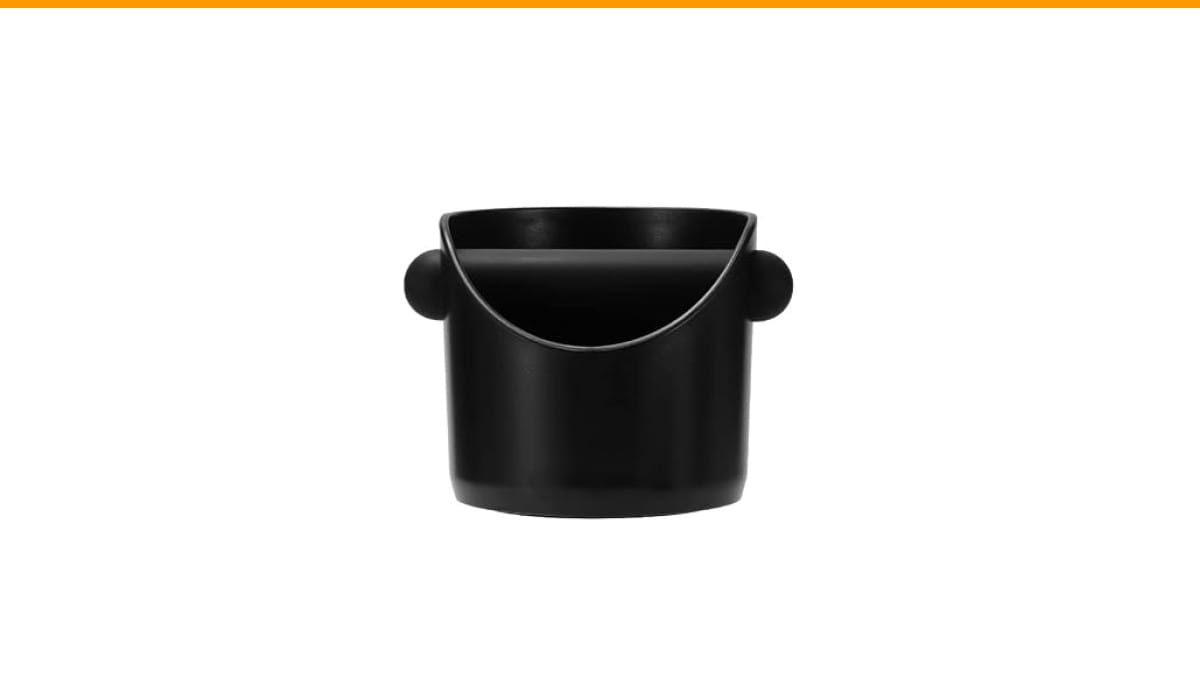
Coffee Knock Box, 4.6 in, Barista Style…
- Compact Design: This 4.6-inch barista-style knock box is perfect for collecting used espresso grounds from your espresso machine.
- Sturdy Construction: Made of heavy-duty plastic, the knock box features a non-slip base for stability.
- Removable Knock Rod: The included plastic knock rod allows for easy disposal of spent grounds.
As an Amazon Associate I earn from qualifying purchases.
If you’re setting up a home espresso bar, a compact model like the Auden Arctic knock box handles the basics well. Its 4.6-inch footprint fits next to most machines, and the removable plastic rod makes emptying the bin less awkward than tilting a heavy container.
Why Bother With a Knock Box at All?
Knocking a portafilter directly on a trash can rim bends the basket over time. A bent basket breaks the seal with the group head, which causes channeling and weak shots. A knock box gives you a solid, padded surface that absorbs the impact without deforming the metal.
It also contains the mess. Wet coffee grounds stick to everything. A dedicated bin keeps them off your counter, your floor, and your shoes. You dump the whole container once or twice a day instead of wiping down the kitchen after every shot.
For anyone pulling multiple shots in a row, a knock box speeds up the workflow. You don’t need to walk to the trash between each drink. You just knock, wipe, and dose again.
Step-by-Step: How to Use an Espresso Knock Box
There’s a right way and a wrong way to knock. The wrong way sends grounds flying and stresses your wrist. Here’s the method that works consistently.
- Position the box at waist height. Place it on a stable surface, not on a stool or stack of books. Your elbow should be at roughly a 90-degree angle when you hold the portafilter.
- Grip the portafilter from above. Wrap your fingers over the top of the handle, not underneath. This grip lets you snap your wrist downward without losing control.
- Hold the portafilter at a 45-degree angle. Tilt it so the basket faces the knock bar, but the bottom edge of the basket is slightly lower than the top edge.
- Strike the knock bar with the basket’s edge. Use a quick, firm motion. The impact should come from the basket rim, not the handle. You’re looking for one sharp hit, not repeated taps.
- Let the puck fall out. The puck should release cleanly into the bin. If it sticks, give the portafilter one light tap on the bar again. Don’t smash it repeatedly.
- Wipe the basket. A dry towel or a quick rinse removes any loose grounds before you refill. This step prevents old coffee from mixing into your next shot.
Pro tip: Don’t knock harder if the puck sticks. A wet puck happens when you underdose or stop the shot too early. Fix the dose, not the force.
Choosing the Right Knock Bar and Box Size
Knock bars come in two main styles: a single horizontal rod or a cross pattern. A single rod gives you a larger target, which helps when you’re rushing. A cross pattern holds the basket more securely, but you need to hit it dead center. For home use, a single rod is easier to live with.
Size matters more than you’d think. A 4.6-inch box works for most home portafilters, which are typically 58mm or smaller. If you have a commercial-sized 58mm basket with a deep ridge, measure the basket’s diameter before buying. The knock bar needs to be wider than the basket rim.
Weight also plays a role. A heavy box stays put when you knock. Light plastic boxes slide across the counter unless they have a non-slip base. The Auden Arctic model includes a non-slip base, which is a feature worth checking for on any knock box you consider.
Comparing Knock Box Materials and Features
| Feature | Plastic | Stainless Steel | Silicone |
|---|---|---|---|
| Weight | Light, may slide | Heavy, stable | Light, grips well |
| Durability | Good, can crack | Excellent | Good, can tear |
| Noise | Loud, hollow sound | Loud, metallic ring | Quiet, dampened |
| Cleaning | Easy, non-stick | Easy, but shows smudges | Easy, flexible |
| Price Range | Lowest | Highest | Mid-range |
| Best For | Budget home setups | High-volume use | Quiet mornings |
Plastic boxes are fine for most home baristas. They’re cheap, easy to clean, and the knock bar won’t dent your basket. Stainless steel looks better on a counter and lasts decades, but it costs more and rings like a bell. Silicone is the quietest option, but it can absorb odors over time.
One thing I’ve noticed in testing: plastic boxes with a smooth interior are much easier to empty. Grounds stick to textured surfaces. If you’re comparing models, run your hand inside the bin. Smooth wins.
Cleaning and Maintaining Your Knock Box
A knock box gets gross fast. Wet grounds sit in a dark, warm container, which is a perfect environment for mold. Empty it daily if you pull more than two shots. Even with light use, don’t let it go more than two days.
Rinse the bin with hot water after emptying. Use a mild dish soap if you see residue. The rubber knock bar can be wiped with a damp cloth. Let everything air dry completely before reassembling.
For a deep clean once a month, soak the bin in a solution of warm water and white vinegar. This breaks down coffee oils that plain soap misses. Rinse thoroughly and dry. A build-up of oils on the knock bar makes it slippery, which reduces the clean release of the puck.
Frequently Asked Questions
How hard should I knock the portafilter?
Use about the same force as closing a car door firmly. You want a solid impact, not a gentle tap. If the puck doesn’t release, don’t hit harder. Check your dose and grind size instead.
Can I use a knock box with a bottomless portafilter?
Yes, but be careful. Bottomless portafilters have an exposed basket edge that can bend more easily. Use a lighter knock and aim for the center of the bar. A rubber knock bar helps protect the basket.
How often should I empty the knock box?
Empty it after every session, or at least once a day. Leaving wet grounds overnight encourages mold growth and makes the box harder to clean. If you pull more than four shots a day, empty it mid-day.
Is a knock box necessary for espresso?
Not strictly, but it protects your portafilter and saves cleanup time. Knocking on a trash can rim bends the basket. A knock box is a cheap insurance policy for a part that costs more to replace than the box itself.
What if my puck sticks to the knock bar?
That happens when the puck is too wet. You’re either underdosing, stopping the shot too early, or your grind is too fine. Fix the extraction, and the puck will release cleanly. Wiping the bar after each knock also helps.
Three Mistakes to Avoid
Mistake 1: Knocking too hard. You don’t need to slam the portafilter. Excessive force bends the basket and can crack the knock bar. Use a firm, quick motion.
Mistake 2: Leaving grounds in the box. Stale, wet grounds smell and attract fruit flies. Empty and rinse the box daily. It takes thirty seconds.
Mistake 3: Buying a box that’s too small. A tiny box fills up fast and makes the portafilter hit the pile of old grounds. That’s messy and unsanitary. Get one that holds at least ten pucks.
What You Should Remember
- Grip the portafilter from above and knock at a 45-degree angle for a clean release.
- One firm knock beats several weak taps. If the puck sticks, fix your dose, not your force.
- Match the knock bar width to your basket size. A 4.6-inch box suits most home portafilters.
- Empty and rinse the box daily to prevent mold and odors.
- Plastic boxes are fine for home use; stainless steel is for heavy-duty or aesthetic reasons.
- Wipe the basket after knocking to keep your next shot clean.
- Check the non-slip base before buying. A sliding box is frustrating and dangerous.
If you’re still dialing in your workflow, a knock box is one of those small upgrades that removes daily friction. For more on building your setup, see our guide on automatic vs semi-automatic machines. And if you’re troubleshooting a sour or bitter shot, the issue might be your espresso tasting burnt from a dirty portafilter. A knock box won’t fix that, but regular cleaning will.
Products related to this article
Sponsored / affiliate links. As an Amazon Associate I earn from qualifying purchases. I may earn additional commission from eligible campaigns.
 MIBOTE Silicone Cooking Kitchen Utensils Set, Wooden Handle, Coffee
 Coffee Espresso Machine Handle Replacement Parts, Cafe Bracket Handle for Lidl Silvercrest CM4621 CM4218 KF5002 KF500S Barista (for 51mm Portafilter Basket - Not included)
 Linnkyfloa Coffee Espresso Maker Handle Replacement for Stovetop Moka Pot or Percolator, Black Plastic for Spare Part Compatible with Italian(9-12 Cup)