You bought a reusable coffee filter because paper filters kept running out, or maybe you wanted better-tasting coffee. Then you got it home, popped it in, and the brew basket overflowed. Or the coffee came out weak. Or grounds ended up in your mug. Sound familiar?
Reusable filters save money and cut waste, but they behave differently than paper. The mesh lets more oils and fine particles through, which changes both flavor and flow rate. Get the grind size and fill level right, and you’ll wonder why you ever used paper. Get them wrong, and you’ll blame the filter.

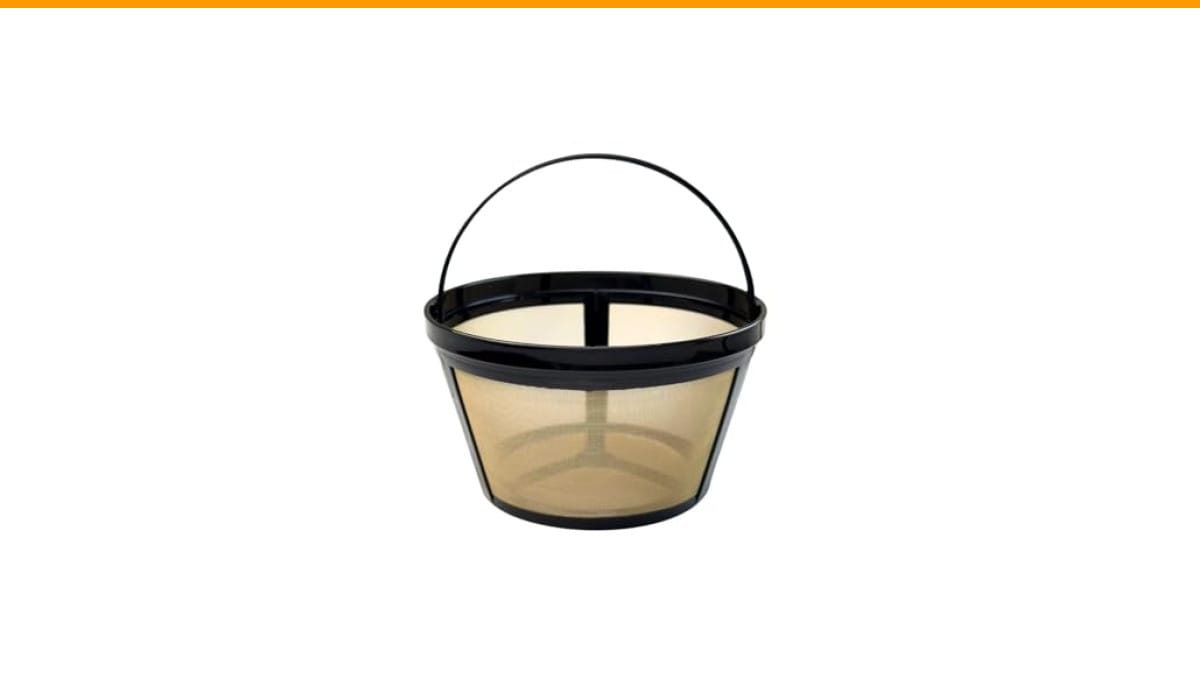
Tronmei
Tronmei 8-12 Cup Reusable Coffee Filter for…
- 【⚠️ FOR 8-12 CUP MACHINES ONLY (NOT 4-6 CUP)】 Perfectly fits most standard 8-12 cup basket-style brewers, including top brands lik…
- 【Size + Materials】 Size: 4.5" (Top) | 3.2" (Base) | 2.5" (Height) Materials: Food-Grade 304 Steel (Mesh) + BPA-Free Plastic (Frame…
- 【SAVE MONEY + CUT WASTE】 Reusable steel filter = no more paper filter restocks. 8-12 cup users toss 600+ paper filters/year – swap…
As an Amazon Associate I earn from qualifying purchases.
This guide covers exactly how to use a reusable coffee filter in standard 8–12 cup basket brewers like Mr. Coffee and Black+Decker. You’ll learn the correct grind, how much coffee to add, how to avoid overflow, and how to clean it so it lasts for years.
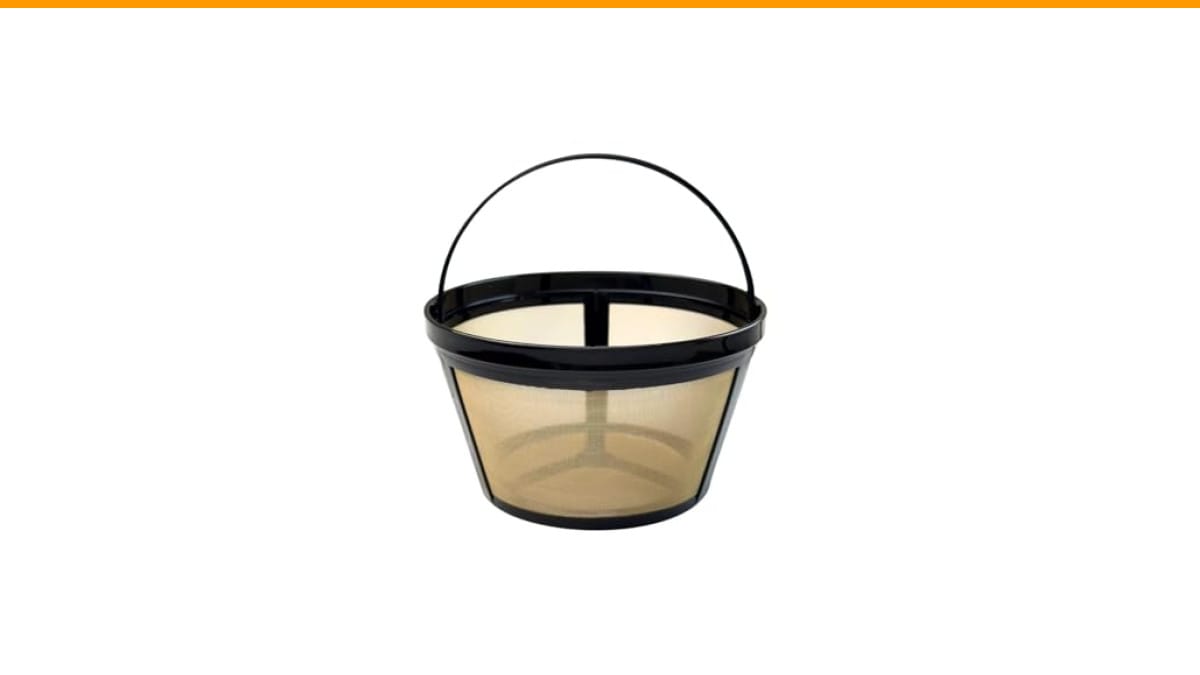
A filter like the Tronmei 8-12 Cup Reusable Coffee Filter fits most standard basket-style machines. It’s made of food-grade 304 steel mesh with a BPA-free plastic frame, and it replaces hundreds of paper filters each year. The steel mesh preserves coffee oils that paper traps, which is why many people report a richer, more aromatic cup.
Grind Size: The Single Biggest Factor
The mesh on a reusable filter is coarser than paper. Paper catches almost everything, so you can get away with a fine grind. Mesh doesn’t. If you use a fine drip grind, the fines will clog the mesh, slow the flow, and the basket will back up.
For basket-style brewers with reusable filters, use a medium to medium-coarse grind. Think sea salt or raw sugar texture. Not powder, not pebbles.
Here’s a quick test: rub a pinch of grounds between your fingers. If it feels like sand, it’s too fine. If it feels like coarse breadcrumbs, you’re in the right zone. Most blade grinders produce uneven particles, so if you’re using one, pulse in short bursts and shake the grinder between pulses. A burr grinder makes this much easier to dial in.
If your brew stalls or the basket overflows, the first thing to check is grind size. Go coarser before you change anything else.
How Much Coffee to Use
Reusable filters hold more coffee than paper baskets because they’re deeper and have stiffer walls. That means you can use the same coffee-to-water ratio you always have, but you need to be careful not to overfill.
For an 8–12 cup brewer, the standard ratio is 1 to 2 tablespoons of ground coffee per 6-ounce cup. A full 12-cup pot calls for 12 to 24 tablespoons, depending on strength. That’s a lot of grounds, and a reusable filter can handle it as long as you don’t pack it down.
Fill the filter to about 80% of its capacity. Leave a little room at the top so water can spread through the grounds evenly. If you tamp or press the coffee down, you’ll create a dense bed that water can’t penetrate. Just shake the basket gently to level the grounds.
One more thing: don’t use the filter with pre-ground coffee that’s labeled “extra fine” or “espresso.” That grind will clog the mesh almost immediately. Stick with drip or percolator grinds.
Brewing: Step-by-Step for Basket Brewers
Every machine is slightly different, but the process is the same for most 8–12 cup basket brewers. Here’s how to get a clean, full-flavored pot.
- Place the filter in the basket. Make sure it sits flat and the handle (if it has one) rests against the side of the basket. It should not stick up so high that the water spray arm hits it.
- Add the coffee. Use a medium-coarse grind and fill to about 80% capacity. Don’t tamp.
- Add water to the reservoir. Use the same amount you normally would for the number of cups you’re brewing.
- Start the brew cycle. Watch the first minute. Water should drip through within 15–30 seconds. If it pools on top of the grounds for more than a minute, the grind is too fine or the filter is clogged.
- Let it finish, then remove the filter. Don’t leave wet grounds sitting in the machine for hours. Rinse the filter immediately after brewing.
The Tronmei filter has a heat-resistant handle, which makes removing a hot basket much easier than wrestling with a bare metal rim. That handle also helps when you’re tapping out the spent grounds.
Cleaning and Maintenance: Do It Right or It Will Bite You
Reusable filters need more attention than paper. Coffee oils build up on the mesh over time, and once that happens, the filter slows down and your coffee starts tasting bitter or stale.
Rinse the filter under running water right after each brew. A quick blast from the faucet removes most of the oils and grounds. Once a week, give it a deeper clean. You can wash it with mild dish soap and a soft brush, or put it on the top rack of the dishwasher. The Tronmei filter is dishwasher-safe, which is convenient, but hand washing is gentler on the mesh.
Every month or so, soak the filter in a solution of one part white vinegar to three parts water for 15 minutes. This breaks down oils that soap can’t touch. Rinse thoroughly afterward. This is the same principle as cleaning a coffee maker, where vinegar dissolves mineral and oil buildup that plain water leaves behind.
If the mesh ever gets dented or torn, replace the filter. A damaged mesh lets grounds through, and no amount of cleaning will fix that.
Reusable vs. Paper: What the Numbers Actually Say
Let’s compare the two approaches side by side. This isn’t about which is “better” in every way — it’s about what you’re trading off.
| Factor | Reusable Mesh Filter | Paper Filter |
|---|---|---|
| Cost per year (12-cup machine) | One-time purchase, ~$10–15 | $30–60 depending on brand and frequency |
| Waste generated | None after initial purchase | 600+ filters per year for daily brewing |
| Flavor profile | More oils, fuller body, more sediment | Cleaner cup, no sediment, slightly muted flavor |
| Brew time | Slightly slower due to finer mesh | Faster, more predictable flow |
| Maintenance | Rinse after each use, deep clean weekly | Throw away after each use |
| Grind sensitivity | Requires medium-coarse, clogs with fine grinds | Works with most grinds |
| Sediment in cup | Some fine particles possible | Virtually none |
For most home users, the flavor improvement and cost savings outweigh the extra cleaning. But if you’re someone who hates any sediment in the cup, or you brew with a very fine grind, paper might still be the better choice for you.
If you do switch, you’ll also need to stay on top of how often to clean your coffee maker, because reusable filters let more oils through, and those oils can coat the internal tubing of your machine faster than paper would.
Common Problems and Fixes
Overflowing basket. Almost always a grind size issue. Go coarser. If that doesn’t fix it, check that the filter isn’t overfilled or that the mesh isn’t clogged with old oils.
Weak coffee. You’re likely using too little coffee or a grind that’s too coarse. Add a tablespoon and see if that helps. Also check that the filter is seated properly — if water bypasses the grounds, you get watery coffee.
Grounds in your cup. The mesh is damaged, or the filter doesn’t sit flush in the basket. Inspect the mesh for tears. If it’s intact, try repositioning the filter so it sits lower in the basket.
Slow brew cycle. The mesh is clogged with oils. Do a vinegar soak, then a thorough rinse. If you’ve been using the filter for months without deep cleaning, this is almost certainly the cause.
These issues are all fixable. The filter itself is rarely the problem — it’s usually the grind or the maintenance routine.
Frequently Asked Questions
Can I use a reusable filter in any coffee maker?
No. Reusable filters come in two main shapes: cone and basket. You need the one that matches your machine’s filter holder. The Tronmei filter is designed for 8–12 cup basket-style brewers, not cone-style machines like a Chemex or a V60. Check your machine’s manual or measure the basket before buying.
How long does a reusable coffee filter last?
With proper care, a stainless steel mesh filter can last several years. The plastic frame is usually the first thing to wear out, especially if you put it in the dishwasher frequently. Hand washing and avoiding harsh scrubbing will extend its life. Replace it when the mesh tears or the frame warps.
Does a reusable filter make stronger coffee?
It makes coffee with more body and more of the natural oils that paper traps. That often tastes stronger and more aromatic, even at the same coffee-to-water ratio. It’s not that the caffeine content changes — it’s that the flavor profile is fuller.
Can I use a reusable filter with espresso?
Not in a standard drip machine. Espresso requires fine grind and high pressure, and a basket filter won’t work for that. Some espresso machines have their own reusable baskets, but that’s a different product. Stick with drip or pour-over for this filter.
How do I stop coffee grounds from getting into my cup?
Check the mesh for damage first. If it’s intact, make sure the filter sits flush in the basket and that you’re not overfilling it. A slightly coarser grind also helps, since very fine particles can slip through even a well-made mesh.
What to Remember Before You Brew
- Use a medium-coarse grind — this is the single most important adjustment when switching from paper.
- Fill the filter to about 80% capacity and never tamp the grounds down.
- Rinse the filter immediately after each brew to keep oils from building up.
- Deep clean with vinegar once a month to prevent clogging and bitter flavors.
- Expect more sediment in your cup than paper — that’s normal and harmless.
- If the basket overflows, go coarser before changing anything else.
- Check that your machine uses an 8–12 cup basket filter before buying a reusable one.
Switching to a reusable filter is a small change with real payoff: better flavor, less waste, and no more paper filter restocks. It takes a few brews to get the grind and fill level dialed in, but once you do, it becomes second nature. And if you’re also dealing with mineral buildup in your machine, take a look at how to descale your coffee machine — it pairs well with a reusable filter routine.
Products related to this article
Sponsored / affiliate links. As an Amazon Associate I earn from qualifying purchases. I may earn additional commission from eligible campaigns.
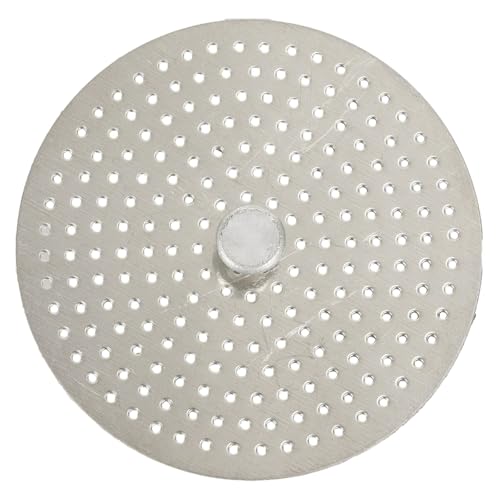 Stainless Steel Moka Pot Coffee Filter Disc for Espresso Brewing, Coffee Maker Replacement Filter Plate for Home Office Coffee Bar Cafe (FOR 4 Cups)
 HomeBeyond Espresso Coffee Maker 12 Cups, Classic Stovetop Espresso Maker, 600ml / 20oz Coffeemaker for Gas & Ceramic Stovetops (Silver)
 Linnkyfloa Coffee Espresso Maker Handle Replacement for Stovetop Moka Pot or Percolator, Black Plastic for Spare Part Compatible with Italian(9-12 Cup)