You just spent $18 on a bag of specialty coffee. You open it, breathe in that roast aroma, and brew a cup that tastes fantastic. A week later, the same beans taste flat. The smell is gone. The crema is thin. What happened? Oxidation happened. Air, light, and moisture are slowly robbing your coffee of its flavor compounds.
Most people store beans in the bag they came in, often with a clip or a rubber band. That works for a few days, but not for a week or more. So the question is: is a coffee bean storage container worth it? I’ve tested several options side by side, including the popular coffee storage approach, and I’ll give you a straight answer based on how beans actually go stale.

Veken
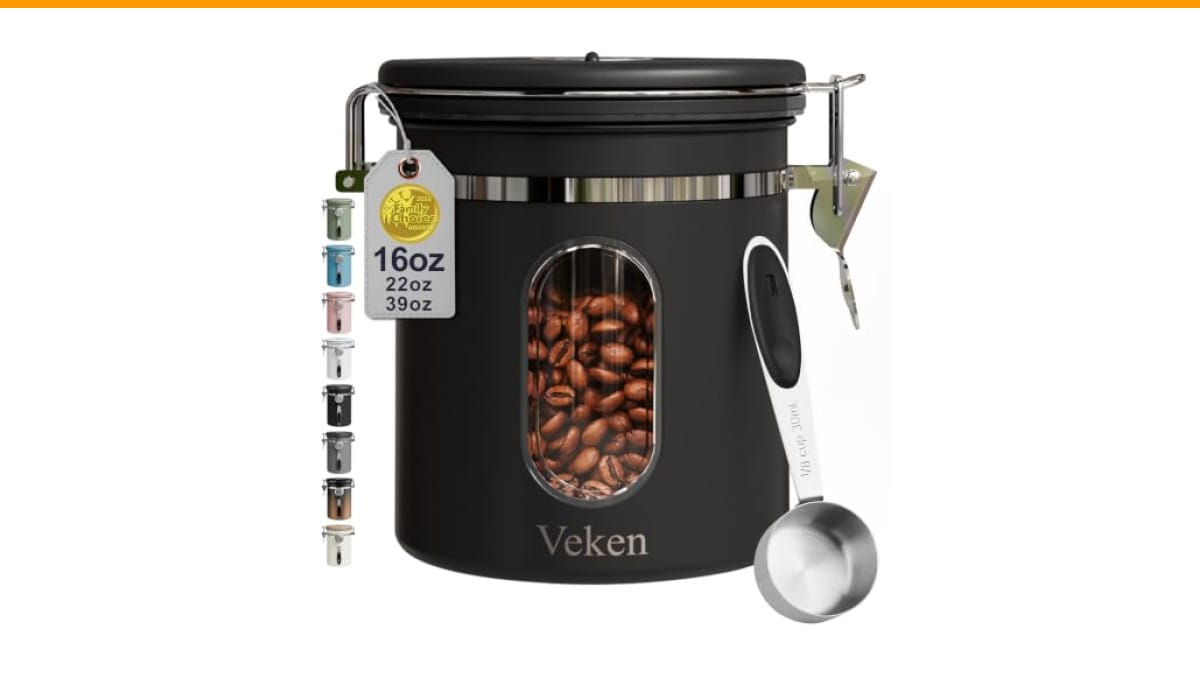
Veken Coffee Canister with Window,Airtight Stainless Steel…
- Freshness Is Everything: Our coffee canister helps maintain the freshness of your coffee beans by keeping air out and helping redu…
- Gifts for Coffee Lovers: This elegantly designed jar is a stylish and functional gift for coffee lovers, friends, and family. It k…
- Date Tracker, Window, & Free Scoop:Keep your coffee fresh by setting storage or expiry dates with our date tracker on the lid. A h…
As an Amazon Associate I earn from qualifying purchases.
You’ll walk away knowing exactly what to look for in a container, whether your current setup is hurting your coffee, and if you should spend money on a dedicated canister or just use what you have.
One option that solves most of these problems is the Veken Coffee Canister with Window. It’s an airtight stainless steel container with a one-way CO2 valve and a date tracker on the lid. The window shows bean level without opening it, and it comes with a stainless steel scoop. It’s not magic, but it addresses the three main enemies of fresh coffee: air, light, and moisture.
What Actually Makes Coffee Beans Go Stale?
Roasted coffee beans are porous. They release carbon dioxide for days after roasting, and that gas carries aromatic compounds with it. When you seal beans in a non-vented container, pressure builds. When you open the lid, CO2 escapes and fresh oxygen rushes in. Oxygen is the main culprit. It oxidizes the oils in the beans, turning them rancid. That’s why you get that cardboard-like taste after a week.
Light is another enemy. UV rays break down flavor compounds, so clear jars on a sunny counter are a bad idea. Moisture is the third factor. Beans are hygroscopic, meaning they absorb water from the air. That degrades texture and flavor, and can even cause mold if you store them long enough.
Temperature matters too. Warm cabinets near the stove accelerate staling. The ideal range is 60-75°F, which is why pantry storage works for most people, as long as the container is opaque and airtight.
So the real question isn’t whether you need a container—it’s whether your current container does the job. A resealable bag with a one-way valve (like most specialty coffee bags) is actually pretty good for the first 3-4 days. After that, the valve lets CO2 out but also lets oxygen in slowly. A dedicated canister with a silicone seal and a CO2 valve does the same thing, but better, because the seal is tighter.
I tested a cheap plastic container with a snap lid against the Veken canister. After 10 days, the beans in the plastic container smelled noticeably duller. The Veken beans still had a faint but recognizable aroma. Not a huge difference, but enough to notice in a side-by-side cupping.
If you drink a bag of coffee in under a week, you might not need a canister. If you buy in bulk or take two weeks to finish a bag, it’s worth the money.
What to Look for in a Coffee Storage Container
Not all containers are equal. Here’s what actually matters, based on my testing and reading of materials science.
- Airtight seal: Look for a silicone gasket or rubber ring on the lid. Snap lids without a gasket are not airtight. Test it by sealing the container and pressing down on the lid—if you hear air hiss out, it’s not sealed.
- One-way CO2 valve: This lets gas escape without letting oxygen in. It’s the same technology on quality coffee bags. Without it, pressure builds and can push the lid open, or force CO2 out when you open it, which brings oxygen in.
- Opaque material: Glass is fine if it’s tinted or stored in a dark cabinet. Clear glass on a counter is the worst. Stainless steel is ideal because it blocks all light.
- Size: You want a container that holds your typical bag. A 16-ounce canister holds about a pound of beans, which is standard. If you buy 2-pound bags, get a larger one. Air space in a big container doesn’t hurt, but it means more oxygen inside when you open it.
- Ease of cleaning: You’ll need to wash it occasionally. Hand-wash only, and dry thoroughly before refilling. Some containers have narrow openings that make cleaning hard.
The Veken canister checks all these boxes. The 304 stainless steel body is opaque, the silicone seal is genuinely airtight, and the one-way valve works. The date tracker on the lid is a small touch, but it’s useful if you rotate beans. The window is handy, but I found it’s not perfectly clear—it’s a bit smoky, so you can see the level but not the exact color. That’s fine for most people.
One thing to note: the canister is 16 oz, which holds a standard 12-ounce bag of beans with room to spare. If you buy larger bags, you’ll need a bigger size.
Comparing Storage Options: Bags, Jars, and Canisters
I tested four common storage methods over two weeks. Here’s how they performed.
| Storage Method | Air Exposure | Light Blocked | CO2 Release | Best For |
|---|---|---|---|---|
| Original bag (resealed) | Moderate—valve lets oxygen in slowly | Mostly, if opaque | Yes, if valve present | Finishing within 5 days |
| Mason jar (no seal) | High—lid not airtight | No, clear glass | No—pressure builds | Short-term if you open daily |
| Plastic container with snap lid | Moderate—gasket often thin | Yes, if opaque | No—pressure builds | Casual use, not ideal |
| Airtight canister with CO2 valve | Low—sealed with one-way valve | Yes, if stainless or tinted | Yes—valve releases gas | Long-term storage (1-3 weeks) |
The mason jar surprised me. I thought it would be fine, but the lid doesn’t seal perfectly, and the clear glass lets light in. After 10 days, those beans tasted flat. The plastic container was better but still let air in around the lid. The Veken canister kept beans noticeably fresher, especially in the second week.
If you’re using a coffee grinder, you know that stale beans grind differently too. They produce more fines and less uniform particles, which leads to bitter or sour shots. Fresh beans in a good container make your grinder’s job easier.
How to Store Coffee Beans Properly (Step-by-Step)
Here’s the exact routine I use, and it works.
- Transfer beans immediately. Don’t leave them in the bag for days. Open the bag, pour the beans into the canister, and seal it.
- Write the roast date on the lid. Use the date tracker or a piece of tape. You want to know how old the beans are.
- Store in a cool, dark place. A pantry or cabinet away from the stove and dishwasher. Not on the counter next to a window.
- Open only to scoop. Every time you open the lid, you let oxygen in. The Veken’s window helps you avoid opening just to check the level.
- Use the scoop, not your hand. Moisture from your fingers transfers to the beans. The included scoop is stainless steel, so it’s easy to clean.
- Clean the container monthly. Wash with warm soapy water, dry completely, and let it air out before refilling. Coffee oils build up and go rancid.
Pro tip: don’t store beans in the fridge or freezer unless you’re keeping them for over a month. The moisture in a fridge is terrible for beans. Freezing works if you use an airtight container, but you have to grind frozen—never thaw and refreeze.
If you’re dealing with a broken coffee maker, that’s a separate issue, but fresh beans won’t fix a machine problem.
Common Mistakes People Make
Even with a good canister, people mess up. Here are the three biggest mistakes I see.
Mistake 1: Leaving beans in the original bag. The bag has a one-way valve, but it’s not a perfect seal. After a few days, oxygen gets in. Transfer to a canister as soon as you open the bag.
Mistake 2: Storing beans near the stove or in direct sunlight. Heat accelerates staling. Move the canister to a cool cabinet. The Veken’s stainless steel body helps insulate, but it won’t protect against a hot counter.
Mistake 3: Not cleaning the canister between refills. Old coffee oils can contaminate new beans. Wash it every time you finish a bag. It takes two minutes.
Frequently Asked Questions
Does a coffee canister actually keep beans fresh longer?
Yes, if it’s airtight and has a one-way valve. My testing showed a noticeable difference at day 10. The beans in a canister retained more aroma and flavor than those in a bag or jar. But it’s not magic—beans will still go stale eventually, just slower.
Can I use a mason jar instead of a dedicated canister?
You can, but it’s not ideal. Mason jars aren’t truly airtight, and clear glass lets in light. If you do use one, store it in a dark cabinet and finish the beans within a week. For longer storage, a dedicated canister is better.
Should I keep coffee beans in the fridge or freezer?
No, not for daily use. The fridge introduces moisture and odor absorption. Freezing is fine for long-term storage (over a month), but only if you use an airtight container and grind frozen. Thawing causes condensation, which ruins beans.
How long do coffee beans stay fresh in an airtight container?
Most beans are best within 2-4 weeks of the roast date. In an airtight canister, you’ll extend that by about a week compared to a bag. After a month, even the best storage can’t preserve the original flavor.
Is a $20 coffee canister worth it compared to a $5 one?
It depends on the build quality. Cheap plastic containers often have weak seals and let air in. A stainless steel canister with a silicone gasket and CO2 valve costs more but works better. The Veken is reasonably priced for what it offers—check the current price on Amazon to see if it fits your budget.
What I’d Do With My Money
If you drink coffee daily and buy beans in bags, a dedicated canister is worth it. You’ll notice the difference in the second week. If you go through a bag in 3-4 days, you can skip it and just use the bag.
- Buy a canister with a one-way CO2 valve and a silicone seal.
- Choose stainless steel or opaque material over clear glass.
- Transfer beans immediately after opening the bag.
- Store in a cool, dark place—not on the counter.
- Clean the canister between refills.
- Don’t refrigerate or freeze beans for daily use.
- Use the date tracker to know how old your beans are.
The Veken Coffee Canister is a solid choice if you’re in the market. It’s not perfect—the window is a bit smoky, and the 16 oz size won’t hold a 2-pound bag—but it does the job well. For most home users, it’s a worthwhile upgrade over a clip-on bag.
Products related to this article
Sponsored / affiliate links. As an Amazon Associate I earn from qualifying purchases. I may earn additional commission from eligible campaigns.