You pull a shot and it trickles out in 40 seconds, dark and angry. Or worse, it gushes out in 8 seconds, pale and sour. Then the steam wand sputters like it has a cold. For a compact machine, there are a lot of ways things can go sideways.
Most of these failures are predictable. They have specific causes, and you can fix most of them at home in under twenty minutes. This guide walks through the most common compact espresso machine problems and fixes in a logical order. You’ll learn what to check first, what to never touch, and when a repair costs more than the machine is worth.

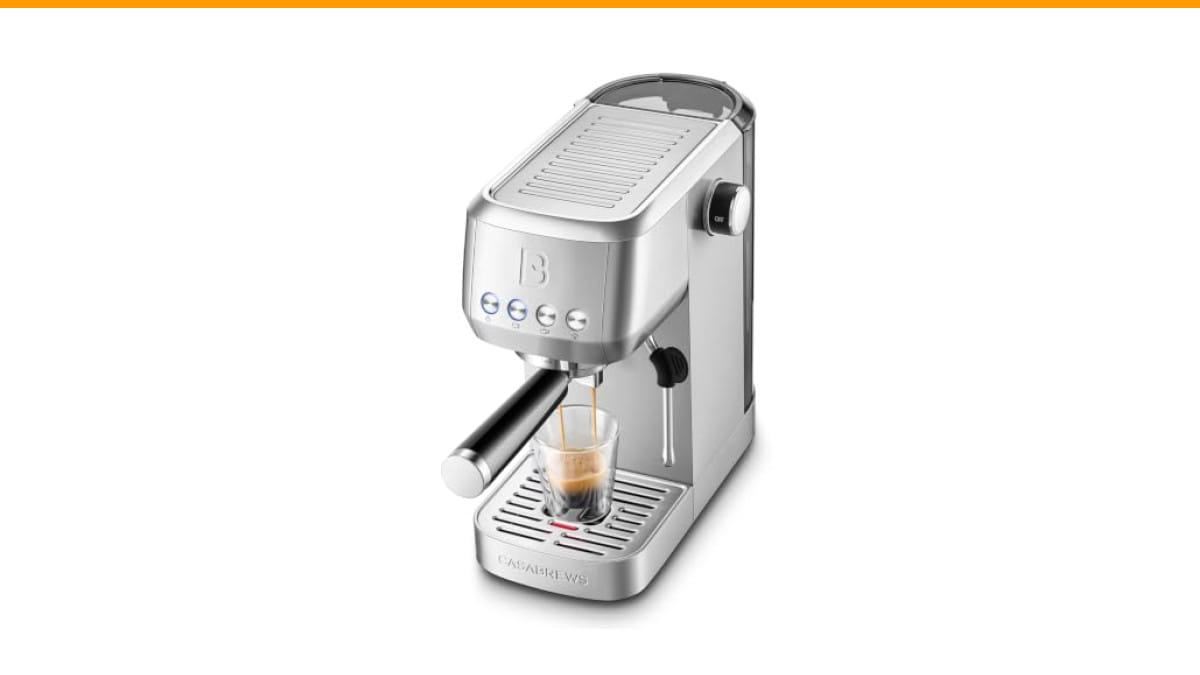
CASABREWS
CASABREWS 3700 Essential Stainless Steel Espresso Machine…
- Make Your Favorite Espresso Coffee At Home: The CASABREWS coffee machine with milk frother allows you to prepare all your favorite…
- Professional 20-Bar Pressure System: A semi-Automatic 2-in-1 Espresso Maker with a 20 bar professional pump and a 1350 W powerful…
- Milk Frothing System: Our espresso machine with milk frother has a powerful steam wand that creates a creamy and rich micro-foam m…
As an Amazon Associate I earn from qualifying purchases.
If you’re using a machine like the CASABREWS 3700 Essential Stainless Steel Espresso Machine, many of these fixes apply directly. Its 20-bar pump and removable 43.9 oz tank mean standard troubleshooting rules work. But the advice here covers nearly any compact unit, regardless of brand.
Quick Symptom Checker: Find Your Problem in 30 Seconds
Before you take anything apart, identify which category your issue falls into. This saves time and prevents unnecessary fiddling.
- No water or weak flow from the group head? That is a supply problem. Check the tank, the inlet valve, or an airlock.
- Shot tastes sour, bitter, or watery? That is a recipe problem. Grind size, dose, and extraction time are the culprits.
- Water leaking around the portafilter? That is a seal problem. The group head gasket or O-rings are worn.
- Steam wand weak or dead? That is a blockage or scale problem. The tip needs cleaning or the boiler needs descaling.
- Machine won’t heat or shows an error? That is an electrical or control problem. Start with a reset, then call a pro.
Match your symptom to the section below. Each one follows the same path: cause, then fix.
Safety First: What You Should Never DIY (and Why)
Compact espresso machines pack high pressure and high voltage into a small frame. The boiler inside operates at around 15 bars of pressure when hot. That is enough force to cause serious burns if you open it improperly.
Never open the machine casing while it is plugged in. The capacitor inside the pump can hold a charge even after unplugging. If you don’t know which part is which, don’t poke around with a screwdriver.
Do not attempt to replace the heating element or the main circuit board yourself unless you have electronics repair experience. These parts are cheap, but the labor and risk are not worth it. A professional repair for these runs $80 to $150. If your machine cost less than that new, buy a replacement instead.
You can safely do these tasks at home: cleaning the shower screen, replacing the group head gasket, clearing an airlock, and descaling. That is the line. Cross it and you void your warranty and risk injury.
Problem 1: No Water or Weak Flow From the Group Head
You press the brew button. The pump hums, but nothing comes out, or just a sad drip. This is the most common failure on compact machines, and usually the easiest to solve.
Step 1: Check the water tank and inlet valve
Remove the tank and look at the bottom. Many machines, including the CASABREWS 3700, have a rubber plug or a float valve there. If that plug is stuck closed, water won’t flow. Press it gently to confirm it moves.
Also check the tank’s water level. Some machines need the tank at least a quarter full to maintain suction. Low water can cause the pump to draw air, which leads to the next problem.
Step 2: Clear airlocks after a dry tank
Running the machine with an empty tank pulls air into the pump. The pump cannot push air, so it locks up. You’ll hear a loud, high-pitched whine with no water coming out.
Fix it by turning the machine off, filling the tank, then turning it back on. Run water through the group head with no portafilter attached for 30 seconds. If nothing flows, repeat the process. Sometimes it takes two or three cycles to purge all the air.
Step 3: Clean the shower screen and basket
Old coffee oils clog the tiny holes in the shower screen. When clogged, water distribution becomes uneven, and flow slows to a trickle.
Remove the shower screen screw and the screen itself. Soak both in a solution of warm water and espresso cleaner (Cafiza or similar) for 15 minutes. Scrub with a soft brush, rinse, and reinstall. Do this monthly if you pull more than two shots a day.
Problem 2: Espresso Tastes Sour, Bitter, or Watery
Your machine works fine, but the coffee tastes wrong. This is a tuning problem, not a mechanical failure. The fix is in your dosing and timing.
Fix extraction time (too fast vs. too slow)
A proper shot takes 25 to 30 seconds from the moment water hits the coffee. Time it next shot.
- Under 20 seconds: The shot is under-extracted. It will taste sour or acidic. Your grind is too coarse, or your dose is too low.
- Over 35 seconds: The shot is over-extracted. It will taste bitter and harsh. Your grind is too fine, or your dose is too high.
Adjust one variable at a time. Change the grind size first, then the dose. Do not change both at once or you won’t know which one fixed it.
Adjust grind size and dose
For a compact machine with a pressurized basket, use a fine grind, like table salt. If you use a non-pressurized basket, go finer, like powdered sugar.
Dose by weight if you can. Start with 14 grams for a double shot. If the shot runs fast, add a gram. If it chokes, remove a gram. Without a scale, use the included tamper spoon to level the basket, then tamp with firm, even pressure.
Check brew temperature stability
Compact machines often run a few degrees cooler than ideal. The first shot after warm-up is usually too cold. Run a blank shot (no coffee) through the group head to heat it up before pulling your actual shot.
If your machine has a thermoblock instead of a boiler, temperature swings are normal. Wait 60 seconds between shots for it to recover. If every shot tastes burnt, your water temperature is too high. Let the machine sit for two minutes after the ready light comes on before brewing.
Problem 3: Leaks Around the Portafilter or Under the Machine
Water dripping from the sides of the portafilter during a shot is not normal. It means the seal between the portafilter and the group head is compromised.
Replace the group head gasket and O-rings
The group head gasket is a rubber ring that sits inside the machine where the portafilter locks in. Over time, it hardens and flattens. You can see it if you look up into the group head with a flashlight.
Replacement gaskets cost $5 to $15. Pry the old one out with a flathead screwdriver, push the new one in with your thumb, and lock the portafilter in and out a few times to seat it. This is a 10-minute job and fixes 90% of portafilter leaks.
Tighten the shower screen screw
A loose shower screen screw causes water to escape around the screen instead of through it. This leak often shows as drips from the group head even when the machine is off.
Remove the screw, clean the threads, and reinstall it snugly. Do not overtighten; it threads into plastic on many compact machines and will strip.
Problem 4: Steam Wand Issues (No Steam or Weak Pressure)
A weak steam wand makes cappuccino impossible. The milk never gets that silky microfoam, and you’re stuck with hot milk. Here’s how to fix it.
Purge condensation and clean the tip
After steaming milk, leftover milk residue bakes onto the wand tip. This blocks the tiny steam holes over time.
After every session, wipe the wand with a damp cloth, then purge steam for 2 seconds into a rag. Once a week, remove the tip (if detachable) and soak it in hot water with espresso cleaner. Use a pin to clear any clogged holes in the tip.
Descale the steam boiler
Scale buildup inside the boiler restricts steam flow. If the wand sputters or produces wet, weak steam, this is the cause.
Run a descaling cycle using a food-safe descaler (citric acid or commercial solution). Follow the machine’s instructions. For most compact machines, you run the solution through the steam wand, not the group head. After descaling, run two full tanks of fresh water through to flush out all residue. You can read our full descaling guide for step-by-step details.
Problem 5: Machine Won’t Heat or Error Codes Appear
This is the frustrating one. The machine powers on, but the pump doesn’t run, or the heating light blinks in a pattern you don’t recognize.
Reset the machine and check basic connections
Unplug the machine for 10 minutes. This clears the control board’s memory and fixes many transient errors. Plug it back in and test.
Check that the water tank is seated properly. Many machines have a sensor in the tank; if it’s not fully pushed down, the machine thinks it’s empty and refuses to heat.
When to call a technician (and what it costs)
If a reset doesn’t fix it, the problem is likely the thermal fuse, the heating element, or the control board. These are not user-serviceable parts on most compact machines.
A repair shop will charge $50 to $100 just to diagnose. Add parts and labor, and you’re looking at $120 to $200. Compare that to the cost of a new compact machine. If yours is over two years old, replacement is almost always the smarter financial move.
The Preventive Maintenance Calendar (Daily to Yearly)
Most of the problems above come from neglect. A simple schedule keeps your machine running for years. Here’s the timeline I follow.
| Frequency | Task | Why It Matters |
|---|---|---|
| Daily | Purge steam wand after use; wipe group head and drip tray | Prevents milk residue buildup and stale coffee oils |
| Weekly | Backflush with water (no detergent) for machines with a blind basket; clean portafilter and basket | Removes loose oils and grounds from the group head |
| Monthly | Deep clean shower screen; soak portafilter and basket in cleaner | Prevents clogged holes and uneven extraction |
| Quarterly | Descale the boiler and steam wand | Removes scale that blocks flow and reduces heating efficiency |
| Yearly | Replace group head gasket and check all O-rings | Maintains a tight seal and prevents leaks |
This schedule assumes you use filtered water. If you use hard tap water, move descaling to monthly.
Water Chemistry: The Hidden Cause of Most Problems
Hard water is the silent killer of espresso machines. The minerals in tap water precipitate out as scale when heated. That scale coats the boiler interior, narrows the steam wand, and eventually seizes the pump.
You can test your water hardness with a simple test strip, available at any hardware store. If your water measures above 150 parts per million (ppm) of calcium carbonate, you need to treat it.
Use filtered water or bottled spring water with a low mineral content. Do not use distilled water; it is too aggressive and can leach metals from the boiler. The ideal range is 50 to 150 ppm.
A cheap countertop filter pitcher fixes most problems. If your water is very hard, consider a dedicated espresso machine water filter. The cost is a few dollars a month, and it saves you from a $100 descale or a $150 repair. It is the single best investment you can make for your machine.
FAQ: Quick Answers to Common Questions
Why does my espresso machine make a loud noise and no water comes out?
That is an airlock. The pump is spinning but pushing air, not water. Turn the machine off, fill the tank, and run water through the group head with no portafilter attached. Repeat until the flow is steady. If the noise persists, the pump may be damaged, but airlocks are far more common.
How often should I descale my compact espresso machine?
Every three months if you use filtered water. Every month if you use hard tap water. The signs you need to descale are slow steam wand flow, longer brew times, and a lingering burnt smell. Check our deep cleaning guide for the full process.
My portafilter leaks. Do I need a new portafilter?
Almost never. The portafilter is metal; it doesn’t wear out. The rubber gasket inside the group head wears out. Replace that gasket first. It costs a few dollars and takes five minutes. If the leak continues, check the basket rim for dents.
Why is my espresso sour even with fresh beans?
Sour taste means under-extraction. Your shot is running too fast. Grind finer or increase your dose by a gram. Also, make sure you’re letting the machine warm up fully. A cold group head drops the brew temperature, which also causes sour shots.
Can I use vinegar to descale my espresso machine?
White vinegar works, but it leaves a strong smell and can damage rubber seals if not rinsed thoroughly. Use a commercial espresso descaler or citric acid instead. They dissolve scale faster and rinse clean. If you must use vinegar, mix one part vinegar with two parts water and run three full tanks of fresh water through afterward.
What Actually Matters: A Quick Recap
- Diagnose by symptom first: supply, recipe, seal, or electrical. That narrows the fix.
- Never open the machine casing. High voltage and pressure are real risks.
- Replace the group head gasket before buying any new parts. It fixes most leaks.
- Time your shots. 25-30 seconds is the target; adjust grind size to hit it.
- Descale quarterly. Hard water is the #1 cause of premature machine death.
- Use filtered water. It costs pennies and prevents scale-related failures.
- If a repair quote exceeds half the machine’s cost, buy a new machine.
Most of these fixes take less time than a trip to the coffee shop. Keep your machine clean, your water soft, and your grind dialed in, and it will reward you with years of good shots. For more on choosing your next machine, see our comparison of automatic vs. semi-automatic machines. If you’re dealing with a specific leak issue, our leak troubleshooting article covers that in more depth.
Products related to this article
Sponsored / affiliate links. As an Amazon Associate I earn from qualifying purchases. I may earn additional commission from eligible campaigns.
 Coffee Espresso Machine Handle Replacement Parts, Cafe Bracket Handle for Lidl Silvercrest CM4621 CM4218 KF5002 KF500S Barista (for 51mm Portafilter Basket - Not included)
 Quick Heating Cup Warmer, Three Temperature Settings, Splashproof and Portable, for Coffee, Milk, Lightweight ABS Material
 Linnkyfloa Coffee Espresso Maker Handle Replacement for Stovetop Moka Pot or Percolator, Black Plastic for Spare Part Compatible with Italian(9-12 Cup)