The first espresso machine you buy usually dies in one of two ways. Either the pump starts screaming like a trapped wasp and then goes silent, or the boiler starts leaking water onto your counter in the middle of a Tuesday morning. It never happens at a convenient time, and it always costs more to fix than you hoped.
Most people just want a straight answer. How many years can you realistically expect from a home espresso machine? The honest answer is somewhere between three and twenty years, depending on what you buy, how you treat it, and whether you can find parts for it when something breaks. This guide walks through the actual data, the real costs, and the warning signs that tell you when to fix and when to walk away.

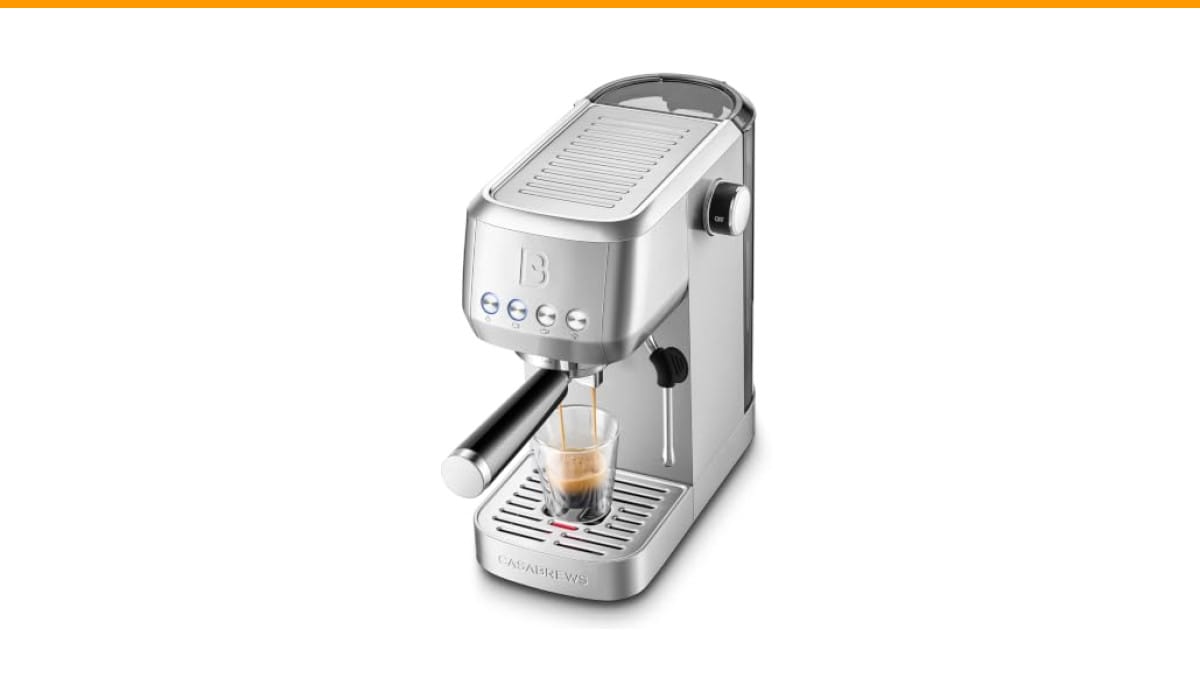
CASABREWS
CASABREWS 3700 Essential Stainless Steel Espresso Machine…
- Make Your Favorite Espresso Coffee At Home: The CASABREWS coffee machine with milk frother allows you to prepare all your favorite…
- Professional 20-Bar Pressure System: A semi-Automatic 2-in-1 Espresso Maker with a 20 bar professional pump and a 1350 W powerful…
- Milk Frothing System: Our espresso machine with milk frother has a powerful steam wand that creates a creamy and rich micro-foam m…
As an Amazon Associate I earn from qualifying purchases.
You’ll leave this article knowing exactly what your machine is worth to you per year, what sounds mean trouble, and why a machine that sits unused for six months can be worse off than one used daily.
If you’re shopping for your first machine and want something that won’t fall apart in a few years, the CASABREWS 3700 Essential Espresso Machine is a solid entry point. It uses a 20-bar pump and a stainless steel body, so it handles daily use better than the plastic alternatives at the same price. It’s not a prosumer machine, but it’s built to survive the learning curve while you figure out what you actually need.
The Short Answer: Lifespan Ranges by Machine Class
Here is the honest breakdown based on how these machines are actually built, not what the marketing says.
- Entry-level machines (under $200): 2 to 4 years. These use plastic internal parts, lightweight boilers, and pumps that aren’t meant to be serviced. When they break, replacement parts often cost more than the machine.
- Mid-range machines ($300 – $800): 5 to 8 years. Better boilers, brass or stainless steel components, and pumps that can be replaced. Most home users get a solid half-decade out of these.
- Prosumer machines ($800 – $2,500): 10 to 15 years. These have commercial-grade parts, E61 group heads, and replaceable everything. With regular descaling, they can outlast your kitchen remodel.
- Super-automatic machines: 5 to 10 years. The convenience comes at a cost — more moving parts means more failure points. The brew group needs regular maintenance, and the internal grinder wears out.
These ranges assume normal home use: 2 to 4 shots per day. Heavy use in a home office or a household that drinks espresso all day will cut those numbers down.
The Real Cost of Ownership: Cheap vs. Premium
Let’s talk money, because the upfront price is only half the story.
A $150 machine that lasts three years costs you $50 per year. A $1,500 prosumer machine that lasts fifteen years costs you $100 per year. The expensive machine costs double per year, but it makes better coffee every single day, and it doesn’t end up in a landfill every three years.
Here’s the calculation that changes how you think about this:
| Machine Class | Upfront Cost | Expected Lifespan | Cost Per Year | Repair Feasibility |
|---|---|---|---|---|
| Entry-level | $150 – $250 | 3 years | $50 – $83 | Usually not worth it |
| Mid-range | $400 – $600 | 6 years | $67 – $100 | Sometimes worth it |
| Prosumer | $1,200 – $1,800 | 12 – 15 years | $80 – $150 | Almost always worth it |
| Super-automatic | $700 – $1,200 | 7 years | $100 – $171 | Depends on the brand |
The math gets even better for premium machines when you factor in resale value. A well-maintained E61 machine can sell for 50% of its original price after five years. Nobody is buying a used $150 machine.
So the question isn’t really “what can I afford?” It’s “what’s the cost per year of the coffee I actually want to drink?”
Lifespan by Type: Manual, Semi-Automatic, Super-Automatic
The type of machine you buy determines how long it lasts more than the price tag does.
Manual and Lever Machines
These are the simplest machines. No pump, no electronics, just a lever and a boiler. A quality lever machine like a La Pavoni can last 20+ years because there’s almost nothing to break. Rebuild kits cost around $50 and replace every seal and gasket. If you’re willing to learn the manual workflow, this is the best long-term investment.
Semi-Automatic Machines
This is the sweet spot for most home users. You control the grind and the shot, but the machine handles the pressure and temperature. The difference between automatic and semi-automatic comes down to control vs. convenience. Semi-automatics have fewer electronics to fail, and the core components — pump, boiler, group head — are all replaceable. Expect 5 to 10 years from a mid-range model, and 10 to 15 from a prosumer model with an E61 group head.
Super-Automatic Machines
These do everything: grind, tamp, brew, and steam. That’s great until the grinder burrs wear out or the brew group jams. The lifespan is often shorter because there are simply more moving parts. The internal grinder is a wear item, and replacing it can cost 30% of the machine’s original price. Most super-automatics need serious maintenance around year 5.
Your choice here is really about how much you value hands-on control versus how much you value convenience. Just know that convenience has a shorter lifespan attached to it.
The 4 Silent Killers: Water, Milk, Heat, and Dormancy
Most espresso machines don’t die from old age. They die from neglect. Here are the four things that actually kill them.
Water Quality
Hard water is the number one killer. Limescale builds up inside the boiler and on the heating element, reducing heat transfer and eventually causing the element to burn out. The fix is simple: use filtered water or a water softener, and descale your machine regularly. A $20 water filter pitcher can add years to your machine’s life.
Milk Residue
Milk is corrosive to metal and a breeding ground for bacteria. If you steam milk and don’t purge the wand immediately, the residue hardens and clogs the steam tip. Worse, milk can get sucked back into the boiler if the wand isn’t purged, contaminating the entire system. Always purge the wand for 2 seconds after steaming.
Heat Cycles
Every time you turn the machine on, components expand. Every time you turn it off, they contract. This thermal cycling eventually cracks solder joints and weakens seals. Leaving the machine on all day actually extends the life of the components because it reduces the number of heat cycles. The trade-off is higher electricity use.
The “Latent Defect” of Idle Machines
Here’s the one most people don’t know. A machine that sits unused for six months will often fail faster than one used daily. The seals and lubricants dry out, the gaskets shrink, and the pump’s internal check valves stick. When you finally turn it on, the dry seals crack and you get leaks.
If you’re going to store a machine, run it once a month with plain water. Even a quick 10-minute heat-up keeps the seals lubricated. This is the “latent defect” problem — the damage happens while the machine is off, not while it’s running.
Auditory Diagnostics: What Your Machine is Telling You
Your machine makes different sounds before it fails. Learning to recognize them saves you money.
- A high-pitched whine from the pump: This usually means the pump is struggling to pull water, often due to a clogged inlet filter or a failing pump. If it’s a clog, cleaning fixes it. If the pump itself is dying, you’ll hear the whine get louder over weeks.
- A rattling or knocking sound from the boiler: This is often loose scale inside the boiler. The scale rattles around as the water heats. If you hear this, descale immediately. The scale is also insulating the heating element, which will burn out soon.
- A hissing sound that doesn’t stop: This is a pressure leak. Check the group head gasket and the steam wand valve. A persistent hiss means steam is escaping where it shouldn’t.
- A clicking relay that cycles rapidly: This indicates the thermostat or pressurestat is failing. The machine is struggling to maintain temperature.
If your machine is already making loud noises, take a look at our guide on why espresso machines get loud before you panic. Sometimes it’s a simple fix.
The Repair vs. Replace Decision Matrix
Here’s a simple rule: if the repair costs more than 50% of the machine’s current value, replace it. If it costs less, repair it.
But there’s a catch. A $50 repair on a $150 machine might not be worth it if the pump is also on its last legs. You need to look at the whole picture.
| Symptom | Typical Repair Cost | Machine Value | Verdict |
|---|---|---|---|
| Clogged group head | $20 (clean it yourself) | Any | Always repair |
| Failed pump | $60 – $100 | Under $200 | Replace the machine |
| Failed pump | $60 – $100 | Over $500 | Repair it |
| Leaking boiler | $150 – $250 | Under $400 | Replace the machine |
| Leaking boiler | $150 – $250 | Over $800 | Repair it |
| Control board failure | $100 – $200 | Under $500 | Replace the machine |
The Sunk-Cost Trap
Here’s the psychology problem. You paid $1,200 for a machine. It’s now five years old and the pump just died. The repair costs $150. You feel like you have to repair it because you already spent $1,200.
That’s the sunk-cost fallacy. The $1,200 is gone whether you repair it or not. The only question is whether $150 fixes the problem for good, or whether it’s the first of several failures. Ask yourself: if someone gave you this exact machine for free today, would you spend $150 to fix it? If the answer is no, sell it for parts and move on.
Also check for water leaks. A machine that’s leaking water is often suffering from multiple failed seals, not just one.
The Maintenance Schedule That Actually Extends Life
You don’t need a lab coat to maintain an espresso machine. You need a routine. Here’s the schedule that works.
- After every use: Purge the steam wand for 2 seconds. Wipe the group head. Knock out the portafilter and rinse it.
- Every week: Backflush with water only (if your machine has a 3-way valve). This clears coffee oils from the group head.
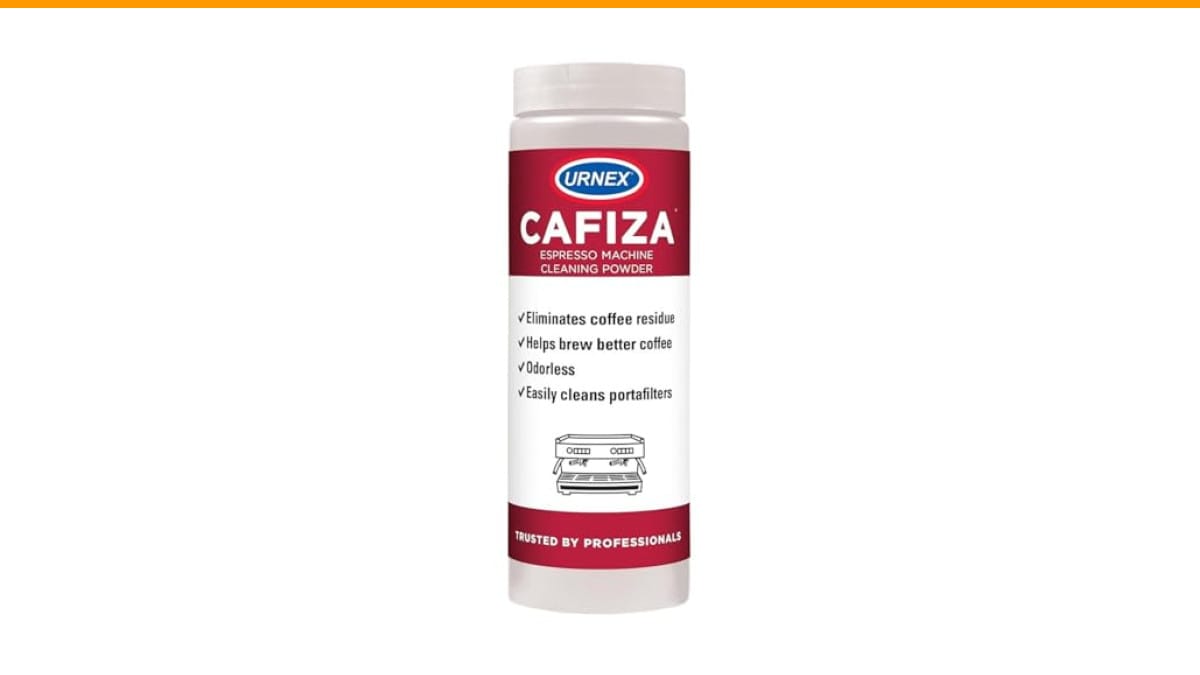
- Every month: Backflush with a mild espresso cleaner like Cafiza. This removes the bitter, rancid coffee oils that plain water can’t touch.
- Every 2-3 months: Descale the boiler. Use a proper descaler, not vinegar, unless you want a vinegar-flavored machine for a month. Follow the full coffee machine maintenance guide for details.
- Every year: Replace the group head gasket and shower screen. These are cheap parts that wear out and cause leaks.
This schedule takes about 10 minutes a week. Skipping it turns a 10-year machine into a 3-year machine.
How to Buy for Longevity: Serviceability Over Specs
When you’re shopping, the most important question isn’t “how many bars of pressure?” It’s “can I get parts for this in five years?”
Here’s what to look for:
- Brand reputation: Companies like Rancilio, Gaggia, and Breville have been around for decades and stock parts for old models. Niche brands might make great machines, but if they disappear, you’re stuck.
- Local serviceability: Is there a repair shop within 50 miles that works on this brand? If not, you’ll be shipping the machine across the country for repairs, which costs $100 just in shipping.
- Standard parts: Machines that use standard components — like a common ULKA pump or a standard E61 group head — are cheaper and easier to repair than machines with proprietary parts.
- Build materials: A brass or stainless steel boiler beats an aluminum one. An E61 group head is a massive hunk of metal that holds heat and lasts forever. Plastic group heads crack.
Don’t get seduced by the pressure rating. A 20-bar pump doesn’t make better coffee than a 9-bar pump — the 9-bar machine is actually doing the right thing. The extra pressure is just headroom for the pump. What matters is the build quality of the group head and boiler.
Frequently Asked Questions
How long does a cheap espresso machine last?
A machine under $200 typically lasts 2 to 3 years with regular use. The plastic internal parts and lightweight boilers just aren’t designed for longevity. When they break, the repair cost is usually more than the machine is worth.
Does using filtered water really make a difference?
Yes, it’s the single biggest factor in machine lifespan. Hard water creates limescale that insulates the heating element and eventually burns it out. Using filtered water can double the lifespan of your boiler. It’s the cheapest insurance you can buy.
Is it worth repairing a 5-year-old espresso machine?
It depends on the machine. If it’s a $1,500 prosumer machine, yes — a $150 pump replacement gives you another 5 years. If it’s a $300 machine, probably not. Use the 50% rule: if the repair costs more than half the machine’s current value, replace it.
How often should I descale my espresso machine?
Every 2 to 3 months for normal home use, or more often if you have hard water. If you hear a rattling sound from the boiler, descale immediately. The scale is already doing damage.
Do super-automatic machines last as long as semi-automatic?
No. Super-automatics have more moving parts — an internal grinder, a brew group that moves, and more electronics. They typically last 5 to 8 years, while a good semi-automatic can last 10 to 15. The convenience comes at a cost to longevity.
The Bottom Line: Buy Once, Cry Once
Here’s what you should take from all of this:
- A $150 machine costs about $50 per year. A $1,500 machine costs about $100 per year. The expensive machine makes better coffee and lasts longer.
- Filtered water is non-negotiable. It’s the cheapest way to add years to any machine.
- Purge the steam wand after every use. Milk residue is corrosive and will kill your boiler.
- Listen to your machine. A whining pump or rattling boiler is a warning, not a personality quirk.
- Repair if it costs less than 50% of the machine’s value. Replace if it costs more.
- A machine that sits idle for months will develop dry seals and fail. Run it monthly if you’re not using it.
- Buy from a brand that has local service and available parts. Serviceability beats specs every time.
Your espresso machine is a tool, not a status symbol. Treat it like one, maintain it on schedule, and it will reward you with a decade or more of good shots. Buy the best you can justify, use good water, and don’t fall for the sunk-cost trap when something finally wears out.
Products related to this article
Sponsored / affiliate links. As an Amazon Associate I earn from qualifying purchases. I may earn additional commission from eligible campaigns.
 Coffee Espresso Machine Handle Replacement Parts, Cafe Bracket Handle for Lidl Silvercrest CM4621 CM4218 KF5002 KF500S Barista (for 51mm Portafilter Basket - Not included)
 Meat Cutter Machine, Stainless Steel Electric Meat Slicer Machine with Three functional modes & Inclined Discharge Port Shredded Cutting Machine for Home Restaurants Supermarket (15mm)
 Quick Heating Cup Warmer, Three Temperature Settings, Splashproof and Portable, for Coffee, Milk, Lightweight ABS Material