You wake up, stumble to the kitchen, and stare at a countertop cluttered with a separate espresso machine, a bulky grinder, a scale, and a tamper. The ritual takes fifteen minutes, and the shot still tastes sour or bitter depending on the humidity. You want a simpler setup. You want one machine that grinds, doses, and pulls a decent shot without turning your kitchen into a lab.
That is exactly what an espresso machine with a built-in grinder promises. But choosing the right one is not just about reading spec sheets. It is about matching the machine to your actual workflow. This guide walks you through the real tradeoffs between built-in and standalone grinders, the specific features that matter, and a step-by-step dialing-in process so you know what you are buying before you spend the money.

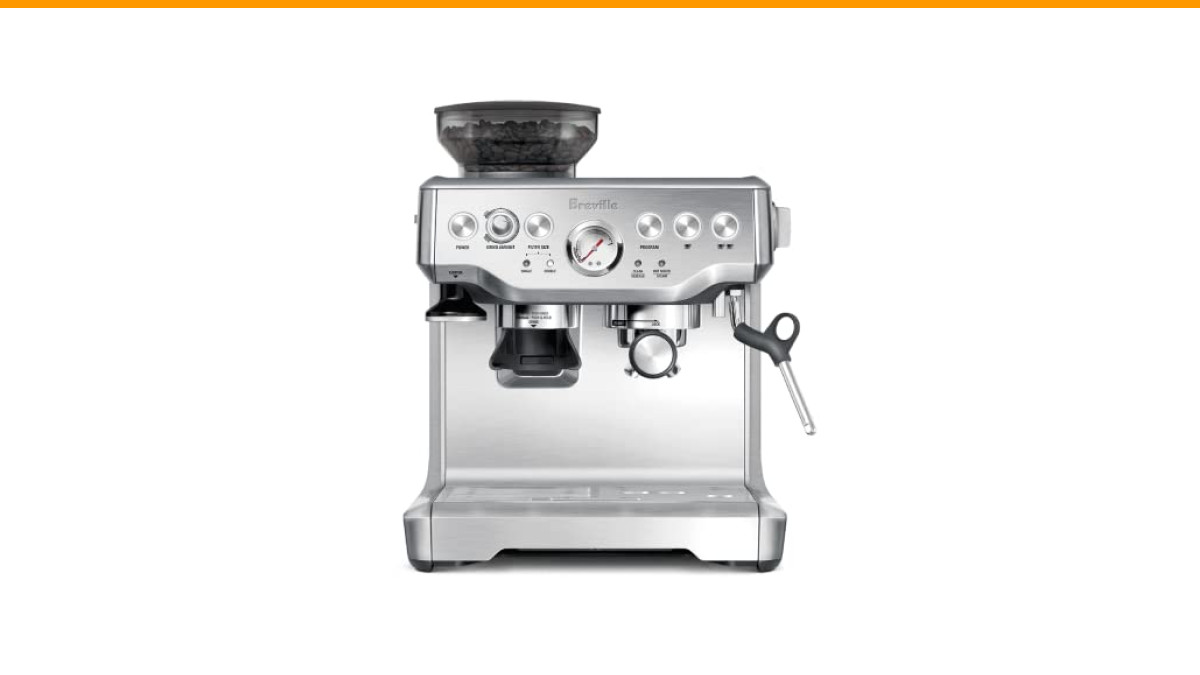
Breville
Breville BES870XL Barista Express Espresso Machine, Brushed…
- MANUAL HAND-TEXTURED MICROFOAM: The powerful steam wand on this cappuccino maker and latte machine is designed to quickly turn mil…
- PRECISE DOSE GRINDING: Integrated precision conical burr grinder on bean-to-cup espresso machine grinds on demand to deliver corre…
- WATER PRESSURE: Low pressure pre-infusion gradually increases pressure at the start and draws out all the flavors evenly during th…
As an Amazon Associate I earn from qualifying purchases.
You will walk away knowing exactly what to look for, what to avoid, and which type of machine fits your morning routine.
A solid example of this all-in-one approach is the Breville BES870XL Barista Express. It combines a conical burr grinder, a 54mm portafilter, and an integrated tamper into one unit. It is a popular starting point for home users because it removes the guesswork of buying a separate grinder while still giving you manual control over the shot.
Why Buy an Espresso Machine with a Built-In Grinder?
The main reason is counter space. A separate grinder and espresso machine take up roughly two feet of linear counter space. A combo unit cuts that in half. The second reason is consistency. When the grinder and brewer are designed together, the grind-to-brew time is short, which means less coffee oxidation and a fresher taste in the cup.
There is also the convenience factor. You do not need to learn two separate machines. You grind directly into the portafilter, tamp, lock it in, and pull the shot. For a beginner, this reduces the learning curve significantly.
But the built-in grinder is not always the best choice. You have to weigh the convenience against the limitations. We will get into those tradeoffs shortly.
Built-In vs. Standalone Grinder: The Real Tradeoffs
This is the core decision. You need to understand the differences in grind quality, retention, noise, and long-term cost.
Grind Quality and Adjustability
Most built-in grinders are conical burr grinders. They do a decent job, but they rarely match the precision of a high-end standalone grinder. A standalone grinder like a Eureka Mignon or a Baratza Sette offers finer adjustments and a more consistent particle size. That matters for dialing in light roast beans, which are less forgiving.
Built-in grinders typically offer a limited number of steps, often 15 to 30. Standalone grinders can offer stepless adjustment or hundreds of micro-steps. If you only drink medium or dark roasts, a built-in grinder is fine. If you chase single-origin light roasts, you will fight the grind settings.
Grinder Retention and Cleaning
Here is a hidden issue most reviews ignore: retention. Retention is the amount of ground coffee that stays inside the grinder chute after you grind. A built-in grinder can retain 2 to 5 grams of stale grounds. When you grind fresh coffee the next morning, those stale grounds mix in and ruin the shot.
You can mitigate this by running a few grams of fresh beans through the grinder to purge the stale grounds before you dose. That wastes coffee, but it is the only way to get a clean shot. Standalone grinders with low retention designs, like single-dose models, do not have this problem.
Cleaning is another factor. You should brush out the chute and remove the burrs for deep cleaning every few weeks. A built-in grinder is harder to clean because it is tucked inside the machine. If you skip cleaning, the oils from old coffee go rancid and add a bitter flavor to your shots.
Noise Level and Counter Footprint
Built-in grinders are loud. The grinder motor is mounted directly on top of the machine, and there is no sound insulation. In testing, the Breville Barista Express grinder hits around 80 decibels, which is like a vacuum cleaner. Standalone grinders can be quieter, especially models with sound-dampening enclosures.
Footprint is the opposite story. A combo machine takes up about 13 inches of width and 12 inches of depth. A separate grinder and machine can take up 20 inches or more. If you have a small kitchen, the built-in wins.
Long-Term Cost and Repair
This is the part nobody talks about. When the grinder fails on a combo machine, the whole unit goes to the shop. You cannot just replace the grinder. Repair costs for integrated machines are higher because the technician has to disassemble the entire chassis.
A standalone grinder is a separate investment. If it breaks, you replace it without touching your espresso machine. The same applies to the brewer. This separation makes long-term maintenance cheaper and easier.
For a budget-conscious buyer, a combo machine is cheaper upfront. But for a 10-year outlook, separate units often cost less in repairs and replacements.
Key Features to Evaluate Before Buying
You cannot judge a machine by looks alone. These four areas determine whether you will love it or hate it after a month of daily use.
Grinder Quality and Adjustability
Look for a conical burr grinder, not a blade grinder. Blade grinders chop beans unevenly and produce a muddy extraction. Burr grinders crush the beans uniformly, which is essential for espresso.
Check the number of grind settings. A machine with 15 settings is workable but limited. A machine with 30 or more settings gives you the flexibility to dial in different roast levels. Also check if the grinder is stepless, which means you can fine-tune between the numbered clicks.
Dosing accuracy matters too. Some machines use a timed grind, which means the grinder runs for a set number of seconds. Timed grinders are inconsistent because bean density and humidity change the output weight. A machine with a manual or weighed grind option is better. The Breville Barista Express uses a timed grind with a manual override, so you can stop it exactly when you want.
Brewing System and Pressure
Espresso needs 9 bars of pressure at the group head. Many machines advertise 15 or 19 bars, but that is the pump pressure, not the brew pressure. The extra pressure is often a marketing gimmick. Look for a machine that mentions a pressure gauge or a regulated brew pressure.
PID control is a feature worth paying for. A PID controller stabilizes the water temperature, which is critical for consistent shots. Without it, the water temperature drifts, and your shots will taste different from morning to morning. If the machine has a PID, it will usually say so in the specs.
Pre-infusion is another feature. It wets the coffee grounds at low pressure for a few seconds before ramping up to full pressure. This reduces channeling and improves flavor. It is standard on higher-end machines, but some budget machines skip it.
Milk Frothing and Steam Power
If you drink lattes or cappuccinos, the steam wand matters as much as the grinder. A single-hole steam wand is slower but produces finer microfoam. A four-hole wand is faster but harder to control.
Check the steam boiler size. A small boiler means you will wait 30 to 60 seconds between steaming and brewing. A machine with a dedicated steam boiler, like a dual boiler, can do both at the same time. For a home user, a single boiler with a fast heat-up time is usually fine.
The steam wand should be a stainless steel ball-joint type, not a plastic panarello wand. Panarello wands inject air automatically and produce thick, bubbly foam that is wrong for latte art. You want manual control.
Ease of Use and Maintenance
Look for a removable water tank. A 67-ounce tank is standard, but a removable tank makes refilling and cleaning easier. A non-removable tank is a pain to fill in place.
Check the drip tray. It should be easy to remove and large enough to hold a few days of runoff. A small drip tray means emptying it constantly.
Descaling is unavoidable. Hard water will clog the boiler and the brew group over time. You need to descale every 2 to 3 months. Read our descaling guide for the full process. If you skip it, the machine will fail prematurely.
The Dialing-In Process: Getting Your First Great Shot
You bought the machine. Now you need to dial it in. This is the process of adjusting grind size and dose to get a balanced shot. It takes about 20 minutes the first time, but it gets faster with practice.
- Start with a known dose. Use 18 grams of coffee for a double shot. Weigh it, do not guess.
- Set the grind size to a medium-fine setting. If your machine has a number dial, start in the middle. For the Breville Barista Express, that is around setting 8.
- Grind into the portafilter. Use the grinding cradle if your machine has one. Fluff the grounds with a toothpick or the included tool to break up clumps.
- Level the grounds. Tap the portafilter once on a flat surface to settle the coffee. Do not over-tap, or you will create a dense layer at the bottom.
- Tamp with even pressure. Aim for 30 pounds of pressure. The Breville includes an integrated tamper, which helps keep the tamp level. If you use a separate tamper, make sure it fits the 54mm basket snugly.
- Lock the portafilter in and start the shot. Time the shot from the first drop of espresso. A good shot takes 25 to 30 seconds.
- Taste and adjust. If the shot runs too fast (under 25 seconds), the grind is too coarse. Make the grind finer. If the shot runs too slow (over 30 seconds) or drips, the grind is too fine. Make it coarser.
- Adjust the dose only after the grind. If the shot tastes sour, you are underextracting. Make the grind finer. If it tastes bitter, you are overextracting. Make the grind coarser.
Pro tip: change one variable at a time. If you change the grind and the dose together, you will not know which adjustment fixed the shot.
The same process applies to any combo machine. The key is to write down your starting point and adjust systematically.
Top Machines by Type
You have three main categories to choose from: semi-automatic, automatic, and super-automatic. Each fits a different routine.
Semi-Automatic
You control the grind, the tamp, and the shot time. The machine pumps water at the right pressure, but you start and stop the shot manually. This gives you the most control over flavor. The Breville Barista Express is a semi-automatic. It is the best choice if you want to learn espresso properly without buying separate equipment.
Automatic
An automatic machine controls the shot volume. You press a button, and it stops the shot when it reaches a pre-set volume. You still grind and tamp manually. This reduces the risk of over-extraction from a long shot. It is a step up in convenience from semi-automatic but still requires some skill.
Super-Automatic
You press a button, and the machine grinds, tamps, brews, and even steams milk automatically. You do not touch the portafilter. The tradeoff is flavor. Super-automatics use pressurized baskets and often have smaller burrs, which limits the quality of the shot. They are also more expensive and harder to repair. If you want convenience above all else, read our comparison of automatic vs semi-automatic machines.
For most home users, a semi-automatic with a built-in grinder is the sweet spot. It gives you control without the clutter.
Common Mistakes to Avoid When Choosing
These are the errors I see buyers make repeatedly. Avoid them, and you will save money and frustration.
Mistake 1: Ignoring the grinder quality. You can fix a bad brew temperature with a better technique, but you cannot fix a bad grind. If the machine has a blade grinder or a cheap burr set, walk away.
Mistake 2: Buying for the brand name. A famous brand does not mean a good grinder. Check the burr size and the number of grind settings. A 38mm conical burr is the minimum for espresso. Anything smaller will struggle with fine grinds.
Mistake 3: Forgetting the cleaning routine. A built-in grinder needs regular cleaning. If you are not willing to brush the chute and wipe the burrs weekly, the machine will produce stale, bitter shots. Read our coffee grinder cleaning steps to see what is involved.
Mistake 4: Choosing a super-automatic for flavor. If you care about tasting the origin notes in your beans, a super-automatic will disappoint you. The convenience comes at the cost of extraction quality.
Mistake 5: Not checking the water tank size. A small tank means refilling every two days. For a busy household, that is a chore. Look for at least a 60-ounce tank.
Frequently Asked Questions
Can I use a built-in grinder for pour-over or French press coffee?
Yes, but it is not ideal. Most espresso grinders have a limited range. The coarse setting for French press is often not coarse enough. You will get a lot of fines, which makes the brew muddy and bitter. If you only drink espresso, this is a non-issue. If you brew multiple methods, a standalone grinder with a wider range is better.
How often should I clean the built-in grinder?
Brush the chute and the burrs every week if you use the machine daily. Run a few grams of beans through the grinder to purge the stale grounds before your first shot. Deep clean the burrs every 2 to 3 months. Use a grinder cleaning tablet or a stiff brush. Do not use water on the burrs.
What does the ‘single-dose’ workaround mean?
It means you do not leave beans in the hopper. Instead, you weigh out a single dose of beans, put them in the hopper, and grind them all. This keeps the beans fresh and reduces retention issues. The downside is that the first few grams you grind are the stale grounds from the previous session. You have to purge those first.
Is a 15-bar pump better than a 9-bar pump?
No. The pump pressure is not the brew pressure. A 15-bar pump can push water through a very fine grind, but the actual pressure at the group head should be 9 bars. A machine with a pressure gauge lets you see the real brew pressure. A machine that claims 15 bars but has no gauge is likely over-extracting or channeling.
How long does a built-in grinder last?
With regular cleaning, a conical burr grinder in a combo machine lasts about 5 to 7 years with daily use. The burrs themselves are replaceable, but finding the exact part for an integrated machine can be difficult. If the motor burns out, you will likely need to replace the whole machine. That is why some people prefer the standalone route.
Final Verdict: Matching the Machine to Your Routine
Choosing the right espresso machine with a grinder comes down to honesty about your morning routine. If you have 10 minutes to make a coffee and you want to learn the craft, a semi-automatic like the Breville Barista Express is a great fit. It teaches you the fundamentals without overwhelming you.
If you have 5 minutes and just want a decent latte before work, a super-automatic might be worth the flavor tradeoff. Just know that you are paying for convenience, not quality.
If you already own a good standalone grinder, buy a separate espresso machine instead of a combo unit. The duplication is unnecessary.
Here are the actionable takeaways:
- Prioritize grinder quality over the brewing system. A bad grinder ruins every shot.
- Expect to purge 2 to 5 grams of stale grounds before your first shot each day.
- Choose a machine with at least 20 grind settings and a manual grind override.
- Look for a removable water tank of at least 60 ounces for daily use.
- Plan for a weekly grinder cleaning routine to avoid rancid coffee oils.
- If you drink light roasts, buy a standalone stepless grinder instead of a built-in.
- Budget for descaling solution every 3 months to protect the boiler.
The right machine is the one you will actually use every day. Match the features to your routine, not the other way around.
Products related to this article
Sponsored / affiliate links. As an Amazon Associate I earn from qualifying purchases. I may earn additional commission from eligible campaigns.
 Coffee Espresso Machine Handle Replacement Parts, Cafe Bracket Handle for Lidl Silvercrest CM4621 CM4218 KF5002 KF500S Barista (for 51mm Portafilter Basket - Not included)
 Cutter Grinder Machine, Universal Grinding Machine, U2 Universal Cutter Tool Grinder Sharpener Holder, For Lathes & Factories, Workshops, Green
 Coffee Mug Warmer & You are Awesome Mug Set, Electric Cup Warmer for Desk