You notice it around week six or seven. The brew cycle takes longer. The coffee tastes slightly bitter, even with fresh beans. The machine sputters like it’s clearing its throat. That’s limescale — hard water minerals that coat the internal heating element and tubing. In a small coffee maker, the effect is worse because the boiler is compact and the passages are narrow.
Descaling is the fix. It dissolves those mineral deposits so your machine heats water properly again. This article walks you through the entire process for a small drip machine, pod brewer, or single-serve unit. You’ll learn the exact steps, the best cleaning agents, and how often to do it. No guesswork.

IMPRESA
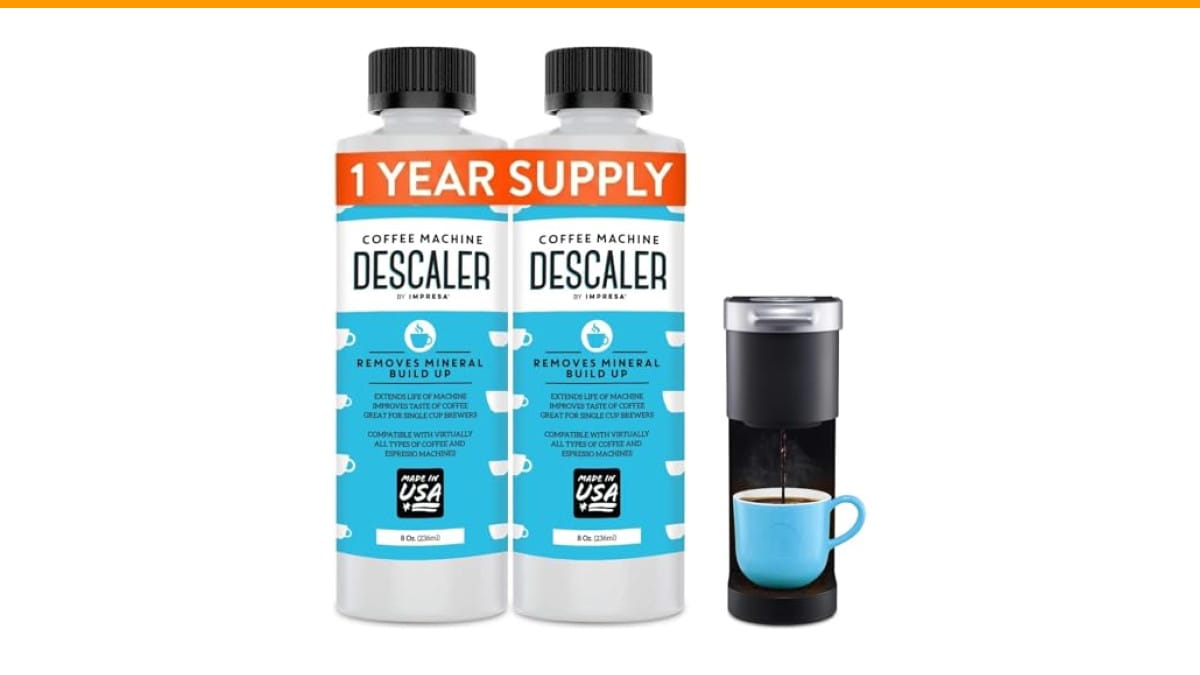
IMPRESA Coffee Machine Descaler, 2-Pack (1-Year Supply)…
- 2-Pack Coffee Descaler and Cleaner - Clean and rinse away residue and oil buildup in your coffee maker with Impresa's Coffee Desca…
- Highly Effective, Made in USA Formula - Unlike most common solutions, our coffee machine cleaner uses just 4 ounces (1/2 bottle) p…
- Preserves Your Machine - Using a coffee descaling solution eliminates limescale and mineral build-up to prevent corrosion, signifi…
As an Amazon Associate I earn from qualifying purchases.
Before you grab a bottle of vinegar from the pantry, consider a purpose-made solution. The IMPRESA Coffee Machine Descaler comes as a 2-pack with enough liquid for four full descaling sessions. It’s formulated to break down both limescale and coffee oil residue, which vinegar doesn’t handle as well. You use just 4 ounces per cleaning, and it’s safe for most machines including Keurig, Nespresso, Breville, and Cuisinart models.
What Actually Happens When You Skip Descaling
Hard water contains calcium and magnesium. When heated, those minerals precipitate out and stick to metal surfaces. In a small coffee maker, that means a layer of scale on the heating element. Scale acts as an insulator. The element has to work harder and longer to heat the same amount of water. Your brew time creeps up, your energy bill creeps up, and the element eventually burns out.
The taste suffers too. Scale traps old coffee oils and stale flavors. Those get released into every fresh batch you brew. If your coffee has a dull, chalky finish that wasn’t there before, scale is likely the culprit.
There’s also a hygiene angle. The rough surface of scale gives bacteria a place to hide. Regular descaling keeps the interior smooth and clean.
Choosing the Right Descaling Agent
You have three realistic options. Each works, but they differ in speed, cost, and residue left behind.
White vinegar is the budget pick. It’s cheap and available everywhere. The downside is the smell — your kitchen will reek of vinegar for a day. You also need to run multiple rinse cycles to fully remove the vinegar taste. If you use it, dilute it 1:1 with water. Don’t use full-strength vinegar; it can be too aggressive on rubber seals and gaskets.
Citric acid powder is a step up. It’s odorless, food-safe, and highly effective at dissolving scale. Mix one to two tablespoons per quart of water. It’s cheaper per use than commercial descalers, but you need to measure carefully. Too much can leave a sour residue.
Commercial descalers like the IMPRESA formula are formulated for coffee machines specifically. They include descaling agents plus surfactants that break down coffee oils. They’re the easiest to use — no measuring, just pour the recommended amount. They also rinse clean with fewer cycles. The trade-off is cost per use, which is still modest when you descale every three months.
| Method | Cost Per Use | Smell | Rinse Cycles Needed | Effectiveness on Coffee Oil |
|---|---|---|---|---|
| White Vinegar (1:1) | Negligible | Strong, lingering | 3-4 full cycles | Poor |
| Citric Acid Powder | Low | None | 2-3 full cycles | Moderate |
| Commercial Descaler | Moderate | Mild, clean | 1-2 full cycles | Good |
Step-by-Step: How to Descale a Small Coffee Maker
The process is the same for most drip machines and single-serve brewers. Check your manual first — some machines have a dedicated descaling mode. If yours does, follow that program instead.
- Empty the machine. Remove any coffee grounds, filters, or pods. Discard old water from the reservoir.
- Mix your descaling solution. For commercial descaler, use the amount listed on the bottle — typically 4 ounces per full reservoir. For vinegar, mix equal parts water and vinegar. For citric acid, dissolve 2 tablespoons in a quart of warm water.
- Fill the reservoir. Pour the solution into the water tank. Don’t overfill past the max line.
- Run a brew cycle. Start the machine as if you were making coffee. Let the solution run through the system. Stop halfway through and let it sit for 15-30 minutes. This soak time lets the acid work on stubborn scale.
- Finish the cycle. Let the remaining solution run through completely. Turn off the machine.
- Rinse with fresh water. Empty the reservoir and fill it with clean water. Run a full brew cycle. Repeat this at least twice. If you used vinegar, run three or four rinse cycles to be safe.
- Wipe down the exterior. While the machine is off and cool, wipe the warming plate and exterior with a damp cloth.
That’s the whole process. It takes about 30 minutes of active time, plus the soak. For a small machine, you don’t need to repeat the descaling step — one pass with the solution is sufficient.
How Often Should You Do This?
The standard recommendation is every three months. But your water hardness changes that number. If you live in an area with hard water — you see white spots on your glasses after washing — descale every six to eight weeks. If you use filtered or softened water, you can stretch it to four or five months.
Pay attention to your machine’s signals. Slower brew time, louder operation, or a mineral taste in the coffee all mean scale is building up. Don’t wait for the scheduled date if you notice these signs.
For daily use machines — you brew two or more pots a day — bump the frequency up. The heating element cycles more often, so scale accumulates faster. A small machine used heavily might need descaling monthly.
Common Mistakes That Damage Small Coffee Makers
People make a few predictable errors. Avoid these.
Using too much vinegar. Full-strength vinegar can corrode the aluminum parts inside some budget machines. Always dilute it. If your machine has an aluminum boiler, skip vinegar entirely and use a commercial descaler or citric acid.
Skipping the rinse cycle. Leftover descaling solution ends up in your next cup of coffee. That tastes terrible and, with some acids, can upset your stomach. Rinse until the water runs clear and odorless.
Descaling a cold machine. The solution works faster when warm. Run the first half of the cycle to heat everything up, then pause for the soak.
Forgetting the removable parts. The carafe, filter basket, and water reservoir lid should be washed with soap and water regularly. Descaler doesn’t remove coffee stains from plastic. Those need a scrub. Check our guide on coffee maker cleaning for the full routine.
Will descaling fix a machine that stopped brewing?
Sometimes. If the machine won’t brew at all, a severe scale blockage could be the cause. The descaling solution might dissolve it. But if the heating element has already burned out, descaling won’t bring it back. Try descaling first — it’s cheap. If the machine still won’t brew afterward, check for other issues like a clogged pump or a faulty switch.
Can I use lemon juice instead of vinegar?
Lemon juice works — it contains citric acid. But it also contains pulp and sugars that can leave a sticky residue inside the machine. You’d need to rinse thoroughly. Citric acid powder is a better choice if you want the lemon-based approach without the mess.
Is it safe to descale a Keurig or Nespresso with vinegar?
Technically yes, but it’s not ideal. These machines have internal tubing and seals that can be damaged by prolonged vinegar exposure. Keurig’s official guidance recommends against vinegar. A commercial descaler like the IMPRESA formula is safer for pod machines. If you do use vinegar, keep the soak time short and rinse aggressively.
How do I know if my machine needs descaling?
Three signs: the brew cycle takes noticeably longer than when the machine was new, the coffee tastes flat or metallic, and you can see white or gray flakes in the reservoir or carafe. Any one of these is enough to schedule a descaling session.
What happens if I never descale my coffee maker?
The scale keeps building until the heating element fails. That’s usually a terminal failure — the machine stops working and needs replacement. You also get progressively worse coffee. A $10 bottle of descaler every few months is far cheaper than a new machine. If you want to understand why this matters so much, read our piece on why regular cleaning matters.
What to Remember Next Time
- Descale every 3 months, or every 6-8 weeks if you have hard water.
- Commercial descaler is easiest and safest for pod machines and aluminum boilers.
- Vinegar works in a pinch but requires extra rinse cycles to remove the smell.
- Always run the solution through a warm machine, then let it soak for 15-30 minutes.
- Rinse with fresh water until the reservoir and carafe hold no trace of the descaling smell.
- Watch for brew time changes — that’s your earliest warning sign of scale buildup.
- Regular descaling extends the life of a small machine significantly, so it’s worth doing on schedule.
If your machine has other problems — like a clogged line that descaling won’t clear — check our guide on clogged coffee maker fixes. And if you’re using vinegar for the first time, our detailed walkthrough on vinegar cleaning methods covers the exact ratios and timing.
Products related to this article
Sponsored / affiliate links. As an Amazon Associate I earn from qualifying purchases. I may earn additional commission from eligible campaigns.
 Belly Moka Coffee Maker Stovetop Espresso Maker 9 Cup Aluminum Moka Pot Percolator 15oz 450ml Easy Brewing for Electric Ceramic Stoves Home Camping Italian Cuban Café Classic Black
 Belly Moka Coffee Maker Stovetop Espresso Maker 6 Cup Aluminum Moka Pot Percolator 10oz 300ml Easy Brewing for Electric Ceramic Stoves Home Camping Italian Cuban Café Classic Silver
 HomeBeyond Espresso Coffee Maker 12 Cups, Classic Stovetop Espresso Maker, 600ml / 20oz Coffeemaker for Gas & Ceramic Stovetops (Silver)