You grind fresh beans, brew a great cup, and then… you ignore the machine for a week. The next morning, your coffee tastes slightly bitter, a little flat, and you wonder what changed. It wasn’t the beans. It was the grinder.
Most people treat their coffee maker with grinder like a toaster—push a button, get coffee, move on. But the grinder is a precision tool. Coffee oils and micro-fines accumulate on the burrs, go rancid, and literally bake into the metal. That residue changes the flavor profile of every single cup you brew. This guide covers the full maintenance routine: daily habits, weekly cleaning, monthly deep cleans, and the tablet method that saves you from taking the whole unit apart.
Urnex
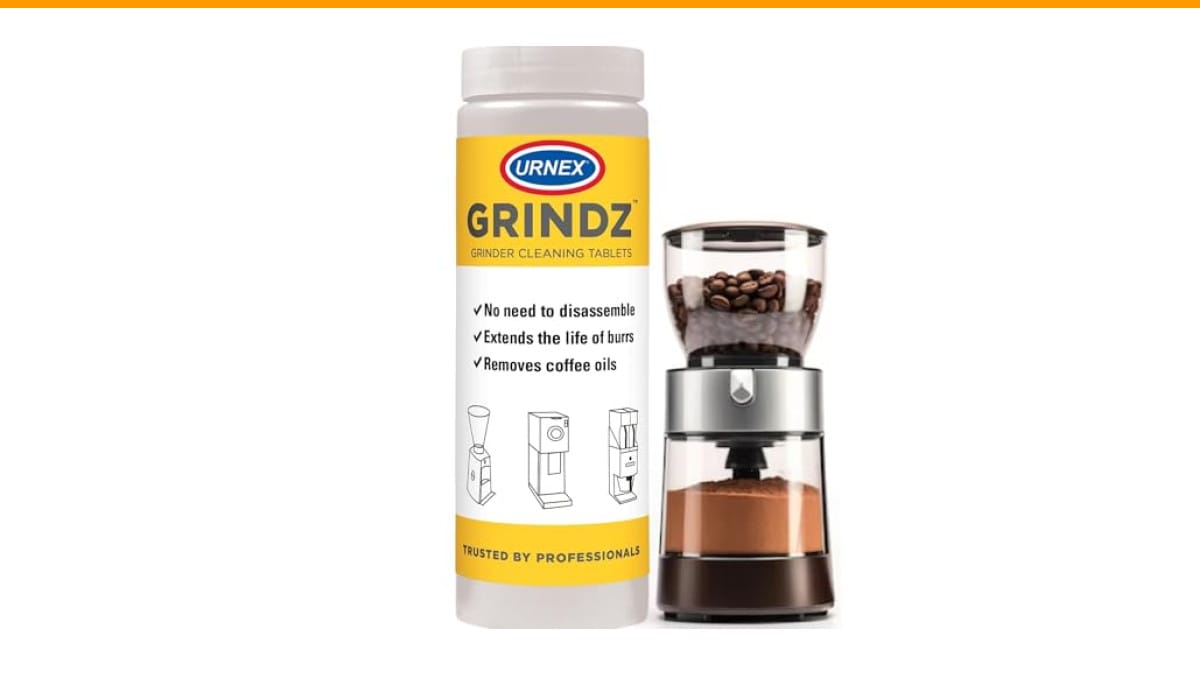
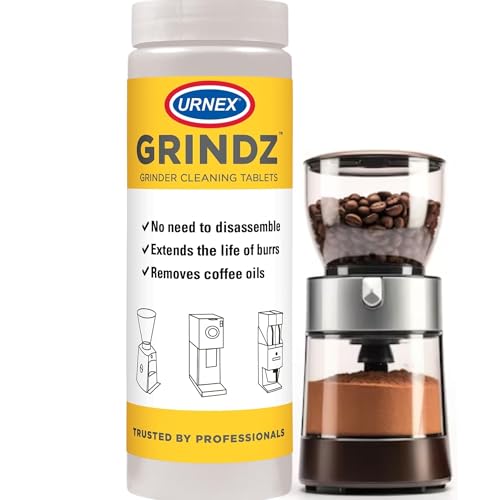
Urnex Grindz Professional Coffee Grinder Cleaning Tablets…
- Removes coffee residue and oils in standalone coffee grinders (not for super automatic espresso machines)
- Patented, all-natural, food safe and gluten-free tablet absorbs and loosens coffee grounds
- Effectively cleans grinders without disassembling burrs or casings
As an Amazon Associate I earn from qualifying purchases.
You’ll walk away knowing exactly what to do, how often to do it, and which products actually work. No vague advice, just a practical system.
One product that makes this dramatically easier is Urnex Grindz cleaning tablets. They’re food-safe, gluten-free, and designed to absorb and loosen coffee residue without you having to disassemble the burrs. You run them through the grinder like coffee beans, and they pull out the gunk that brushing alone can’t reach.
Why Your Grinder Gets Dirty So Fast
Coffee beans are about 10% oil by weight. When you grind them, that oil coats the burrs and the chamber. It doesn’t just sit there—it oxidizes. Oxidized coffee oil tastes like cardboard and old nuts. It’s the single biggest flavor killer in home coffee setups.
Add to that the fine dust that clings to static-charged plastic and metal parts, and you have a sticky, rancid paste forming inside your machine. Over time, this buildup also slows down the grinding process. Burrs that should cut cleanly start crushing beans, which produces more fines and more bitterness.
Here’s the thing most owners miss: the grinder’s performance degrades gradually. You won’t notice a sudden failure. You’ll just accept that your coffee got worse and blame the beans. Then you’ll buy new beans, and the problem persists.
The Daily and Weekly Routine
Daily maintenance takes about thirty seconds. After your last brew of the day, wipe down the grinder hopper and the area around the burrs with a dry microfiber cloth. This removes the loose oils that haven’t baked on yet. Don’t use water—moisture in the grinder leads to clumping and corrosion.
Weekly, you should do a more thorough dry brush-out. Unplug the machine, remove the hopper, and use a stiff nylon brush to sweep the burrs and the chute. A small handheld vacuum with a brush attachment helps pull out the fines that brushing just pushes around.
If you use flavored beans or switch between regular and decaf, do this brush-out every time you switch. The residue transfers instantly. One batch of hazelnut-flavored beans can taint the next three batches of your favorite single-origin.
For a deeper look at the whole machine, not just the grinder, check our guide on cleaning a coffee maker properly. The brewing side needs its own attention.
Deep Cleaning with Tablets vs. Manual Methods
Once a month, you need to remove the baked-on oils that brushing can’t touch. You have two realistic options: cleaning tablets or full disassembly.
Tablets like Urnex Grindz work by absorbing the oils into a porous, food-safe material. You drop one or two tablets into the hopper and run them through on a medium grind setting. The tablet breaks down into a powder that sweeps through the burrs and the chamber, pulling residue with it. Then you grind a small amount of fresh beans to clear out any tablet residue. Total time: about two minutes.
Manual disassembly is more thorough but riskier. You need to remove the burrs, soak them in a mild detergent solution, dry them completely, and reassemble. If you misalign the burrs, you’ll ruin the grind consistency. If you don’t dry them fully, you’ll get rust. I’ve done it twice on my own grinder, and both times I spent twenty minutes just trying to get the alignment right.
Here’s my honest take: tablets are the right choice for most home users. Manual disassembly is for people who enjoy tinkering or who have a grinder that’s already severely neglected. If you’ve never cleaned your grinder in a year, start with tablets, then decide if you need to go deeper.
How Often Should You Clean? A Realistic Schedule
There’s a lot of conflicting advice out there. Some say clean after every use. That’s overkill. Here’s a schedule that balances effort with results:
| Frequency | Action | Time Needed |
|---|---|---|
| Daily | Wipe hopper and exterior with dry cloth | 30 seconds |
| Weekly | Brush burrs, vacuum chute, empty grounds container | 5 minutes |
| Monthly | Run cleaning tablets through the grinder | 2 minutes |
| Quarterly | Deep clean brewing parts (carafe, filter basket, water reservoir) | 20 minutes |
| As needed | Full disassembly if grind quality drops or you see buildup | 30-45 minutes |
If you drink more than four cups a day, move the tablet cleaning to every two weeks. Heavy use means more oil buildup. If you only brew on weekends, monthly tablets are still fine—the oils don’t care how often you use the machine, they’ll still oxidize.
For the brewing side of your machine, the descaling schedule matters too. Hard water leaves mineral deposits that clog tubes and affect brew temperature. Our guide on cleaning a coffee maker with vinegar covers that process, but the short version is: descale every 2-3 months if you use tap water, every 6 months if you use filtered water.
Signs Your Grinder Needs Cleaning Right Now
You don’t have to wait for a calendar reminder. Your grinder will tell you when it’s struggling. Watch for these signs:
- Grind time gets noticeably longer—the burrs are working harder to crush through oily buildup.
- Grind consistency looks uneven, with visible chunks mixed with fine powder.
- Your coffee tastes bitter or flat even with fresh, quality beans.
- You see oily clumps sticking to the sides of the grounds container.
- The grinder smells stale or musty when you open the hopper.
If you notice any of these, do a tablet cleaning immediately. Don’t wait for the monthly schedule. Catching buildup early makes the cleaning easier and keeps the burrs in better shape long-term.
One thing I see people do is confuse grinder cleaning with general coffee maker maintenance. They descale the machine but never touch the grinder. That’s like washing your car but never changing the oil. Both systems need independent care.
Common Mistakes That Ruin Grinders
I’ve seen plenty of grinders killed by well-meaning owners. Here’s what to avoid:
Never rinse the burrs with water. Water causes rust and can damage the motor if it seeps into the housing. Dry brushing and tablets are all you need.
Don’t use rice to clean the grinder, despite what you’ve heard. Rice is harder than coffee beans and can dull the burrs. It also doesn’t absorb oils well. Tablets are specifically engineered for this job.
Avoid running cleaning tablets through a super-automatic espresso machine. Those machines have different internals, and the tablet instructions specifically say they’re for standalone grinders. Using them in the wrong machine can cause jams.
Don’t ignore the grind size setting when cleaning. If you run tablets through on an espresso-fine setting, they might clog the chute. Use a medium to coarse setting for cleaning.
Frequently Asked Questions
Can I use vinegar to clean the grinder burrs?
No. Vinegar is acidic and can corrode the metal burrs and strip any protective coating. Vinegar is fine for descaling the brewing system, but keep it away from the grinder. Use dry methods for the grinder itself.
How long do grinder burrs last before they need replacing?
With regular cleaning, flat burrs typically last 500-800 pounds of coffee. Conical burrs can last longer, often 1000+ pounds. For a home user making two cups a day, that’s roughly 5-10 years. If you never clean, expect to replace them sooner because the oils and fines accelerate wear.
Do I need to clean the grinder if I only use it for espresso?
Yes, and actually more often. Espresso grind settings are very fine, which means more surface area for oils to cling to. The finer the grind, the faster the buildup. Stick to the monthly tablet schedule, or move to every three weeks if you pull multiple shots daily.
Is it safe to run cleaning tablets through a grinder with a plastic hopper?
Yes. The tablets are food-safe and designed to work with standard grinder materials. They break down into a powder that sweeps through, not a liquid that could damage plastic or electronics. Just follow the dosage instructions on the package.
What’s the difference between cleaning and seasoning a grinder?
Cleaning removes residue. Seasoning is the opposite—it means running a few ounces of cheap beans through a new grinder to coat the burrs with a thin layer of oil that helps subsequent grinds flow better. Seasoning is only for brand-new grinders or after a deep clean. It’s not a regular maintenance step.
What Actually Matters for Long-Term Performance
If you only remember a few things from this guide, make them these:
- Wipe the hopper daily with a dry cloth—it takes thirty seconds and prevents most buildup.
- Brush out the burrs weekly and vacuum the chute to remove fines.
- Run cleaning tablets monthly, or every two weeks with heavy use.
- Never use water, vinegar, or rice on the grinder burrs.
- Switch to a medium grind setting before running tablets to avoid clogs.
- Watch for longer grind times or bitter coffee as signs you’re overdue.
- Keep a separate maintenance schedule for the brewing side—descaling and how often to clean a coffee maker are different from grinder care.
Your coffee maker with grinder is a workhorse. It grinds, brews, and does it all without complaint. But it’s not maintenance-free. The difference between a machine that produces great coffee for five years and one that fades after twelve months is almost entirely about how well you clean the grinder.
Set a recurring reminder on your phone for the monthly tablet cleaning. Buy a pack of tablets now so you have them on hand. And the next time your coffee tastes off, clean the grinder before you blame the beans. That one habit will improve your daily cup more than any fancy bean purchase.
Products related to this article
Sponsored / affiliate links. As an Amazon Associate I earn from qualifying purchases. I may earn additional commission from eligible campaigns.
 HomeBeyond Espresso Coffee Maker 12 Cups, Classic Stovetop Espresso Maker, 600ml / 20oz Coffeemaker for Gas & Ceramic Stovetops (Silver)
 Belly Moka Coffee Maker Stovetop Espresso Maker 9 Cup Aluminum Moka Pot Percolator 15oz 450ml Easy Brewing for Electric Ceramic Stoves Home Camping Italian Cuban Café Classic Black
 Belly Moka Coffee Maker Stovetop Espresso Maker 6 Cup Aluminum Moka Pot Percolator 10oz 300ml Easy Brewing for Electric Ceramic Stoves Home Camping Italian Cuban Café Classic Silver