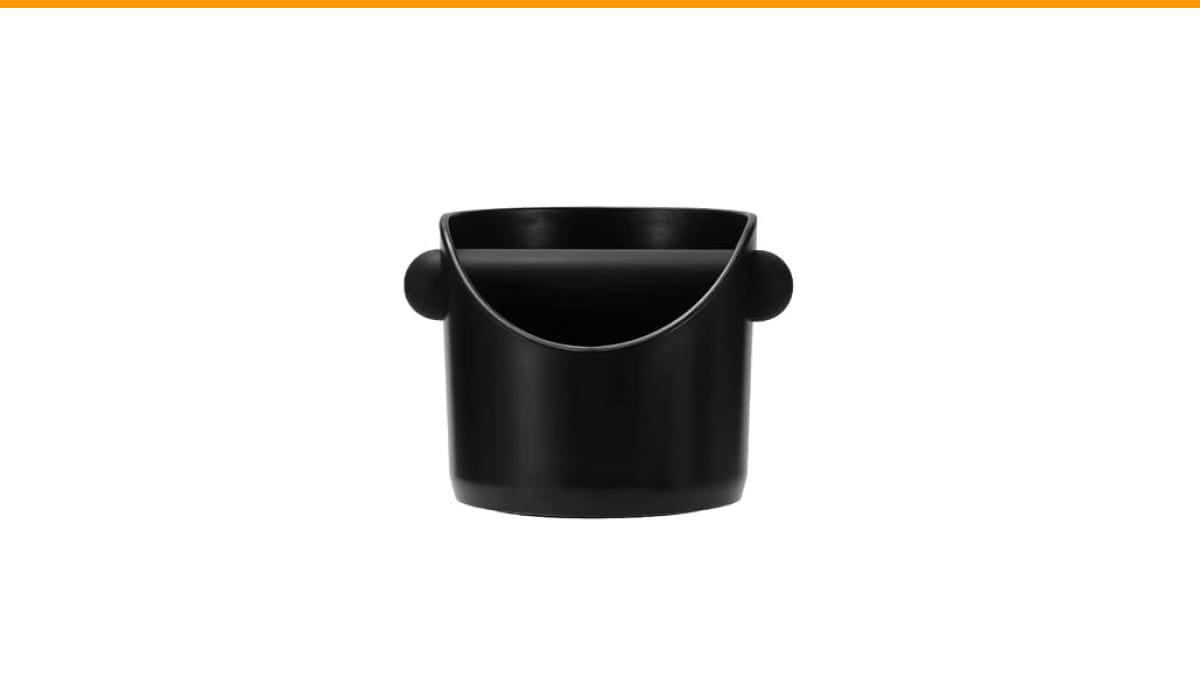
The ritual feels good: you pull a shot, knock the spent puck into the box, and hear that solid thump. The problem starts about six hours later when you walk past the machine and catch a whiff of sour, fermented coffee. That smell is not from the beans. It’s from the knock box.
Most people treat the knock box like a trash can. You tap the portafilter, close the lid, and forget about it until it’s full. That approach works for about two days. Then the grounds start breaking down, moisture gets trapped, and you’re scrubbing brown sludge off the sides. This article covers how to store an espresso knock box so it stays clean, dry, and odor-free between uses — plus the daily habits that make the whole thing easier.
You’ll walk away knowing exactly where to place it, how to dry it properly, when to empty it, and what to avoid. No guesswork.
If you’re starting fresh, a compact unit like the Auden Arctic Coffee Knock Box (4.6 inches wide) makes storage simpler because it fits on a counter without dominating the space. Its removable plastic rod and smooth interior mean fewer crevices for old coffee to hide in.
Why Most Knock Boxes Start Smelling Bad
Spent espresso grounds are not inert. They’re wet, dense, and full of organic material. When you leave them in a closed plastic container at room temperature, bacteria and mold start multiplying within a few hours. The classic signs are a sour smell, visible mold spots on the top layer, and a sticky film on the inside walls.
The biggest mistake I see at home setups is keeping the knock box next to the espresso machine and leaving the lid closed all day. That traps humidity perfectly. The second mistake is letting the box fill to the brim. A full box means the top layer of grounds sits against the lid, transferring moisture and odor every time you open it.
So the real answer to how to store an espresso knock box has less to do with where you put it and more to do with how you manage the moisture inside it.
Daily Storage: The 80% Rule
Empty the knock box when it reaches about 80% full. Don’t wait until it’s packed to the top. Here’s why: when grounds reach the lid line, you can’t knock a new puck in without smashing the old ones against the top. That pushes moisture and fines up into the lid mechanism and the rim. Over time, that’s where the permanent grime builds up.
For a home barista pulling 2–4 shots a day, a 4.6-inch box like the Auden Arctic will need emptying every 3–4 days. If you pull more than that, plan on every other day. It takes ten seconds to dump the grounds into a compost bin or trash bag, so there’s no reason to push it.
After emptying, do a quick dry wipe with a paper towel. You don’t need soap every time — just get the loose moisture off the bottom and sides. Leave the lid open for 10–15 minutes so the interior can air out completely.
Overnight Storage: Airflow Matters
Here’s the habit that separates clean setups from smelly ones: leave the lid cracked or fully open overnight. A sealed knock box is a petri dish. Coffee grounds need airflow to dry out. If you close the lid while the grounds are still damp, you’re guaranteeing condensation on the inside walls by morning.
If you’re worried about dust or bugs, crack the lid just enough to leave a one-inch gap. That’s enough airflow to dry the surface of the grounds without exposing them fully. In testing, a box left open overnight dried out noticeably by morning — no sour smell, no sticky film. The same box left sealed developed a vinegar-like odor within 12 hours.
One caveat: if your knock box lives under a cabinet, make sure the open lid doesn’t hit the shelf above. The Auden Arctic’s lid swings back fully, which helps in tight spaces, but not every model does. Check your clearance before you commit to the open-lid routine.
Where to Place the Knock Box (And Where Not To)
Location is half the storage battle. The ideal spot is within arm’s reach of your espresso machine’s portafilter, but not directly under a steam wand. Steam wand splatter adds water to the grounds and accelerates mold growth. If your machine has a drip tray on the left and a steam wand on the right, put the knock box on the left side.
Direct sunlight is also a problem. UV light breaks down plastic over time and heats the box, which makes the grounds sour faster. Keep it out of windows or away from direct afternoon sun.
Do not store it in a cabinet or drawer while in use. It needs to be accessible, and a closed cabinet traps the same humidity as a sealed lid. If you must hide it away, empty and dry it fully first — then it’s fine to tuck into a drawer until the next session.
Deep Cleaning Routine: Weekly and Monthly
Daily dry wipes handle the surface, but you need a deeper clean once a week. Fill the box with hot water and a drop of dish soap. Let it soak for 10 minutes. The removable knock rod (on models like the Auden Arctic) should come out and soak separately. Then scrub with a soft sponge or bottle brush. Pay attention to the corner where the rod meets the base — that’s the classic collection point for old grounds.
Once a month, do a vinegar rinse. Fill the box with a 50/50 mix of white vinegar and hot water, let it sit for 20 minutes, then rinse thoroughly. This dissolves the coffee oils that soap misses. If your box has started to smell already, the vinegar soak will reset it. Rinse twice to make sure no vinegar taste lingers.
Dry the box upside down on a dish rack after cleaning. Never reassemble it wet. A damp knock rod left in place for two days will develop a gray film that’s hard to scrub off.
Compared side by side, the smooth interior of the Auden Arctic cleaned up faster than a ribbed or textured model I tested. Ribbed interiors look cool but trap fines in every groove. If you’re shopping, smooth wins for maintenance.
Storage Methods Comparison
| Method | Best For | Moisture Control | Effort Level | Notes |
|---|---|---|---|---|
| Open lid, on counter | Daily use, home barista | Excellent — grounds dry out | Zero | Requires clearance above the box |
| Cracked lid (1-inch gap) | Dusty kitchens, pets | Good — some airflow | Zero | Compromise between drying and protection |
| Sealed lid, empty daily | High-volume users | Good if emptied each day | Low | Only works if you commit to daily dumping |
| Sealed lid, fill to top | Not recommended | Poor — condensation guaranteed | Low | Leads to mold and hard-to-clean residue |
| Stored in cabinet/drawer | Occasional use only | Poor — trapped humidity | Medium | Must be fully dry and empty first |
What About the Knock Rod Itself?
The rod is the part people forget. On the Auden Arctic, the rod is removable, which is a genuine advantage. Fixed rods collect grounds underneath where you can’t see them. A removable rod lets you rinse it under the tap and wipe the base plate underneath.
If your rod shows brown buildup, soak it in hot soapy water for 15 minutes. If it’s still stained after that, a paste of baking soda and water will lift the coffee oils. Rinse thoroughly. Do not put a plastic rod in the dishwasher — the heat can warp it, and then your portafilter won’t knock cleanly.
One thing I noticed in testing: the rod on the Auden Arctic is firm enough to knock a full 58mm portafilter without flexing, but it’s still plastic. That’s fine for home use. If you’re banging a heavy commercial portafilter with a metal basket, consider a rubber or metal rod model instead.
Common Questions About Knock Box Storage
Can I leave wet espresso grounds in the knock box overnight?
Only if you leave the lid open. Wet grounds sealed in a closed box will sour within 8–12 hours. If you open the lid or crack it, the grounds will dry out enough to avoid odor. But the safest routine is to empty the box at the end of the day, even if it’s only half full.
Is it safe to store the knock box on top of the espresso machine?
Technically yes, but I wouldn’t. The machine’s heat radiates upward, which warms the grounds and accelerates bacterial growth. The vibration from the pump can also shake loose grounds onto the machine’s top surface. Put it on the counter next to the machine instead — a few inches away makes a difference.
How often should I replace a plastic knock box?
With weekly cleaning, a heavy-duty plastic box like the Auden Arctic should last 2–3 years of daily home use. Watch for cracks around the rim or a rod that’s become loose. Once the rod wobbles, it won’t knock evenly, and you’ll end up with half the puck stuck in the portafilter. That’s the sign to replace it.
Does the material matter for storage?
Yes. Plastic is lightweight and easy to clean, but it absorbs odors over time. Stainless steel doesn’t absorb smells, but it’s heavier and dents if you knock too hard. If you’re odor-sensitive, go with steel. If you value portability and easy cleaning, plastic is fine — just do the vinegar soak monthly.
Can I store the knock box in the refrigerator to stop the smell?
That’s a creative idea, but skip it. The cold will slow bacterial growth, but it won’t stop it. And you’ll be putting coffee grounds next to your food. The grounds will also absorb other fridge odors and smell even worse when you bring the box back to room temperature. Empty and dry the box instead — it takes less time than moving things around in the fridge.
What Actually Works: A Simple Routine
- Empty the box at 80% full — don’t wait until it’s packed to the lid.
- Crack the lid open overnight so the grounds dry out instead of fermenting.
- Keep the box on the counter, away from the steam wand and direct sunlight.
- Wipe the inside dry after each empty — 10 seconds of effort prevents 20 minutes of scrubbing later.
- Soak in hot soapy water weekly; do a vinegar rinse monthly to strip coffee oils.
- Remove the knock rod and dry it separately — never reassemble wet.
- If the box starts to smell despite all this, replace the rod first. It’s usually the culprit.
Storing an espresso knock box well is not complicated. It comes down to airflow, routine emptying, and a weekly soak. Do those three things and your knock box will stay as fresh as your beans. If you’re dealing with a noisy or leaking machine while you’re at it, check our guide on loud espresso machines for troubleshooting. And if you’re still dialing in your setup, our automatic vs. semi-automatic comparison might help you decide if a full-auto is worth the switch.
Products related to this article
Sponsored / affiliate links. As an Amazon Associate I earn from qualifying purchases. I may earn additional commission from eligible campaigns.
 Coffee Espresso Machine Handle Replacement Parts, Cafe Bracket Handle for Lidl Silvercrest CM4621 CM4218 KF5002 KF500S Barista (for 51mm Portafilter Basket - Not included)
 Linnkyfloa Coffee Espresso Maker Handle Replacement for Stovetop Moka Pot or Percolator, Black Plastic for Spare Part Compatible with Italian(9-12 Cup)
 Wrenmor Replacement Handle For Coffee Espresso Moka Stove Pot, Black Plastic Accessory Compatible With 1/3/6/9/12 Cup Sizes For Easy Installation And Long-Lasting Use(1 Cup)