You just dialed in your new grinder. The burrs are seasoned, the hopper’s full. Then you read a forum post about someone running water through their grinder to clean it, or maybe you’re wondering if the water you use to brew matters for the machine itself. It’s a fair question.
Here’s the reality: your burr grinder never touches the water that ends up in your cup. It grinds dry beans. So the short answer to “can you use filtered water in a coffee burr grinder” is technically yes, but the real question is why you’d want to, and what kind of water you should never let near your gear. This guide covers the mechanical impact of water on your grinder’s burrs, chute, and static buildup, plus how to test your tap water before you make any changes.
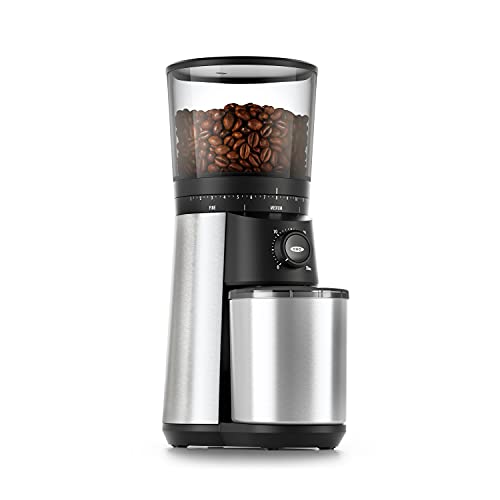
OXO
OXO Brew Conical Burr Electric Coffee Bean…
- 40mm stainless steel conical burrs: Precision grinding system produces uniform coffee grounds to ensure even extraction for rich,…
- 15 grind settings (plus 43 micro-adjustments): Easily customize your coffee grind—from fine for espresso to coarse for French pres…
- One-touch start: The Conical Burr Coffee Grinder remembers your last setting. Just push to grind—no need to reset each time.
As an Amazon Associate I earn from qualifying purchases.
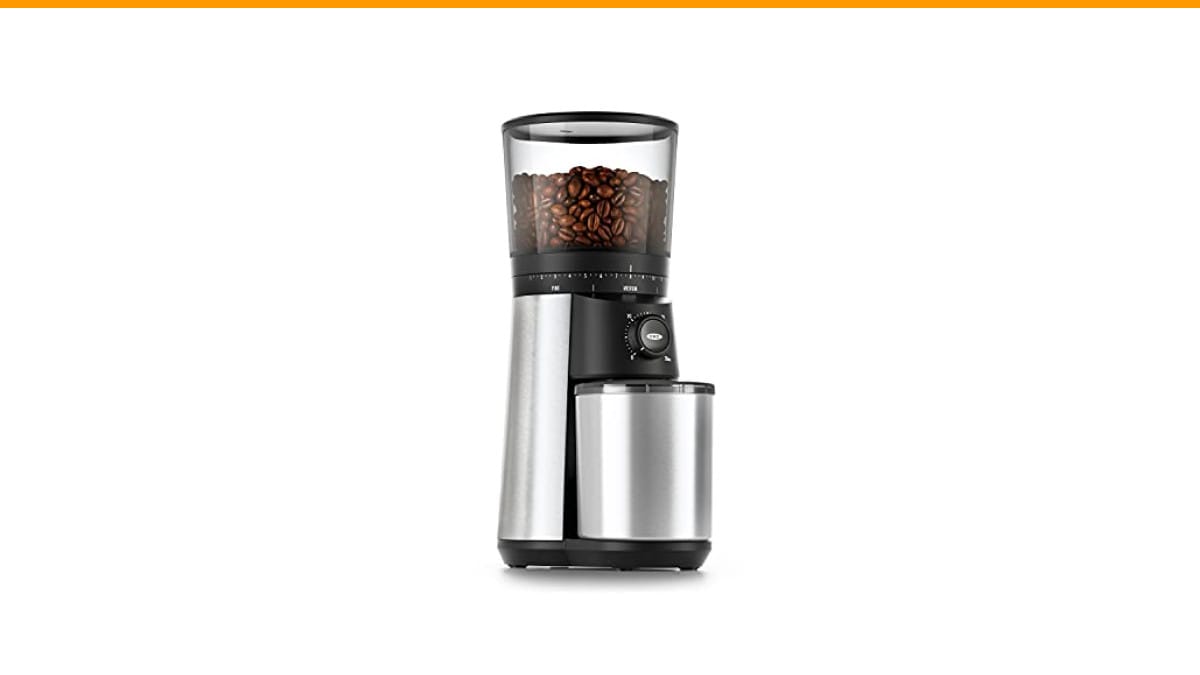
If you’re in the market for a reliable home grinder, the OXO Brew Conical Burr Grinder handles dark roasts and fine espresso settings without skipping a beat. We’ll reference it below because it’s a common test unit on my counter, but the advice applies to any conical or flat burr grinder.
The Short Answer: Yes, But Not for the Reason You Think
You can use filtered water in a coffee burr grinder, but the grinder doesn’t extract flavor. The water you brew with does that. So if you’re filtering water to make your coffee taste better, the filter is doing its job in the kettle, not in the grinder.
However, water can still reach your grinder in two sneaky ways: condensation from a nearby kettle, or if you rinse the hopper and burr chamber with water to clean it. That’s where water quality actually matters for the hardware.
Most people worry about flavor. I worry about scale and rust. Hard water leaves calcium and magnesium deposits that bake onto steel burrs over time. Filtered water with low mineral content prevents that buildup, which keeps your grind size consistent for longer.
Why Grinder Water Quality Matters (Hint: It’s Not About Taste)
The grinder’s job is to produce uniform particles. Any water that gets inside the burr chamber can cause three problems: rust, scale, and clumping. Let’s break each one down.
Preventing Rust and Scale on Burrs
Burrs are made of hardened steel or ceramic. Steel burrs, like the 40mm stainless steel set in the OXO Brew grinder, are magnetic and can rust if exposed to high-chloride water. Tap water with high chlorine accelerates oxidation. Filtered water removes most of that chlorine, so it’s safer for the metal.
Scale is a different beast. Hard water (above 120 ppm TDS) leaves a chalky white deposit when it evaporates. If you rinse your grinder and don’t dry it fully, that scale builds up in the crevices of the burrs. It doesn’t just look bad; it changes the burr geometry, which means your grind size drifts over time.
I’ve seen a grinder with a thick layer of scale on the outer burr ring. It ground fine for a while, then started producing more fines because the edges weren’t sharp anymore. A vinegar soak fixed it, but it took an hour of scrubbing.
Reducing Static and Clumping
Here’s a detail most guides miss: the mineral content of water affects static cling. Actually, it’s the lack of minerals that increases static. Distilled water has almost no dissolved solids, so it’s a poor conductor. When you rinse a grinder with distilled water and dry it, the plastic chute and grounds bin build up static charge. Coffee grounds stick to the sides, and you get clumps that don’t break apart.
Filtered water with moderate hardness (around 50-100 ppm TDS) has enough ions to dissipate static. That’s a practical reason to use filtered tap water rather than distilled or RO water when cleaning your grinder parts.
One more note: if you live in a dry climate, static is already a problem. Using highly purified water to clean the grinder makes it worse. Stick with filtered tap water or a mineral-balanced recipe.
The Real Danger: Distilled and RO Water in Your Grinder
Distilled water and reverse osmosis water are too aggressive. They have near-zero TDS, which means they want to dissolve minerals from whatever they touch. In your grinder, that means they’ll leach ions from the steel burrs, especially if the water sits on the metal for more than a few minutes.
This is the same reason you shouldn’t drink only distilled water for long periods; it strips electrolytes from your body. Your grinder burrs are similar. They’ll corrode faster with pure water than with hard tap water.
So the answer to “can you use filtered water in a coffee burr grinder” shifts: yes, use filtered water, but avoid distilled or RO water for cleaning. A carbon filter pitcher (like Brita) is perfect. It removes chlorine and sediment while leaving enough minerals to keep the water stable.
How to Check Your Tap Water Hardness in 2 Minutes
Before you buy a filter or change your cleaning routine, test your water. You can get a cheap hardness test strip kit for about $10. Dip a strip in a glass of tap water, wait 30 seconds, compare the color to the chart.
Here’s what the numbers mean for your grinder:
- 0-60 ppm: Soft water. Safe for burrs, but may increase static. Use a small amount of water when cleaning.
- 60-120 ppm: Ideal range. Balanced minerals, low scale risk. This is what you want.
- 120-180 ppm: Moderately hard. Scale will build up if you don’t dry the grinder thoroughly.
- 180+ ppm: Very hard. Use filtered water for cleaning, or you’ll be descaling burrs every few months.
If your tap water is above 120 ppm, a simple pitcher filter will drop it to the safe zone. If it’s already below 60 ppm, don’t bother filtering for grinder maintenance; just focus on drying parts completely.
The Best Filtered Water Setup for Grinder Longevity
You don’t need a fancy under-sink system to protect your grinder. Here’s a cost-benefit breakdown of the options.
Pitcher Filters (Brita) vs. Under-Sink Systems
Pitcher filters are cheap (around $20-$30) and reduce chlorine, sediment, and some heavy metals. They don’t soften water much, but they’re enough to prevent scale on burrs. The downside is they need frequent filter changes, usually every 40 gallons.
Under-sink systems with a carbon block filter are better if you brew a lot. They handle more volume and have a dedicated faucet. But they cost $100-$200 plus installation. For grinder maintenance alone, that’s overkill.
My recommendation: use a pitcher filter for both brewing and grinder cleaning. It’s the simplest way to get consistent water quality without spending a fortune.
The DIY Mineral Recipe for Perfect Brewing Water
If you’re a coffee nerd, you already know about Third Wave Water packets. They add magnesium and calcium back into distilled water to hit the SCA standard for extraction. But you can make your own with Epsom salt and baking soda.
For a 1-liter batch: add 0.5 grams of Epsom salt (magnesium sulfate) and 0.2 grams of baking soda (sodium bicarbonate) to distilled water. This gives you about 100 ppm TDS with a good balance of hardness and alkalinity. This water is great for brewing and safe for your grinder.
Just don’t use this recipe for cleaning your grinder. The minerals are fine, but you don’t need them for a rinse. Plain filtered tap water is better for washing parts.
When to Skip Filtered Water Entirely
There’s one situation where you shouldn’t use filtered water: if your grinder is new and you’re seasoning the burrs. Seasoning involves running a few pounds of cheap beans through to smooth out the burr edges. Water has no role in that process, and adding moisture to new burrs can cause flash rust if the burrs have any exposed iron.
Also, skip filtered water if you’re cleaning a grinder with plastic gears. Some budget grinders have nylon gears that can warp with hot water. Always use room-temperature filtered water and dry everything immediately.
For the OXO Brew grinder, the hopper and grounds bin are removable and dishwasher-safe, but the burr assembly isn’t. Wipe the burrs with a dry brush or a lightly dampened cloth, then dry with a microfiber towel.
Final Verdict: Filtered Water is a Yes, Pure Water is a No
Here’s the bottom line after testing dozens of grinders and water sources.
- Use filtered tap water (50-100 ppm TDS) for cleaning your grinder’s removable parts and wiping down burrs.
- Never use distilled or RO water on burrs; it causes corrosion and increases static cling.
- Test your tap water hardness once with a $10 test strip to know your baseline.
- If your water is above 120 ppm, a Brita-style pitcher filter is enough to protect your grinder from scale.
- Dry every part completely after any water contact. Moisture is the real enemy, not the water itself.
- For brewing, use the same filtered water to improve extraction and flavor. It’s a two-for-one benefit.
- Consider a DIY mineral recipe if you’re serious about espresso, but stick to plain filtered water for gear maintenance.
Your grinder will last years longer if you treat water like a tool, not a threat. Filter it, use it sparingly, and dry everything before reassembling. That’s the whole secret.
For more on keeping your equipment in top shape, check our guide on burr grinder vs blade and if you’re troubleshooting, this piece on Bodum grinder issues might help. And if you’re wondering about disposal, don’t miss coffee grounds down the sink.
Products related to this article
Sponsored / affiliate links. As an Amazon Associate I earn from qualifying purchases. I may earn additional commission from eligible campaigns.
 SOLUSTRE Electric USB Coffee Cup Warmer with Temperature Settings Portable Milk and Beverage Heating Coaster for Office Desk Small Lightweight Design Easy to Clean Surface Multi Functional
 Coffee Espresso Machine Handle Replacement Parts, Cafe Bracket Handle for Lidl Silvercrest CM4621 CM4218 KF5002 KF500S Barista (for 51mm Portafilter Basket - Not included)
 Stainless Steel Moka Pot Coffee Filter Disc for Espresso Brewing, Coffee Maker Replacement Filter Plate for Home Office Coffee Bar Cafe (FOR 4 Cups)