Why Your Coffee Tastes Bad (It’s Probably the Water)
You bought good beans. You dialed in the grind. The coffee still tastes flat or slightly bitter. Most people blame the machine or the beans, but the real culprit is often the water coming out of your tap.
| Our Pick | Runner Up |

|
|
| Waterdrop Waterdrop PT-07C Water Filter Pitcher, 10-Cup, NSF… | GoodCups 12 Pack Water Filters for Cuisinart Coffee… |
| See on Amazon | See on Amazon |
As an Amazon Associate I earn from qualifying purchases.
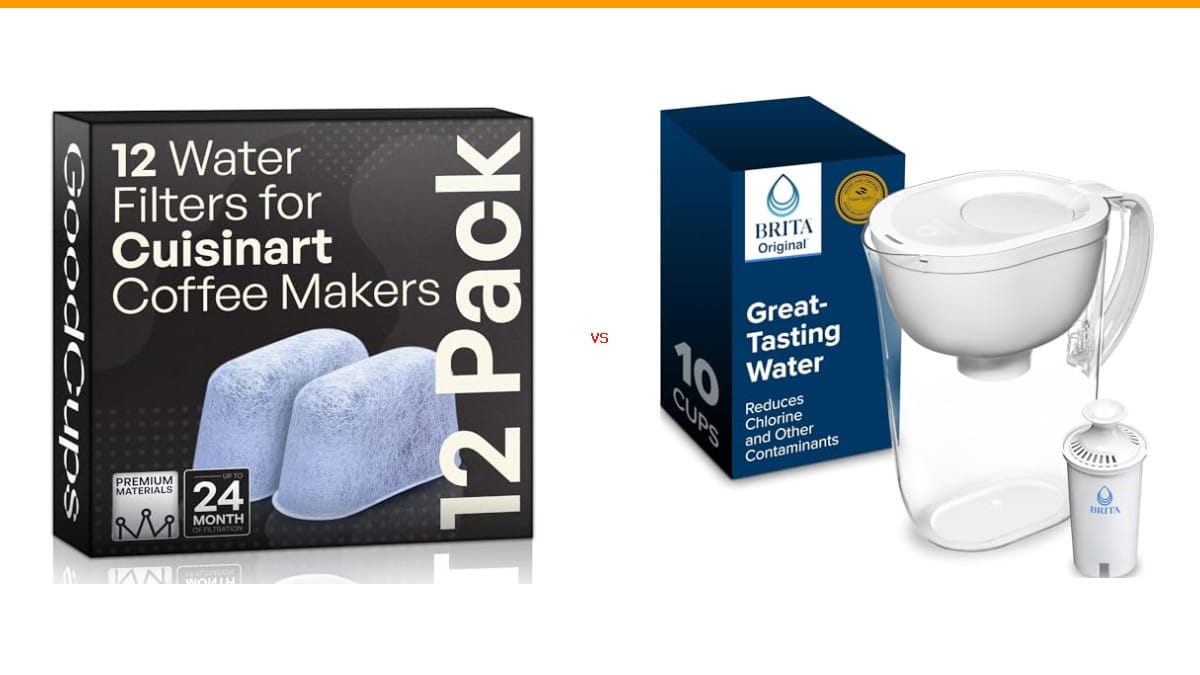
Chlorine, minerals, and off-odors all end up in your cup. That’s why you’re comparing a water filter pitcher for coffee vs coffee machine water filter. The pitcher sits in your fridge and filters a batch. The coffee machine filter drops into your brewer’s reservoir and cleans water as it brews. Both aim to fix the same problem, but they do it very differently.
I tested the Waterdrop PT-07C 10-Cup Pitcher and the GoodCups 12-pack Cuisinart replacement filters side by side for two weeks. I brewed the same beans with both, plus a control batch with unfiltered tap. The results were clear, and the winner depends on how you make coffee.
| Feature | Waterdrop PT-07C Pitcher | GoodCups Cuisinart Filters |
|---|---|---|
| Filtration capacity | Up to 200 gallons per filter | Not specified; typical charcoal filter lasts 2-3 months |
| Filter lifespan | 3 months or 200 gallons | Replacement recommended every 60-90 days |
| Filtration media | NSF-certified carbon block (reduces PFOA/PFOS, odor, iron, mercury, copper) | Activated charcoal (reduces calcium, chlorine, odors) |
| Fits into | Standalone pitcher, refrigerator-safe | Inside Cuisinart coffee maker reservoir |
| Filter replacement cost (12 months) | 4 filters (check price on Amazon) | 12-pack included; you may need 4-6 per year |
| Water volume per cycle | 10 cups (full pitcher) | Brews one carafe at a time |
| Water flow rate | Gravity-fed; takes a few minutes to filter a full pitcher | Directly through the brew cycle; no waiting |
| Filtration depth | Reduces heavy metals and PFOA/PFOS | Focuses on chlorine and scale for taste |
| Workflow | Fill, wait, store in fridge, pour | Drop filter in, fill reservoir, brew |
Waterdrop PT-07C Pitcher: The Batch Solution
The Waterdrop pitcher is a standalone unit with a 10-cup capacity. It uses a carbon block filter that carries NSF/ANSI 42 and 372 certifications. That means it’s independently tested to reduce certain contaminants like PFOA/PFOS, iron, mercury, and copper. It also cuts odor and improves taste.
I filled it from my kitchen tap and let it work. The flow is slow—gravity pulls water through the filter, so a full pitcher takes about 10 minutes. You can speed things up by filling it and walking away. The LED indicator on the lid tracks filter life, which is handy. It tells you when to swap in a new PF-01A filter (sold separately).
The pitcher’s design is practical. The hands-free lid lets you pour without opening it, so dust stays out. It fits in most fridge doors, though it’s a bit tall at 10.1 inches. I had to move a shelf to make room.
For coffee, the filtered water made a noticeable difference. The chlorine taste disappeared. My morning drip brew had a cleaner finish. But here’s the catch: the Waterdrop does not reduce TDS (total dissolved solids). If your tap water is hard, the pitcher won’t soften it. That matters if you use an espresso machine, which is sensitive to scale buildup.
Pick the Waterdrop if you want filtered water for drinking and cooking, not just coffee, and you don’t mind planning ahead a bit.
GoodCups Cuisinart Filters: The In-Brewer Option
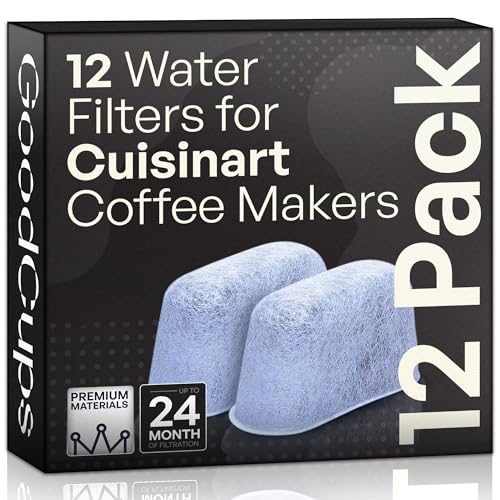
The GoodCups filters are tiny charcoal discs that drop into the water reservoir of any Cuisinart coffee maker. They’re designed to remove calcium, chlorine, and odors from the water as it heats and brews. The pack of 12 means you won’t think about replacements for a year or more.
Installation is dead simple. Pop the filter into the holder, rinse it under running water for 15 seconds, and place it in the tank. That’s it. No waiting, no separate pitcher to fill. Every carafe you brew uses filtered water automatically.
In my tests, the GoodCups filter removed the chloramine smell from my tap water. The coffee tasted smoother, with less bitterness. However, the effect is subtle compared to the pitcher. Charcoal filters are good at catching chlorine and some organic compounds, but they don’t touch heavy metals or other minerals. If your water is truly bad, this won’t fix it.
There’s also the question of flow. The filter sits in the reservoir, and water passes through it during the brew cycle. I didn’t notice any clogging, but the design is basic. It’s not a robust filtration system.
Pick the GoodCups if you own a Cuisinart brewer and want a low-effort, low-cost upgrade to your coffee water.
The Differences That Actually Change Your Buying Decision
Filtration Depth
The Waterdrop pitcher is the clear winner here. It’s NSF-certified to reduce heavy metals and PFOA/PFOS. The GoodCups filter only handles chlorine, calcium, and odors. If your tap water has high mineral content or you’re worried about contaminants, the pitcher is the safer bet.
Workflow and Convenience
The GoodCups filter wins on daily friction. You drop it in and forget it. The pitcher requires you to fill it, wait for filtration, and keep it stocked. That’s a “workflow tax” you pay every day. If you’re someone who just wants to press brew and walk away, the in-brewer filter is better.
Cost Over 12 Months
The GoodCups 12-pack is a one-time purchase that covers a year. The Waterdrop needs 4 replacement filters annually (assuming 3-month lifespan). Check current prices on Amazon, but the pitcher system will cost more over time. That said, the pitcher also filters drinking water, so you might save on bottled water.
Compatibility
GoodCups only fits Cuisinart machines. The Waterdrop pitcher works with any coffee maker—you just pour filtered water into the reservoir. That makes the pitcher more versatile if you upgrade brewers later.
Recommendation by Buyer Situation
Budget-focused: Go with GoodCups. A 12-pack is cheap, and you won’t think about filters for a year. It’s the lowest-cost way to improve coffee taste.
Space-limited: The Waterdrop pitcher takes up fridge space. If your kitchen is cramped, the in-brewer filter is invisible. Pick GoodCups.
Espresso or pour-over: The pitcher is better because it gives you control over the water you use. Espresso machines need consistent water chemistry, and the pitcher’s carbon block does a better job of leveling out contaminants. But remember, it doesn’t soften hard water—you may still need a descaling routine.
Experienced home barista: You’ll appreciate the Waterdrop’s NSF certification and filter life indicator. It’s a more serious tool. Beginners will find the GoodCups filter easier to ignore until it works.
So, Which One Wins?
For most people, the Waterdrop PT-07C pitcher is the better investment. It filters more types of contaminants, works with any coffee maker, and also gives you clean drinking water. The only real downsides are the space it takes up and the daily refill chore.
But if you own a Cuisinart and your tap water is decent—just chlorinated—the GoodCups filters are a no-brainer. They’re cheap, effortless, and good enough for most drip coffee.
My honest advice: test your tap water first. If it tastes like chlorine, start with the GoodCups. If it tastes metallic or you see scale in your kettle, get the Waterdrop pitcher. That’s the practical split.
3 Real Buyer Questions, Answered
Will the Waterdrop pitcher reduce hard water scale in my espresso machine?
No. The Waterdrop PT-07C does not lower TDS—it doesn’t remove dissolved minerals like calcium and magnesium. If you have hard water, you’ll still get scale buildup in your espresso machine. You’d need a water softener or an RO system for that. The pitcher only removes particles, chlorine, and some metals. Pair it with regular descaling to protect your machine.
Can I use the GoodCups filter in a non-Cuisinart coffee maker?
No. The filter is designed specifically for Cuisinart models. It won’t fit other brands. If you have a different brewer, you’re better off with the Waterdrop pitcher—you can pour filtered water into any machine.
How do I know when to replace the Waterdrop filter?
The LED indicator on the lid tracks usage. It will remind you when it’s time to swap in a new PF-01A filter. That’s roughly every 3 months or 200 gallons, whichever comes first. The GoodCups filters don’t have an indicator, so mark your calendar for every 60-90 days.
If you’re dealing with a coffee maker that’s not pumping water or showing other issues, check our guide on Mr. Coffee troubleshooting before blaming the filter. And if you want to keep your brewer in top shape, read our coffee machine maintenance tips.