
Your morning ritual usually starts with the gentle hum of the grinder and the hiss of steam. But this morning, the machine sounded like a jackhammer. A loud, rattling bang that shook the counter. You pulled the cup out and wondered if the whole thing was about to blow up.
Here’s the truth: an espresso machine is a small hydraulic system. It forces water through coffee at 9 bars of pressure. That pressure creates vibration, and vibration creates noise. But there’s a big difference between normal mechanical chatter and a sound that signals real trouble. This guide will help you match the specific noise to the component causing it, so you can decide whether to fix it yourself or call a technician.

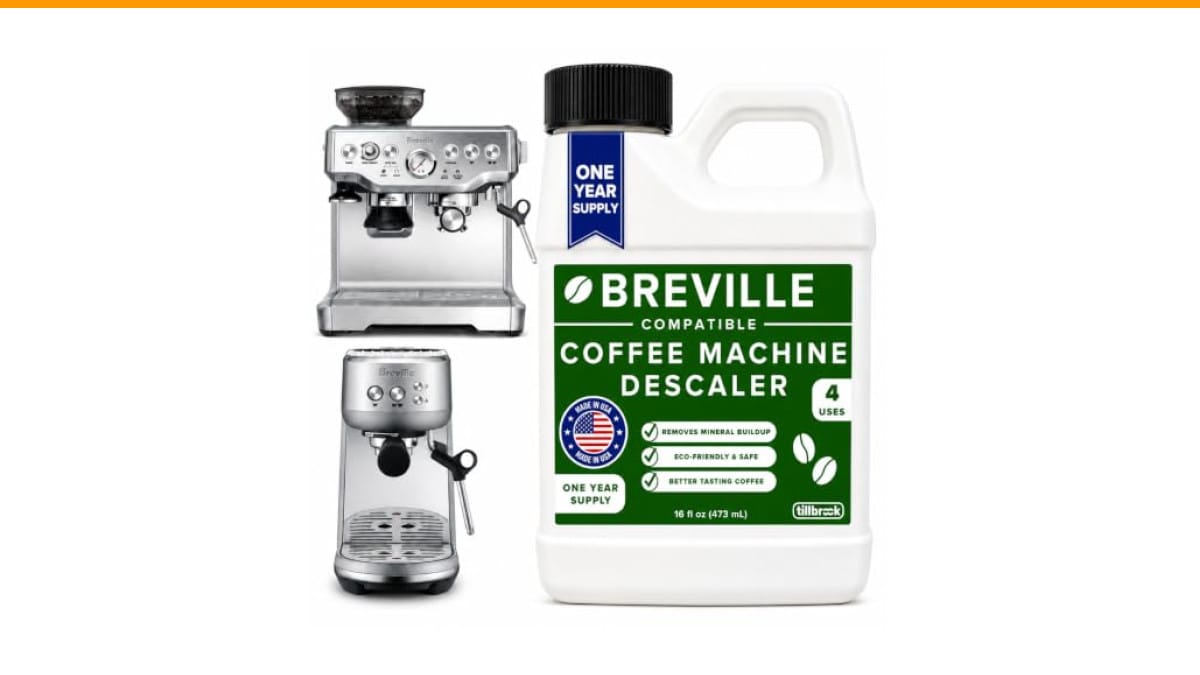
Tillbrook
Breville Espresso Machine Compatible Descaler, 4 Uses,…
- EXCEPTIONAL RESULTS: Introducing Tillbrook Coffee Machine Descaler specifically formulated for Breville—the best choice for removi…
- 1 YEAR SUPPLY: Our concentrated formula is easy to use and provides remarkable value with 4 cleanings per bottle. Simply add 1/2 c…
- SCIENTIFICALLY ENGINEERED: Our advanced descaling solution is carefully crafted with powerful, all-natural ingredients that remove…
As an Amazon Associate I earn from qualifying purchases.
Before you start troubleshooting, check one simple thing: the last time you descaled. Hard water scale is the root cause of most loud noises. A product like the Tillbrook Breville Descaler removes the mineral buildup that makes heating elements rattle and valves stick. I keep a bottle on hand because it’s a cheap fix compared to a new pump.
Quick Diagnosis: Match the Sound to the Source
Don’t guess. Listen to the exact character of the noise and when it happens. Use this table as your first reference point.
| Sound You Hear | When It Happens | Likely Culprit | Severity |
|---|---|---|---|
| High-pitched buzzing | During brewing | Vibration pump struggling | Medium |
| Loud clicking | After brewing cycle | Solenoid valve | Low |
| Gurgling or knocking | Heating up | Boiler scale build-up | High |
| Squealing | Steam wand use | Blocked tip or valve | Low |
| Loud pop then silence | Any time | Thermal fuse blown | Critical |
Most machines use a vibration pump, not a rotary pump. The vibration pump is a small electromagnetic coil that pushes a piston back and forth 60 times per second. That movement is inherently loud. Rotary pumps, found in commercial machines, spin instead of hammering. They are much quieter but cost three times as much. If you have a home machine, you likely have a vibration pump, and some noise is normal.
Pump Noises: Buzzing and Rattling
A constant, angry buzz during the brewing cycle usually means the pump is working too hard. The most common reason is a lack of water flow. The pump needs water to cool and lubricate it. Running it dry creates a high-pitched whine that sounds like a dying mosquito.
Priming the Pump and Checking Water Flow
First, check the water tank. It sounds obvious, but many machines will happily suck air if the tank is just below the intake tube. Fill it completely. Next, run water through the group head without any coffee in the portafilter. If the flow is weak or sputters, you have an airlock.
To fix an airlock, turn the machine off. Remove the water tank and gently tap the pump inlet tube to dislodge any trapped air bubbles. Reattach and run water again. If the pump still screams, check the inlet filter. A clogged filter restricts flow, making the pump work harder and louder than it should.
One thing I learned the hard way: don’t ignore a noisy pump for weeks. The pump has a small plastic impeller that can crack under stress. Once that happens, you are replacing the entire unit. A replacement pump costs $40 to $80, plus your time. A descale costs $15. Removing limescale early prevents the pump from ever reaching that failure point.
Steam Wand Squealing and Hissing
A shrill whistle from the steam wand is not the wand itself. It is the steam trying to squeeze through a tiny gap. The milk proteins and sugars burn onto the tip, narrowing the opening. The steam accelerates through the gap, creating a piercing tone.
Cleaning the Wand Tip and Anti-Vacuum Valve
Remove the tip and soak it in hot water with a drop of dish soap. Use a pin to clear the tiny hole. That fixes 80% of squeals. If the noise persists, the issue is the anti-vacuum valve. This small valve opens when the steam wand is cold, letting air in to prevent a vacuum from forming. When scale builds up on the valve seat, it flutters, producing a high-pitched vibration.
You can test this by tapping the valve gently with the back of a spoon while the wand is steaming. If the noise stops, the valve is sticking. You can often clean it with a descaling solution, but sometimes the rubber seat hardens and needs replacement. It is a $5 part on most machines.
The Scale Problem: Gurgling and Knocking Sounds
This is the one that scares people. A loud knocking or gurgling sound coming from the boiler, especially during the heating cycle, means you have significant scale build-up. Here is what happens: the heating element heats water to create steam. Scale acts as an insulator. The element gets hotter than it should, and the water around it boils violently, creating steam bubbles that collapse. That collapse is the knocking sound. It is called steam hammer.
Scale is not just a noise issue. It shortens the life of the heating element. The element runs hotter, which eventually trips the thermal fuse. A thermal fuse is a one-time safety device. When it blows, the machine goes completely dead. You will hear a loud pop, then silence. That pop is the fuse breaking the circuit.
Water chemistry matters here. Calcium carbonate scale is hard and brittle. Magnesium scale is softer and easier to dissolve. If you have hard water, you need to descale more often. I recommend every three months if your water is above 150 ppm hardness. The descaling process is straightforward: run the solution through, let it sit, then rinse. It takes about twenty minutes.
A note on descaling: never use vinegar. It is too weak for heavy scale and leaves a residue that can damage the internal seals. Use a commercial descaler formulated for espresso machines. The Tillbrook solution is designed specifically for Breville machines and is all-natural, so it won’t leave a chemical aftertaste in your next shot.
Solenoid Valve Clicking and Vibrating
The solenoid valve is the part that stops water flow at the end of the brewing cycle. It is a magnetic switch that opens and closes rapidly. A single click when you stop brewing is normal. A rapid, chattering vibration is not. That chattering means the valve is not seating properly, often due to a small piece of coffee grounds stuck in the valve body.
You can often clear this by backflushing. This is the process of forcing water backward through the group head to dislodge debris. You need a blind basket, which is a portafilter basket with no holes. Run the machine for ten seconds, then stop. Repeat five times. If the chattering stops, you are good. If not, the valve coil might be failing, which requires a replacement part.
Super-Automatic vs. Semi-Automatic: Noise Differences
There is a clear difference in noise profiles between machine types. A semi-automatic machine like a Breville Barista Express has a single vibration pump and a simple grinder. The loudest moments are the pump during extraction and the grinder during dosing. These are distinct, short bursts of noise.
A super-automatic machine, like a Jura or Philips, combines everything into one unit. You get the grinder, the pump, and the brewing chamber all working together. The noise is more continuous and higher pitched because the internal mechanisms are compact. The grinder burrs in a super-auto are smaller, which creates a higher frequency sound. It is not louder, just more present.
The trade-off is convenience. A super-auto does everything for you, but it has more moving parts that can wear out. If you are deciding between the two, consider that automatic machines are easier to use but semi-automatics are easier to service yourself. That serviceability matters when a noise starts.
When to Stop: Emergency Shut-Off Sounds
Some sounds mean stop immediately. A grinding, metallic screech during brewing is the sound of the pump running without water. The internal piston is scraping against the cylinder wall. Let it run for more than a few seconds, and you will score the cylinder, ruining the pump.
A loud pop followed by complete silence is the thermal fuse. This is a hard failure. The machine will not turn back on. Do not try to bypass the fuse. It blew for a reason, usually a stuck heating element relay or severe scale. Replacing the fuse without fixing the underlying issue will just blow the new fuse, or worse, start a fire.
If you hear a loud bang and see water pooling underneath, you have a burst boiler or a failed pressure relief valve. Turn off the machine at the wall, not just the power button, and let it cool down. This is not a DIY repair. Take it to a professional.
Preventative Maintenance: The 6-Month Checklist
Most loud noises are preventable. Set a reminder to do these tasks every six months, and you will extend the life of your machine significantly.
- Descale the boiler: Use a commercial descaler every three to four months if you have hard water. This prevents steam hammer and thermal fuse failure.
- Backflush the group head: Do this weekly if you use dark roasted beans. Oily coffee residue builds up fast and clogs the solenoid valve.
- Clean the steam wand tip: Wipe it after every use and soak it in hot water weekly. A clean tip steams quieter and produces better microfoam.
- Check the water filter: If your machine has a built-in charcoal filter, replace it every two months. A clogged filter restricts flow and makes the pump work harder.
- Inspect the gaskets: Look at the group head gasket for cracks or hardening. A worn gasket causes pressure loss and hissing noises. Replace it when it looks flat.
- Listen for changes: Your machine has a baseline sound. If you notice a new noise that persists for more than two brewing cycles, investigate it. Don’t wait.
FAQ: Sudden Noise After Cleaning or Descale
Why is my machine making a loud noise after I just descaled it?
You likely left a bit of scale loose in the boiler. The descaling solution breaks up the scale, and some of those chunks are now floating around. Run two or three full tanks of fresh water through the machine to flush them out. If the noise is a gurgling, it is probably air trapped in the pump. Run water through the steam wand for 30 seconds to purge the air.
Is a loud buzzing sound normal when the machine is heating up?
A low hum is normal. A loud buzz is not. The heating element uses a relay to switch power on and off. A failing relay can chatter, creating a buzz. If the buzz is accompanied by the lights flickering, the relay is arcing and needs replacement. This is a job for a technician.
Can I use my machine if it is making a knocking sound?
No. The knocking sound is steam hammer, which means the heating element is overheating. Running the machine risks tripping the thermal fuse, which will kill the machine permanently. Stop using it, descale it, and test again.
Why does my machine sound like it is grinding rocks during brewing?
That is the sound of the pump cavitating. Cavitation happens when there is not enough water pressure feeding the pump. It is usually caused by a clogged inlet filter or a kinked water line. Check the water tank and the tube leading to the pump. If it is clear, the pump itself is failing.
How long should an espresso machine pump last?
A vibration pump typically lasts 500 to 1,000 brewing cycles. That is roughly two to three years for a home user. Running it dry or with hard water shortens that life dramatically. If you replace the pump, also replace the inlet filter and check the O-rings on the water line.
The Bottom Line: Listening to Your Machine
Your espresso machine is not silent, and it never will be. The key is knowing the difference between the hum of normal operation and the noise of distress.
- Match the sound to the component first, before buying any parts.
- Descale every three months if you have hard water. It is the cheapest insurance you can buy.
- Never run the pump dry. It will destroy the pump in under a minute.
- Backflush your group head weekly to keep the solenoid valve clear.
- A loud pop followed by silence means the thermal fuse blew. Stop and call a professional.
- Keep a commercial descaler like the Tillbrook solution on hand so maintenance is never delayed.
- If the noise changes suddenly and persists, fix it now. Waiting always costs more.
Your machine is telling you something. The question is whether you are listening.
Products related to this article
Sponsored / affiliate links. As an Amazon Associate I earn from qualifying purchases. I may earn additional commission from eligible campaigns.
 Coffee Espresso Machine Handle Replacement Parts, Cafe Bracket Handle for Lidl Silvercrest CM4621 CM4218 KF5002 KF500S Barista (for 51mm Portafilter Basket - Not included)
 Linnkyfloa Coffee Espresso Maker Handle Replacement for Stovetop Moka Pot or Percolator, Black Plastic for Spare Part Compatible with Italian(9-12 Cup)
 850W Electric Meat Cutter Machine,Automatic 5mm Meat Slicer Machine with Water Pressure Gun,Stainless Steel Slicing Shredding Dicing Machine for Pork Chicken Fish, 5mm/0.2in Meat Thickness