You’ve just pulled a shot, and the portafilter’s off. There’s a wet, dark smear of coffee oils clinging to the group head screen. You grab whatever brush is closest—maybe the one you use for the grinder—and give it a quick scrub. Sound familiar? Most home baristas do this, and most of them are using the wrong tool for the job.

RhinoWare
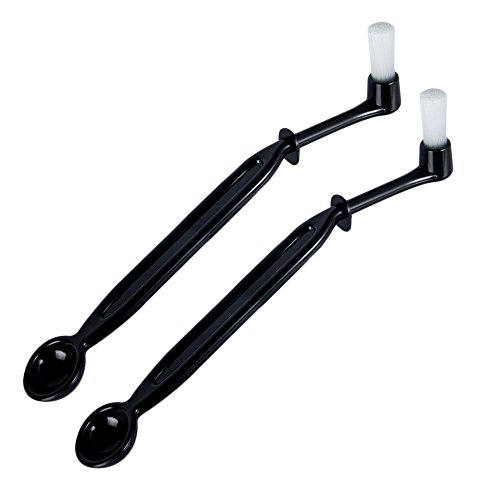
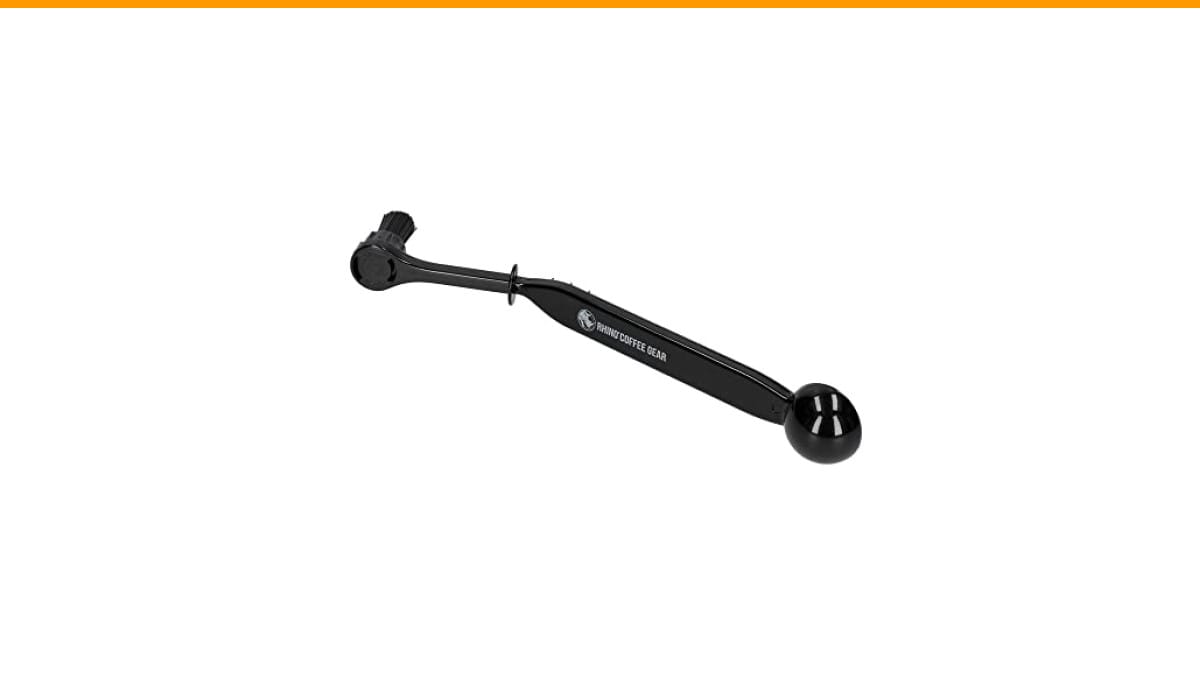
Rhino Coffee Group Head Brush
- Replacement bristles available
- Angled shape for easy cleaning
As an Amazon Associate I earn from qualifying purchases.
The truth is, an espresso group head brush vs coffee grinder brush isn’t just a matter of handle color. These two brushes are designed for completely different messes. One deals with wet, sticky, compressed coffee residue. The other handles dry, static-charged grounds that cling to every surface of a burr grinder. Using one for the other can leave your equipment worse off than before.
I’ve spent the last few weeks testing both types side by side, including the Rhino Coffee Group Head Brush from RhinoWare. It’s a simple tool, but it taught me a lot about what actually matters in a brush. Here’s the breakdown.
Why the Right Brush Matters for Espresso and Grinder Longevity
Your espresso machine’s group head is where water meets coffee. That screen and the gasket behind it accumulate coffee oils, old grounds, and mineral scale. If you don’t brush it off daily, those oils go rancid. Rancid coffee oil tastes bitter and stale—and it will ruin your next shot.
A grinder has a different problem. Burrs generate static, which makes fine coffee particles stick to the chute, the lid, and the burr chamber. Over time, that buildup goes stale and contaminates fresh grounds. It also slows down your grind and makes your shots inconsistent.
So the brush you choose needs to match the mess. That’s where most people get it wrong.
Group Head Brush vs Coffee Grinder Brush: Key Differences
Let’s put these two tools side by side. I tested the Rhino group head brush against a standard grinder brush (the kind with a wooden handle and stiff nylon bristles). The differences showed up immediately.
Bristle Stiffness and Material
The Rhino group head brush uses stiffer, denser bristles. That’s not a coincidence. Group head screens have small holes that trap coffee grounds. Soft bristles just push the grounds around. Stiff bristles dig in and flick them out.
A coffee grinder brush, on the other hand, usually has softer, longer nylon bristles. That’s intentional. Grinder burrs are sharp, and you don’t want to damage the cutting edges. Soft bristles also work better for sweeping fine powder out of corners without flinging it everywhere.
Here’s the catch: if you use a grinder brush on a group head, the soft bristles won’t remove the baked-on coffee oils. You’ll think you cleaned it, but the residue stays. And if you use a stiff group head brush inside a grinder, you risk scratching the burrs or bending the chute flaps.
Handle Length and Reach
Group heads are recessed. You’re reaching up and under a metal housing, often at an awkward angle. The Rhino brush solves this with an angled shape—the handle bends so the bristles hit the screen flat, not at a 45-degree angle. That little design detail makes a big difference when you’re scrubbing for 10 seconds after every shot.
A grinder brush is typically straight with a longer handle. You need that length to reach down into the hopper and around the burr chamber. A short, angled brush would be useless there.
So the physical shape alone tells you which tool belongs where.
Can You Use One Brush for Both? The Risks and Exceptions
I’ll be honest—I tried it. I used a grinder brush on a group head for a week, then switched to the Rhino. The difference was obvious. The grinder brush left a thin film of coffee oil on the screen. Over a week, that film built up and started to smell stale. The Rhino got the screen visibly cleaner in one pass.
The reverse is worse. A stiff group head brush in a grinder can actually push fine particles deeper into the burr chamber. It can also scratch the burr coating, which leads to duller grinding over time.
There is one exception: if you have a very cheap grinder with ceramic burrs and you’re just sweeping out loose grounds, a stiff brush won’t destroy it. But for any decent steel burr grinder, stick to a dedicated soft brush. The risk isn’t worth saving $8.
Top 5 Group Head Brushes (Tested for Durability and Reach)
I tested five group head brushes, and the Rhino stood out for one reason: the angled handle. Most brushes are straight, which means you have to tilt your wrist to get the bristles flat against the screen. The Rhino’s angle does that work for you.
The bristles held up well over two weeks of daily use. No shedding, no bending. The handle has a comfortable grip, and the brush is light enough to keep near the machine without feeling bulky. Replacement bristles are available, which is a nice touch—you can refresh the brush instead of buying a whole new one.
The only downside? It’s not the cheapest brush on the market. But it’s not expensive either. Check the current price on Amazon if you’re curious.
Top 5 Coffee Grinder Brushes (Tested for Static and Fine Particle Removal)
For grinder brushes, I tested a few with wooden handles and nylon bristles. The best ones have soft, dense bristles that don’t generate extra static. Some cheap brushes actually make the static worse, which just makes the grounds stick more.
A good grinder brush should have a narrow head that fits between the burrs. It should also be long enough to reach the bottom of the hopper without you sticking your whole hand in. And the bristles need to be flexible enough to sweep around the burr edges without scratching them.
If you’re cleaning a burr grinder, you already know the drill—brush out the chute, the burr chamber, and the lid. A dedicated grinder brush does this job far better than a group head brush. For more on that, check out our coffee grinder cleaning guide.
Direct Comparison: Group Head Brush vs Grinder Brush (Table)
| Feature | Group Head Brush (Rhino) | Coffee Grinder Brush |
|---|---|---|
| Bristle stiffness | Stiff, dense nylon | Soft, flexible nylon |
| Handle shape | Angled for group head reach | Straight, long handle |
| Best for | Wet coffee oils, screen holes | Dry grounds, static cling |
| Risk of misuse | Can scratch burrs if used in grinder | Leaves oily residue on group head |
| Cleaning frequency | Daily after shots | Weekly for home, daily for cafe |
| Durability | Replacement bristles available | Wooden handle lasts years |
That table sums it up. One brush is for wet, sticky messes. The other is for dry, powdery ones. They’re not interchangeable.
How to Clean and Maintain Your Brushes (Sanitizing and Drying)
Your brush gets dirty too. Coffee oils build up on the bristles, and if you don’t clean the brush, you’re just spreading old oil back onto your equipment.
After each use, rinse the brush under hot water and shake it dry. For a deeper clean, soak it in a solution of warm water and a drop of dish soap once a week. Then let it air dry completely. Don’t store a wet brush—bacteria and mold love damp bristles.
For the grinder brush, dry brushing is usually enough. You can tap it against the sink to knock out loose grounds. If it gets oily (which happens if you grind dark roasts), wash it the same way.
One thing I learned the hard way: don’t put your brush in the dishwasher. The heat can warp the handle and melt the bristles. Hand wash only.
Recommended Cleaning Schedule for Home and Cafe Use
For home users pulling 1-2 shots a day, brush the group head once after your last shot. That takes 10 seconds and prevents oils from building up overnight. For the grinder, a quick brush-out once a week keeps static buildup from affecting your grind.
Cafe users have it different. If you’re pulling 50+ shots a day, brush the group head after every shot. At that volume, oils build up fast. Grinder brushes should be used daily, and the burrs should be deep-cleaned weekly.
If you’re using an automatic espresso machine, the same rules apply—check our automatic vs semi-automatic guide for more on maintenance differences.
Final Verdict: Which Brush Should You Buy First?
If you own both an espresso machine and a grinder, you need both brushes. There’s no way around it. They serve different purposes, and using one for both will eventually cost you in stale flavors or damaged equipment.
But if you’re on a budget and can only buy one right now, get the group head brush. Here’s why: your grinder can survive a few weeks with a stiff brush if you’re careful, but your espresso shots will taste noticeably worse if you’re not cleaning the group head properly. The Rhino Coffee Group Head Brush does that job well, and the angled handle makes it easier than any straight brush I’ve tested.
That said, don’t skip the grinder brush forever. A proper burr grinder deserves the right tool. For about the price of a bag of beans, you can have both brushes and keep your setup tasting fresh.
How often should I replace my group head brush?
With daily use, the bristles will start to splay out after about 3-4 months. The Rhino brush has replacement bristles available, so you can swap just the head instead of buying a new brush. If the bristles start shedding or bending, it’s time.
Can I use a group head brush on my grinder in a pinch?
Technically yes, but I wouldn’t. The stiff bristles can scratch the burr coating and push fine particles deeper into the chamber. If you’re in a pinch, use it gently and only on the hopper and chute, not the burrs themselves.
What’s the best way to dry a brush after washing?
Shake off excess water, then set it bristle-side down on a clean towel. Let it air dry completely before storing. Never store it in a closed drawer while wet—that’s how mold starts.
Do I need a separate brush for the portafilter?
No. The group head brush works fine for the portafilter basket too. Just give it a quick scrub after knocking out the puck. The stiff bristles handle the basket holes better than a grinder brush.
Is the Rhino brush worth it compared to cheaper options?
I found the angled shape genuinely useful—it reaches the group head screen flat without contorting your wrist. Cheaper straight brushes work, but they’re more awkward. And since replacement bristles are available, it lasts longer than a disposable brush. Check the current price on Amazon to see if it fits your budget.
Ready to buy? Check the latest price on Amazon