You pull a shot after a long day, and it tastes… off. Slightly bitter, a little flat. You check the beans, the grind, the water. Everything looks fine. But that shot still isn’t right. Chances are, the machine itself is the problem.
Compact espresso machines get dirty faster than most people realize. The small boiler, narrow group head, and short steam wand leave less room for residue to hide, so coffee oils and mineral scale build up quickly. That buildup doesn’t just ruin taste—it slows down the machine, makes the steam wand sputter, and can even cause pressure problems. This guide walks you through a realistic cleaning routine for a compact espresso machine, from daily rinses to monthly deep cleans. You’ll know exactly what to do, how often to do it, and which products actually help.

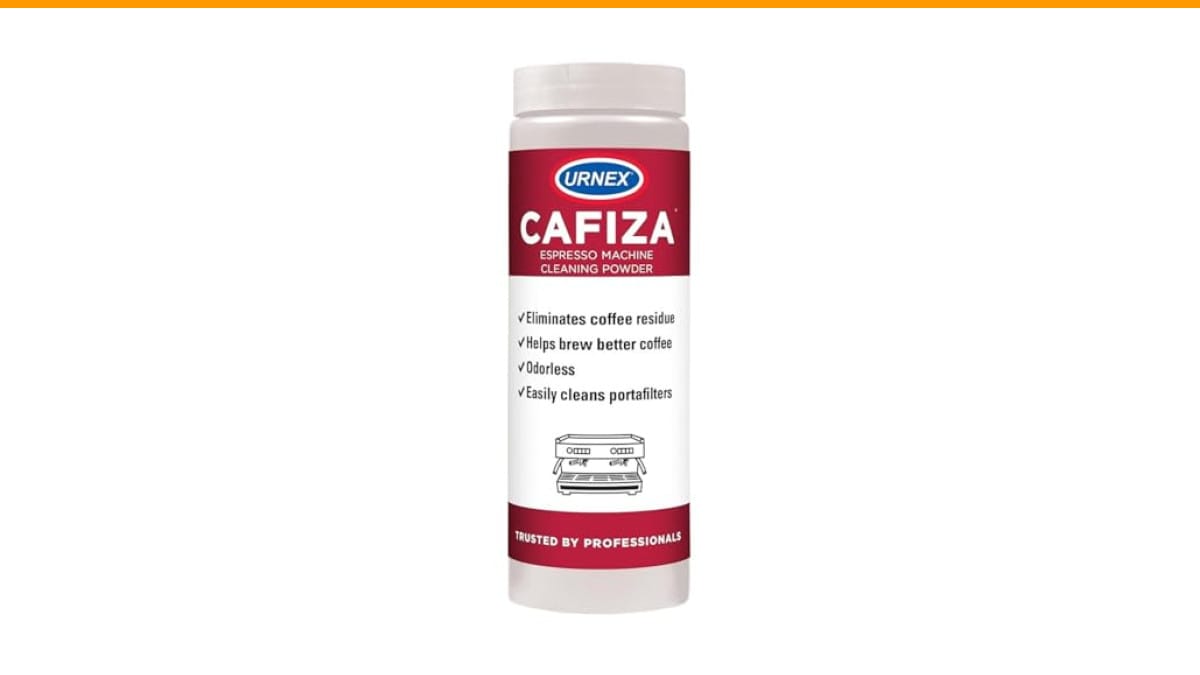
Urnex
Urnex Espresso Machine Cleaning Powder - 566…
- Eliminates coffee residue and oils from espresso machine group heads, valves and lines
- Specially formulated to clean heavily soiled equipment in a professional setting
- Powder format allows for easy and controlled dosing
As an Amazon Associate I earn from qualifying purchases.
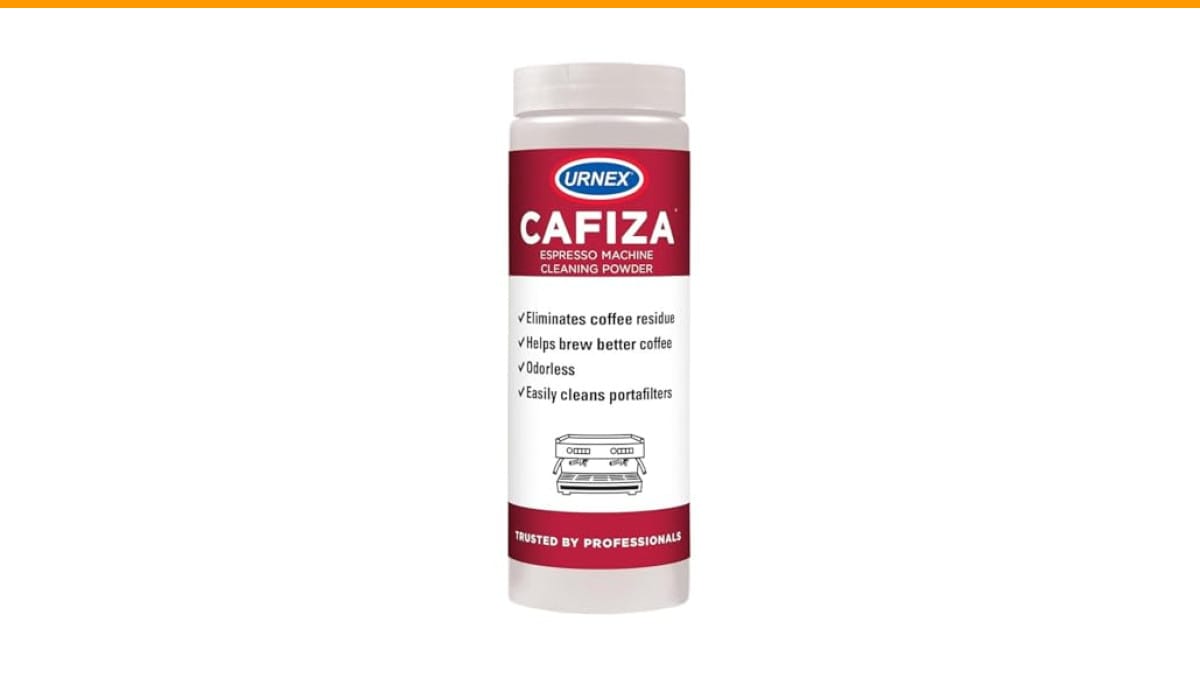
For the backflush step, I use a dedicated espresso machine cleaner. The Urnex Cafiza powder is a staple in home and cafe setups alike. It breaks down coffee oils that plain water won’t touch, and a little goes a long way—one container lasts months for a home user. It’s NSF-certified, which means it’s safe for food-contact surfaces, and it’s what I reach for when the group head starts looking dull.
Why Compact Machines Need a Different Cleaning Approach
Compact espresso machines—think 15-bar home units with a single boiler—share the same core components as commercial machines, but they’re built tighter. The internal tubing is narrower, the group head is smaller, and the water path is shorter. That means two things: residue travels less distance to reach your cup, and it’s harder to flush out once it settles.
Most people clean their machine once a month, if that. For a compact unit, that’s not enough. I’ve seen group heads clogged with hardened coffee oil in machines used twice a day for three weeks. The fix is simple: clean more often, but with a routine that’s fast enough to actually stick.
Here’s the breakdown of what needs attention and how often:
- Daily: Rinse the group head, purge the steam wand, wipe the exterior.
- Weekly: Backflush with a cleaning powder, soak the portafilter and basket.
- Monthly: Deep clean the water tank, descale if your water is hard, and check the steam wand tip.
That’s not excessive. Each step takes under ten minutes, and the weekly backflush is the one that makes the biggest difference.
The Daily Routine: 5 Minutes That Save You From a Deep Clean
Daily cleaning is about prevention, not restoration. You’re not trying to remove months of buildup—you’re stopping it from forming in the first place.
- Flush the group head. After your last shot of the day, place an empty portafilter in the group head and run water for 5–10 seconds. This pushes out loose coffee grounds and oils that would otherwise dry onto the screen.
- Purge the steam wand. After steaming milk, wipe the wand with a damp cloth, then open the steam valve for 2–3 seconds. This clears milk residue from inside the tip. Milk protein is sticky and hardens quickly—if you skip this, you’ll get that burnt-milk smell later.
- Wipe the exterior. Use a damp microfiber cloth on the body, drip tray, and steam wand. Don’t use abrasive cleaners; they’ll scratch the finish.
That’s it. Two minutes in the morning, two in the evening. Skipping this routine means you’ll need a full backflush every few days instead of weekly.
The Weekly Backflush: How to Use a Cleaning Powder Correctly
Backflushing is the single most important step for a compact espresso machine. It forces cleaning solution through the group head and back into the machine, dissolving coffee oils that cling to internal parts you can’t see.
Here’s the method I use, and it works for most home machines with a blind basket (a basket with no holes):
- Remove the regular basket and insert the blind basket into the portafilter.
- Add a small scoop of espresso machine cleaning powder—about 1–2 grams, roughly half a teaspoon. Urnex Cafiza comes with a scoop, and the powder dissolves quickly.
- Lock the portafilter into the group head.
- Start the brew cycle. Let water run for 10 seconds, then stop. Wait 30 seconds—this lets the solution soak.
- Repeat this cycle 3–4 times. You’ll see foam and cloudy water, which is the cleaner lifting oils out.
- Remove the portafilter, rinse it thoroughly, and run 2–3 full cycles of plain water through the group head to rinse any remaining cleaner.
If your machine doesn’t have a blind basket, you can use a rubber stopper or a backflush disc—many compact machines come with one. Check your manual; if not, a blank basket is cheap and worth the money.
I’ve tested cleaners side by side, and Cafiza works noticeably better than dish soap or vinegar. Dish soap leaves a film, and vinegar can damage the seals over time. Cafiza is formulated for coffee oils, so it cuts through without residue.
Monthly Deep Clean: Tackling Scale and Stubborn Spots
Even with a solid weekly routine, scale builds up inside the boiler and heating element. Hard water leaves calcium deposits that reduce heating efficiency and eventually cause the machine to overheat or shut off.
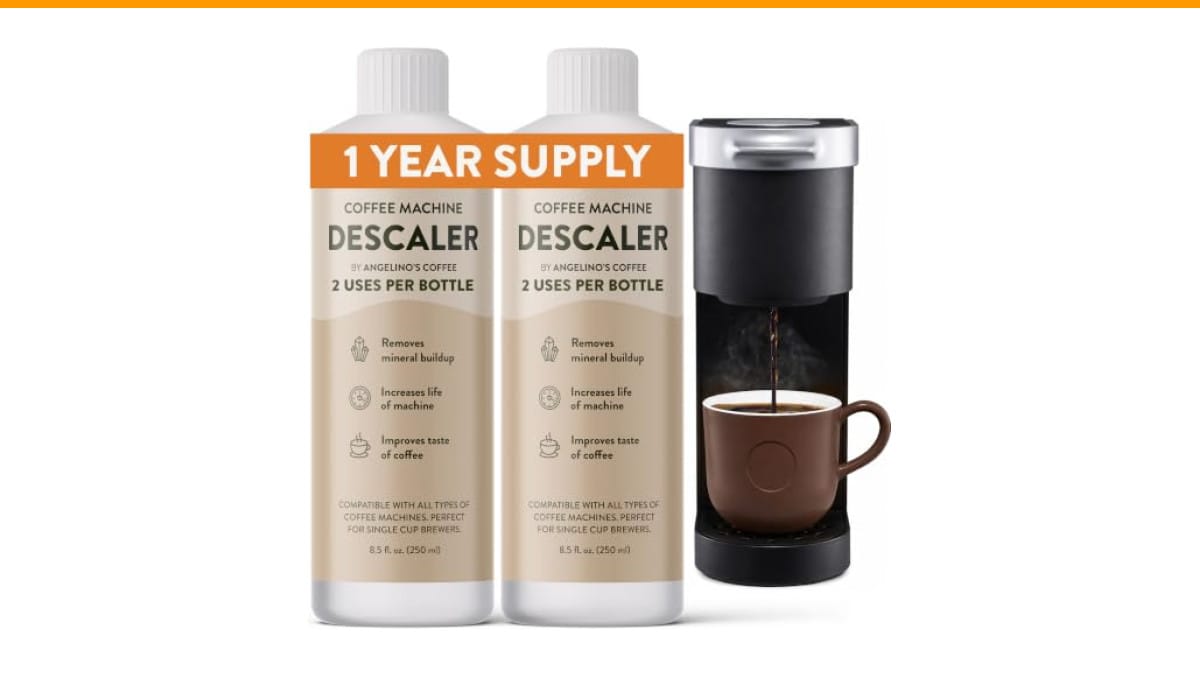
For descaling, use a product specifically for espresso machines—citric acid or espresso descaler works. Follow the manufacturer’s instructions for your machine. Most recommend running a descaling solution through the boiler, letting it sit for 15–20 minutes, then flushing with fresh water. Do this every 1–3 months, depending on your water hardness. If you notice the shot pulling slower than usual or the machine making a louder hissing sound, scale is likely the culprit.
While you’re at it, clean the steam wand tip. Remove the tip (if it’s removable) and soak it in a small cup of warm water with a drop of cleaning powder for 10 minutes. This clears any milk residue that has baked on. For the water tank, empty it, wash with mild soap and warm water, and rinse thoroughly. Don’t put it in the dishwasher—the heat can warp it.
One thing I learned the hard way: don’t forget the drip tray. It collects water and coffee drips, and if left for weeks, it grows mold. Wash it with soap and water weekly, and dry it completely before putting it back.
Comparing Cleaning Methods: What Works and What Doesn’t
| Method | Effectiveness on Coffee Oils | Effectiveness on Scale | Time per Session | Risk to Machine |
|---|---|---|---|---|
| Plain water flush | Low – removes loose grounds only | None | 1–2 minutes | None |
| Dish soap and water | Moderate – cuts some oils but leaves film | None | 5–10 minutes | Can leave residue in group head |
| Vinegar solution | Low – doesn’t break down coffee oils well | Moderate – works but slow | 20–30 minutes | Can degrade rubber seals over time |
| Espresso machine cleaner (Cafiza) | High – dissolves oils completely | None – not for scale | 5 minutes (backflush) | None when used as directed |
| Commercial descaler | None | High – removes calcium deposits | 15–20 minutes | Low – but must rinse thoroughly |
For a compact machine, I recommend a two-step approach: Cafiza weekly for oils, and a descaler quarterly for scale. That covers everything without overcomplicating things.
Frequently Asked Questions
How often should I backflush a compact espresso machine?
Once a week if you use the machine daily. If you pull more than 4 shots a day, do it every 3–4 days. The backflush takes under 5 minutes, so there’s no excuse to skip it.
Can I use vinegar to clean my espresso machine?
You can, but I don’t recommend it. Vinegar is acidic enough to remove scale, but it doesn’t dissolve coffee oils well, and the smell lingers in the boiler. Over time, the acid can wear down rubber seals. A dedicated espresso cleaner and a descaler cost less than a replacement machine.
Do I need a blind basket to backflush?
Yes, unless your machine has a dedicated backflush mode. A blind basket blocks water flow, forcing the cleaning solution through the group head and into the internal circuit. If your machine didn’t come with one, you can buy a compatible blind basket for under $10.
Why does my steam wand sputter after a few weeks of use?
That’s dried milk residue inside the tip. Milk proteins harden and restrict steam flow. The fix is to purge the wand immediately after every use, and soak the tip in warm water with a drop of cleaner weekly. If it’s already clogged, remove the tip and soak it for 20 minutes.
What’s the difference between descaling and backflushing?
Backflushing removes coffee oils and residue from the group head and internal lines. Descaling removes mineral scale from the boiler and heating element. Both are necessary, but they address different problems. Backflush weekly, descale quarterly.
What to Remember: A Quick Recap
- Flush the group head and purge the steam wand after every use.
- Backflush weekly with a proper espresso cleaner like Cafiza—don’t use dish soap or vinegar.
- Descale every 1–3 months, depending on water hardness.
- Clean the water tank, drip tray, and steam wand tip monthly.
- Use a blind basket for backflushing; if you don’t have one, buy one.
- Rinse thoroughly after any cleaning solution—leftover cleaner ruins the next shot.
- If you notice a change in taste or pressure, clean before you adjust grind or beans.
For a deeper dive on related topics, check out our guide on deep cleaning coffee machines and steam wand cleaning for more specific troubleshooting. And if you’re dealing with a machine that’s leaking or making noise, our noise troubleshooting guide might help.
Cleaning a compact espresso machine isn’t glamorous, but it’s the difference between a machine that lasts five years and one that dies at two. Stick to the routine, and your shots will taste as good as the day you unboxed it.
Products related to this article
Sponsored / affiliate links. As an Amazon Associate I earn from qualifying purchases. I may earn additional commission from eligible campaigns.
 Coffee Espresso Machine Handle Replacement Parts, Cafe Bracket Handle for Lidl Silvercrest CM4621 CM4218 KF5002 KF500S Barista (for 51mm Portafilter Basket - Not included)
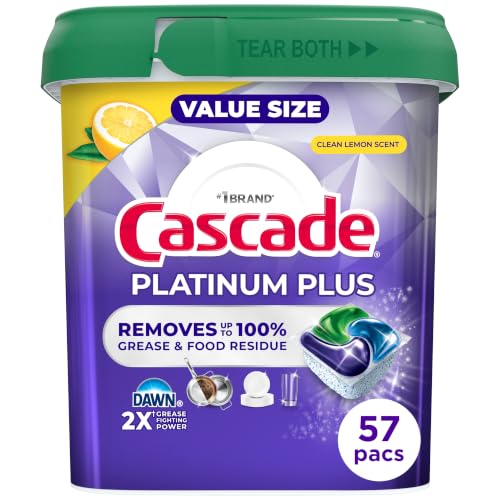 Cascade Platinum Plus Dishwasher Detergent Pods Dish Soap Lemon 57 Count
 Quick Heating Cup Warmer, Three Temperature Settings, Splashproof and Portable, for Coffee, Milk, Lightweight ABS Material