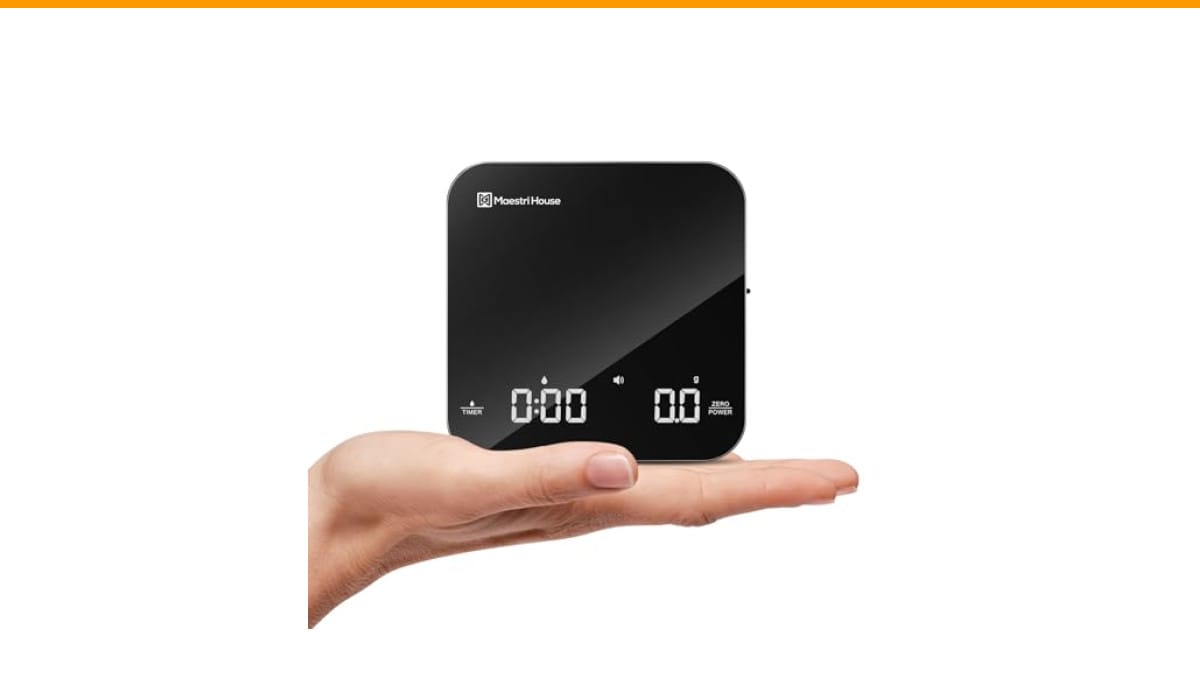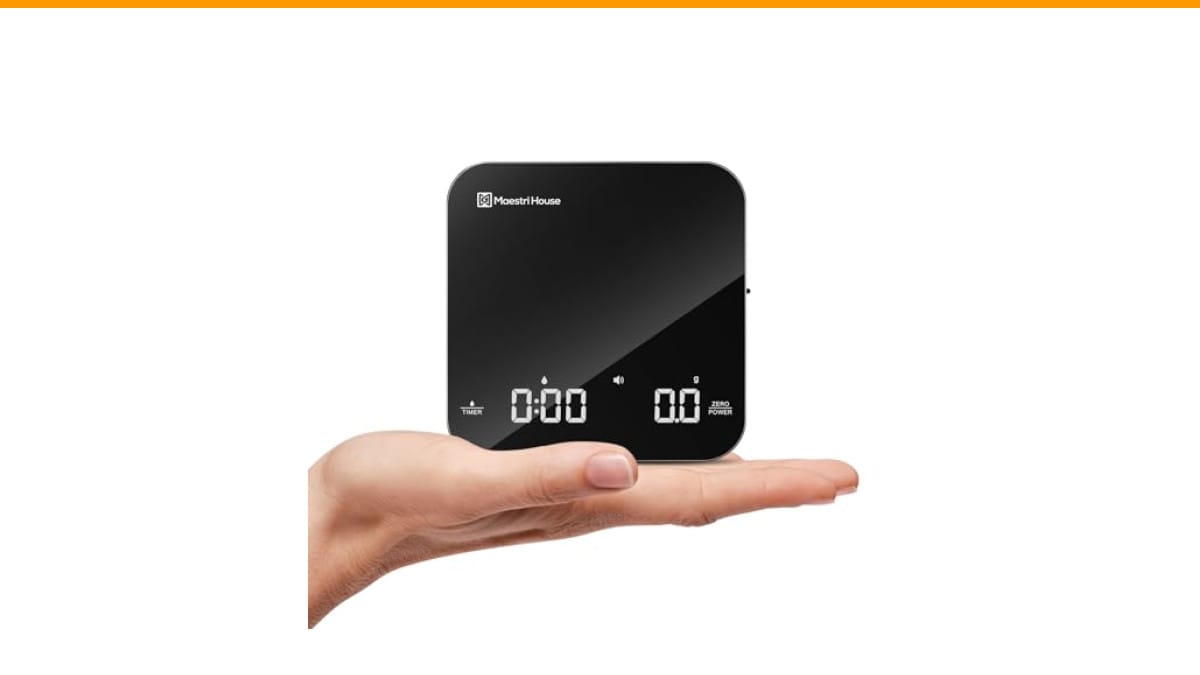
You just finished dialing in a new bag of beans. You nailed the 1:16 ratio, the brew time hit 3:30, and then you notice it. The scale pad has a crusty ring of old coffee sludge, and the buttons feel sticky. Every coffee scale with a timer collects this grime eventually. The question is how to clean it without wrecking the load cells inside.
Most people grab a wet paper towel and wipe the top. That works for surface dust, but it doesn’t sanitize. And if you get water into the seams, you will ruin the scale. I have killed a scale that way. This article walks you through the exact process I use now, the stuff to avoid, and how often you actually need to do this.
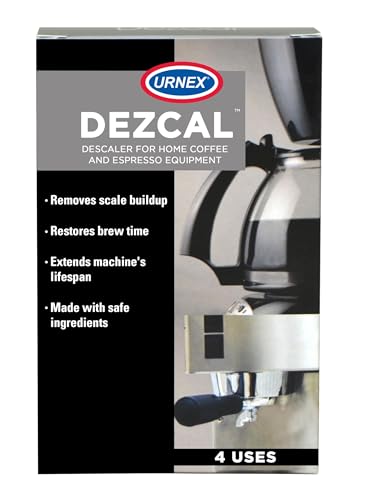
Urnex
Descaling Powder Solution - 4 Uses -…
- UNIVERSALLY COMPATIBLE DESCALER - This product can be used to descale Keurig machines, as well as Nespresso, Breville, Jura, Delon…
- BETTER THAN VINEGAR - Our formula is more effective at removing limescale than vinegar, works faster than vinegar, and is odorless
- MAINTAIN YOUR COFFEE EQUIPMENT - Descaling extends the lifespan of your machine, helping to prevent damage to heating elements, co…
As an Amazon Associate I earn from qualifying purchases.
You will learn the difference between cleaning, sanitizing, and descaling. You will also find out why your scale’s timer function can survive a coffee spill but not a soak in the sink.
If you are also battling mineral buildup inside your brewer, check out the descaling guide on this site. That is a separate job from scale sanitizing, but you will need both routines.
The Myth: Water and Soap Are Fine
Soap and water are not fine for most digital scales. The load cells inside a coffee scale are sensitive to moisture and physical shock. Water seeps into the plastic housing through the button membrane or the USB port. Once inside, it corrodes the circuit board. Your scale starts reading 5 grams when nothing is on it.
The other myth is that alcohol will strip the coating off the scale pad. Isopropyl alcohol at 70% is safe for the plastic and silicone pads on almost every consumer scale. It evaporates fast and kills bacteria. The trick is applying it to a cloth, not spraying it directly on the scale.
Spraying is the killer. The mist gets into the gap between the pad and the base. You cannot dry that gap easily. Use a damp cloth, not a spray bottle.
What You Actually Need to Sanitize a Coffee Scale
Gather these items before you start. You likely have them all in your kitchen already.
- Isopropyl alcohol (70% or higher)
- Distilled water or filtered water
- Microfiber cloth or lint-free cotton cloth
- Cotton swabs (Q-tips)
- Soft toothbrush (dedicated to gear cleaning)
- Paper towel for drying
Skip the bleach, vinegar, and citrus cleaners. Vinegar is acidic and can eat the adhesive holding the rubber feet. Bleach leaves a residue that transfers to your coffee grounds. Citrus oils can cloud clear plastic displays.
The process takes about five minutes. Do this every two weeks if you weigh coffee daily. Once a month is fine for occasional use.
Step-by-Step: The Safe Sanitizing Routine
Start by turning the scale off and removing the weighing platform if it lifts off. Many scales have a removable stainless steel or plastic top. If yours does not lift off, skip that part.
- Shake off loose coffee grounds over the trash. Do not blow on the scale; your breath pushes fine dust into the sensor area.
- Dampen a microfiber cloth with 70% isopropyl alcohol. Wipe the entire top surface, including the edges where the pad meets the base.
- Use a dry section of the cloth to wipe off the alcohol. Let it air dry for 30 seconds.
- Dip a cotton swab in alcohol and clean the buttons and the display bezel. Squeeze out excess liquid first.
- Use a dry cotton swab to clean the USB port opening and any seams. Do not poke the swab deep into the port.
- For sticky residue on the pad, use a soft toothbrush with a drop of dish soap mixed in water. Scrub gently in circles, then wipe with a damp cloth.
- Dry the entire scale with a paper towel. Do not use heat to speed up drying.
That is the whole routine. It removes coffee oils, kills bacteria, and does not damage the electronics.
What About Descaling the Scale Itself?
Your scale does not have limescale buildup. It does not heat water. The only reason you would use a descaler near your scale is if you are cleaning the machine next to it. Do not soak your scale in descaler solution.
However, if you are already running a descale cycle on your espresso machine, that is a good time to sanitize the scale too. You are already in cleaning mode. Just keep the scale away from any splashing descaling solution. The acid in descaler is harder on electronics than plain water.
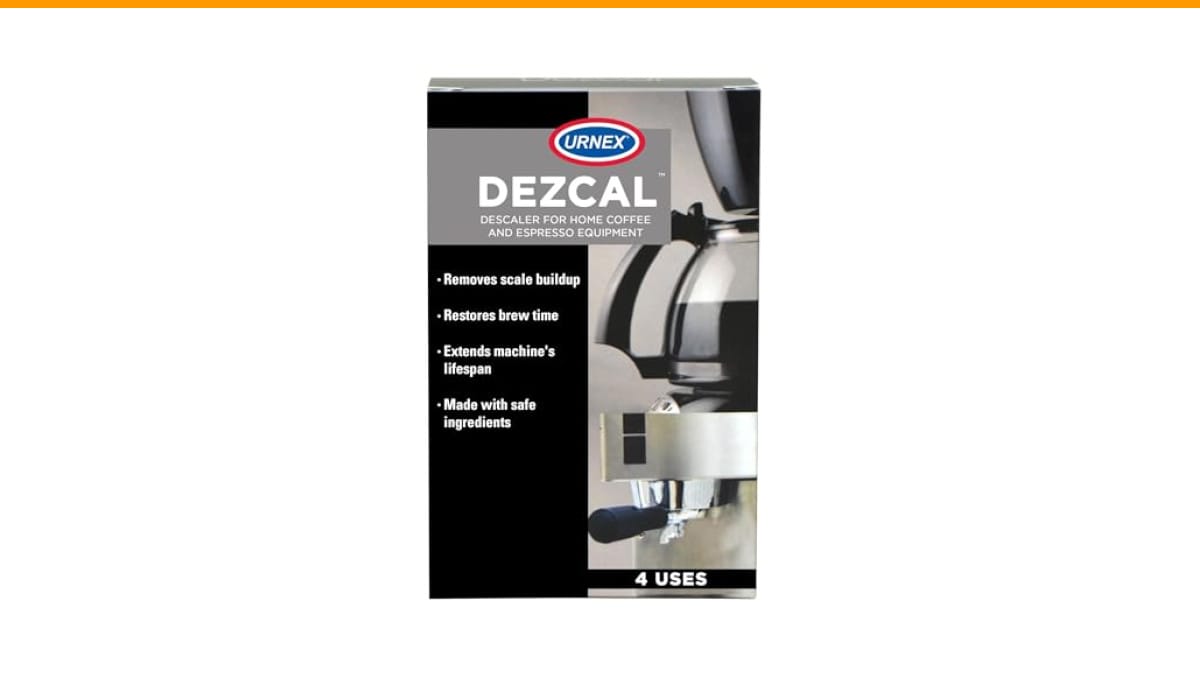
For the actual descaling job on your brewer, the Urnex Descaling Powder Solution works well. It dissolves in warm water and handles limescale in kettles and espresso machines. It is odorless, which beats the vinegar smell. Use it on the machine, not the scale.
If you want the full vinegar comparison, read this vinegar method article to see which approach fits your gear.
Comparing Sanitizing Methods
Here is a side-by-side look at the common approaches people try.
| Method | Kills Bacteria | Risk to Scale | Best For |
|---|---|---|---|
| 70% Isopropyl Alcohol | Yes | Low if applied to cloth | Regular sanitizing |
| Soap and Water | Partial | High if submerged | Removing sticky residue |
| Vinegar Solution | Yes | Medium (can corrode adhesive) | Deep cleaning plastic parts |
| Bleach Wipes | Yes | High (residue and corrosion) | Not recommended |
| Dry Cloth Only | No | None | Daily dust removal |
The alcohol method wins for most home baristas. It evaporates fast, leaves no residue, and does not require rinsing. The dry cloth is your daily habit. The other methods have too much downside for the benefit.
Common Mistakes That Break Scales
People ruin scales in predictable ways. I have seen all of these in coffee forums and in my own testing.
Submerging the scale in water is the fastest way to kill it. The load cells are not waterproof. Even a splash into a filled sink can be fatal. If you drop your scale in water, remove the batteries immediately and let it dry for 48 hours before testing.
Putting the scale in the dishwasher is not a thing. Do not do it. The heat warps the plastic and the water destroys the electronics.
Using abrasive scrubbers scratches the pad. Scratches trap coffee dust and make future cleaning harder. Stick to microfiber and soft brushes.
Ignoring the battery compartment is another mistake. Corroded batteries leak acid onto the contacts. Check the battery compartment every few months. If you see white powder, clean it with a dry cotton swab and replace the batteries.
For the rest of your coffee station, follow the proper cleaning routine to keep everything tasting fresh.
How Often Should You Sanitize?
Daily: wipe the pad with a dry cloth after your last brew. This removes loose grounds before they get ground into the surface.
Weekly: do the alcohol wipe down. This takes two minutes and keeps the buttons from getting sticky.
Monthly: do the full routine including the toothbrush scrub on the pad and a check of the battery compartment.
If you brew with dark roasted beans, you will need the weekly wipe more often. Dark roasts leave more oil residue. Light roasts are drier and leave mostly dust.
If you weigh sticky ingredients like honey or syrups, clean the scale immediately after use. Dried sugar is hard to remove and attracts ants.
Questions People Ask About Sanitizing Coffee Scales
Can I use hand sanitizer on my coffee scale?
Yes, if it is gel-based and you apply it to a cloth. Hand sanitizer contains alcohol plus thickeners. The thickeners can leave a film on the scale pad. That film can make your portafilter slide around. Stick to plain isopropyl alcohol if you have it.
Will sanitizing the scale affect the timer accuracy?
No. The timer is a simple quartz circuit. Cleaning the exterior does not change its timing. What affects timer accuracy is low battery or extreme temperatures. Keep your scale away from direct sunlight and heat sources.
Is it safe to use Clorox wipes on a coffee scale?
Clorox wipes contain bleach and other chemicals. The residue can transfer to your coffee grounds and your hands. Bleach also corrodes metal contacts over time. Use alcohol wipes instead. They are just as effective and leave nothing behind.
My scale has a removable stainless steel top. Can I wash it in the sink?
Yes, if the top is fully removable and the electronics are sealed inside the base. Wash the steel top with soap and water, dry it completely, and click it back on. Test the scale with a known weight after reassembly to make sure the connection is solid.
How do I get coffee stains off the white plastic display?
Make a paste of baking soda and water. Apply it with a soft cloth and rub gently. Wipe clean with a damp cloth. Do not use baking soda on the silicone pad; it is too abrasive. For the display, it works fine.
What to Remember for Long-Term Scale Care
- Use 70% alcohol on a cloth, never spray directly on the scale.
- Never submerge the scale in water or run it through the dishwasher.
- Wipe the pad dry after every use to prevent coffee oil buildup.
- Check the battery compartment monthly for corrosion.
- Keep the scale away from descaling solution when cleaning your espresso machine.
- Use a soft toothbrush for stubborn residue, not steel wool or scrub pads.
- If water gets inside, remove batteries and dry for 48 hours before testing.
Sanitizing a coffee scale with timer is a five-minute job that protects a tool you use every day. The scale is the most accurate piece of equipment in your coffee setup. Treat it like the precision instrument it is, and it will stay accurate for years.
Products related to this article
Sponsored / affiliate links. As an Amazon Associate I earn from qualifying purchases. I may earn additional commission from eligible campaigns.
 Coffee Espresso Machine Handle Replacement Parts, Cafe Bracket Handle for Lidl Silvercrest CM4621 CM4218 KF5002 KF500S Barista (for 51mm Portafilter Basket - Not included)
 Supvision 4 Cup Thickened Moka Pot 304 Stainless Steel 200ml
 Stainless Steel Moka Pot Pressed Powder Tool for 2 4 6 9 Cup Espresso Coffee Brewer(6 Cups)