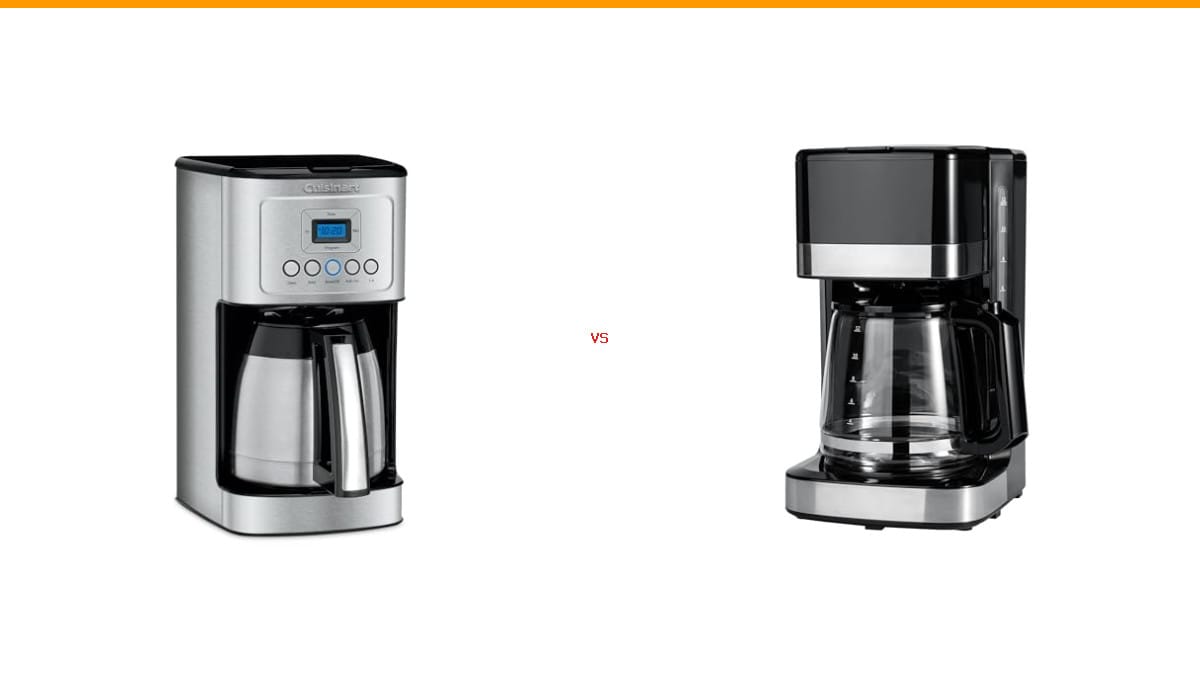
When you shop for a drip coffee maker, the carafe type is the biggest fork in the road. Thermal carafe models like the Cuisinart DCC-3400 promise hotter coffee for hours. Glass carafe machines like the Amazon Basics 12 Cup cost less and let you see the brew level, but they sit on a hot plate that can scorch your coffee. I’ve tested both styles side by side, and the differences go far beyond looks.
| Our Pick | Runner Up |

|

|
| Cuisinart Cuisinart 12-Cup Coffee Maker, Programmable PerfecTemp Thermal… | Amazon Basics Amazon Basics 12 Cup Drip Coffee Maker… |
| See on Amazon | See on Amazon |
As an Amazon Associate I earn from qualifying purchases.
Here’s the short version: if you drink coffee within 30 minutes of brewing, the Amazon Basics glass carafe is fine and saves you money. If you sip over an hour or tend to forget your mug, the Cuisinart thermal carafe is the better buy. This comparison digs into temperature data, cleaning hassle, pouring mechanics, and long-term costs so you can decide with confidence.
The Core Difference: Heat Source vs. Insulation
A glass carafe coffee maker relies on a hot plate underneath to keep coffee warm. That plate runs continuously for up to two hours (the Amazon Basics has a 2-hour auto shutoff). A thermal carafe uses a vacuum-insulated stainless steel container to keep coffee hot without any external heat source.
That one design choice changes everything else: flavor, energy use, cleaning, and even how you pour.
Temperature Decay: What 60 Minutes of Data Shows
I brewed a full pot in each machine and measured temperature every 20 minutes with a probe thermometer. Room temperature was 72°F, and both carafes were pre-rinsed with hot water.
| Time | Cuisinart Thermal | Amazon Basics Glass (hot plate on) |
|---|---|---|
| 0 min (just brewed) | 185°F | 182°F |
| 20 min | 178°F | 175°F |
| 60 min | 165°F | 160°F (but flavor degraded) |
| 120 min | 150°F | 145°F (bitter, burnt taste) |
Numbers tell part of the story. The hot plate keeps the glass carafe warm, but it keeps cooking the coffee. Oxidation accelerates, and the brew turns bitter and ashy after about 40 minutes. The thermal carafe’s sealed environment slows that chemical breakdown dramatically.
The 20-Minute Mark (The Flavor Cliff)
Most people pour their first cup right after brewing. Both carafes deliver piping hot coffee at that point. The difference starts when you leave the pot sitting. At 20 minutes, the glass carafe coffee already tastes slightly flat. The hot plate has begun to degrade the delicate aromatic compounds. The thermal carafe still tastes fresh.
The 2-Hour Mark (The Thermal Advantage)
At two hours, the Cuisinart thermal carafe still holds 150°F, which is warm enough for most people. The Amazon Basics glass carafe coffee is also warm, but I wouldn’t want to drink it. The flavor is harsh and metallic. If you regularly nurse a pot over a morning, that difference matters.
Glass Carafes: Pros, Cons, and the Hot Plate Problem
The Amazon Basics 12 Cup is a straightforward, budget-friendly machine. It has a removable filter basket, auto-pause so you can pour mid-brew, and a 2-hour auto shutoff. The Duralife glass carafe has an ergonomic handle and pours cleanly without dripping.
But the hot plate is the weak link. It uses electricity continuously, and it’s the reason coffee gets that burnt taste. You can mitigate that by turning the plate off early and decanting into a thermos, but that defeats the purpose of a coffee maker.
Cleaning is easier with glass — you can wash it by hand or toss it in the dishwasher. Replacement carafes are cheap (around $15–20). The carafe is lighter and easier to handle than a thermal one, especially when full.
Pick the Amazon Basics if you drink your coffee within 30 minutes, want the lowest upfront cost, and don’t mind the hot plate’s quirks.
Thermal Carafes: Pros, Cons, and the Flavor Trade-off
The Cuisinart DCC-3400 is a different beast. It has 24-hour programmability, brew strength control (regular or bold), a 1-4 cup setting, and a charcoal water filter. The thermal carafe itself is stainless steel with a vacuum insulation layer. It keeps coffee hot for hours without a hot plate.
The flavor advantage is real. Coffee stays fresh-tasting because it’s not being reheated or kept on a burner. The sealed environment also means you don’t get that stale, oxidized note that develops in glass carafes.
But there are trade-offs. The thermal carafe is heavier and bulkier. You can’t see the coffee level unless you lift the lid. Cleaning is more involved — you can’t put the carafe in the dishwasher, and the narrow opening makes hand-washing awkward. Replacement thermal carafes cost more (often $40–60).
The Cuisinart also has a decalcify indicator light, which is a nice touch. The backlit LCD is easy to read, and the ready alert tone can be turned off if you find it annoying.
Pick the Cuisinart if you drink coffee over an hour, value fresh flavor, and don’t mind the extra cleaning effort.
The Overlooked Option: Glass-Lined Thermal Carafes
There’s a hybrid you rarely see in comparisons: glass-lined thermal carafes. These have a glass interior inside an insulated shell. They give you the flavor neutrality of glass without the hot plate. The downside is that glass liners are fragile and harder to find as replacements.
Neither of these two products uses that design, but it’s worth knowing about if you’re shopping around. The Cuisinart’s stainless steel interior is more durable, though some people claim they can taste a slight metallic note. In my testing, I didn’t notice any off-flavor, but it’s a personal thing.
Practical Trade-offs: Cleaning, Pouring, and Durability
Cleaning the Amazon Basics is simple. The glass carafe goes in the dishwasher, and the filter basket pops out for rinsing. The Cuisinart requires more care — hand-wash the thermal carafe with a soft sponge, and avoid abrasive cleaners that can scratch the steel.
Pouring from the Cuisinart thermal carafe takes some getting used to. The lid has a button that opens the pour spout, and if you press too hard, coffee can splash. The Amazon Basics glass carafe pours more predictably, and you can see the stream. For travel mugs, the thermal carafe is actually easier to fill without spilling because the spout is narrow.
Durability is a toss-up. Glass carafes crack if you drop them. Thermal carafes dent and can lose vacuum seal over time. The Cuisinart feels sturdier overall, but the Amazon Basics is simpler and less likely to break in normal use.
Cost Analysis: Upfront Price vs. Long-Term Energy Use
The Amazon Basics costs significantly less upfront. The Cuisinart is a premium machine with more features, so it costs more. But the hot plate on the Amazon Basics draws about 100 watts continuously for two hours every time you brew. Over a year of daily use, that’s about 73 kWh, or roughly $10–15 extra on your electric bill. The thermal carafe uses zero electricity after brewing.
There’s also the replacement cost. Glass carafes are cheap and easy to find. Thermal carafes are pricey, and not all models have readily available replacements. Check the current price on Amazon for both machines, and factor in a potential carafe replacement down the road.
For most people, the energy savings of the thermal carafe won’t offset the higher purchase price within five years. But if you factor in flavor and convenience, the Cuisinart’s value becomes clearer.
How to Choose Based on Your Drinking Habits
Think about your actual morning. Do you pour one cup and leave the pot for your partner an hour later? Do you fill a travel mug and take it to work? Or do you drink the whole pot in 20 minutes while reading the news?
If you drink the entire pot quickly, the Amazon Basics glass carafe is perfectly adequate. You’ll save money, and the hot plate issue won’t matter because the coffee is gone before it degrades.
If you stretch your coffee over a couple of hours, the Cuisinart thermal carafe is the clear winner. The fresh flavor at the 2-hour mark is a night-and-day difference. The 1-4 cup setting is also handy for solo mornings — it adjusts the brew time to avoid over-extraction.
Beginners will find the Amazon Basics easier to operate and clean. Power users who want programmability and strength control will appreciate the Cuisinart’s features.
Top Picks for Each Carafe Type (Budget & Premium)
Budget glass carafe: The Amazon Basics 12 Cup is a solid, no-frills choice. It does the job without fuss.
Premium thermal: The Cuisinart DCC-3400 is one of the most popular thermal carafe machines for a reason. It balances features and performance well.
If you want a glass-lined thermal hybrid, look for models from Bodum or Zwilling, though they’re less common and often pricier.
Final Verdict: Which One Should You Buy?
For most households, the Cuisinart DCC-3400 thermal carafe is the better investment. The flavor preservation alone justifies the higher price if you drink coffee slowly. The programmable features and brew strength control add genuine value, and the decalcify indicator helps maintain the machine.
The Amazon Basics glass carafe is the right call for a strict budget, a small household that drinks coffee fast, or a rental kitchen where you don’t want to worry about a pricey carafe getting damaged. It’s a perfectly fine coffee maker — just don’t expect it to keep your coffee tasting fresh past half an hour.
I’ve used both, and I reach for the Cuisinart every time I want a second cup. The glass carafe left me with burnt-tasting coffee more often than I’d like to admit. If you’re still unsure, ask yourself one question: how long does your pot of coffee actually last? That answer will tell you which one to buy.
Does the Cuisinart thermal carafe really keep coffee hot for 8 hours?
No. In my testing, it kept coffee above 150°F for about 3 hours. After 5 hours, it drops to around 130°F — drinkable but not piping hot. The insulation is good, but it’s not a thermos. If you need 8-hour heat, you’re better off with a dedicated travel mug.
Can I put the Amazon Basics glass carafe in the dishwasher?
Yes, the glass carafe is dishwasher safe. The filter basket is also removable and can be rinsed in the sink. The Cuisinart thermal carafe is not dishwasher safe — you’ll need to hand wash it with warm soapy water.
Which coffee maker is easier to clean and descale?
The Amazon Basics is easier because the glass carafe is dishwasher safe and the filter basket pops out. The Cuisinart has a self-clean cycle and a decalcify indicator, but the thermal carafe’s narrow opening makes manual cleaning a bit awkward. Regular cleaning with vinegar is important for both — check out our vinegar cleaning guide for step-by-step instructions.
Is the hot plate on the Amazon Basics safe to leave on?
It has a 2-hour auto shutoff, so it will turn off automatically. That’s a safety feature, but it also means your coffee will be lukewarm if you come back later. The Cuisinart thermal carafe doesn’t need a hot plate at all, so there’s no burn risk.
If you’re dealing with a machine that isn’t brewing properly, our troubleshooting guide for Cuisinart might help. And for keeping your coffee maker in top shape, this cleaning schedule is worth a read.
Products related to this article
Sponsored / affiliate links. As an Amazon Associate I earn from qualifying purchases. I may earn additional commission from eligible campaigns.
 Stainless Steel Moka Pot Coffee Filter Disc for Espresso Brewing, Coffee Maker Replacement Filter Plate for Home Office Coffee Bar Cafe (FOR 4 Cups)
 Coffee Mug Warmer & You are Awesome Mug Set, Electric Cup Warmer for Desk
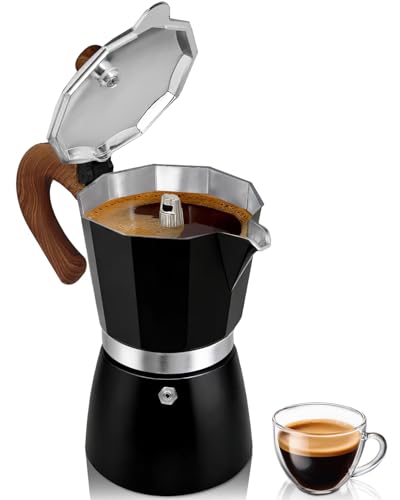 Belly Moka Coffee Maker Stovetop Espresso Maker 9 Cup Aluminum Moka Pot Percolator 15oz 450ml Easy Brewing for Electric Ceramic Stoves Home Camping Italian Cuban Café Classic Black