You notice a slightly bitter taste in your morning brew. The machine seems to take a few seconds longer to finish a cup. Steam rises slowly, and the heating element sounds like it’s working harder than it should. That’s limescale, and it’s already costing you money in energy and flavor.
Most owners either descale too rarely or obsess over it weekly. Both approaches are wrong. The right frequency depends on three variables you can measure in under five minutes: your water hardness, how many cups you brew daily, and your machine type. This guide walks you through a simple decision tree so you can mark a specific date on your calendar instead of guessing.
You’ll also learn what happens when you over-descale, how to fix a stuck descaling cycle, and whether the expensive commercial solutions are actually worth it compared to citric acid or vinegar.
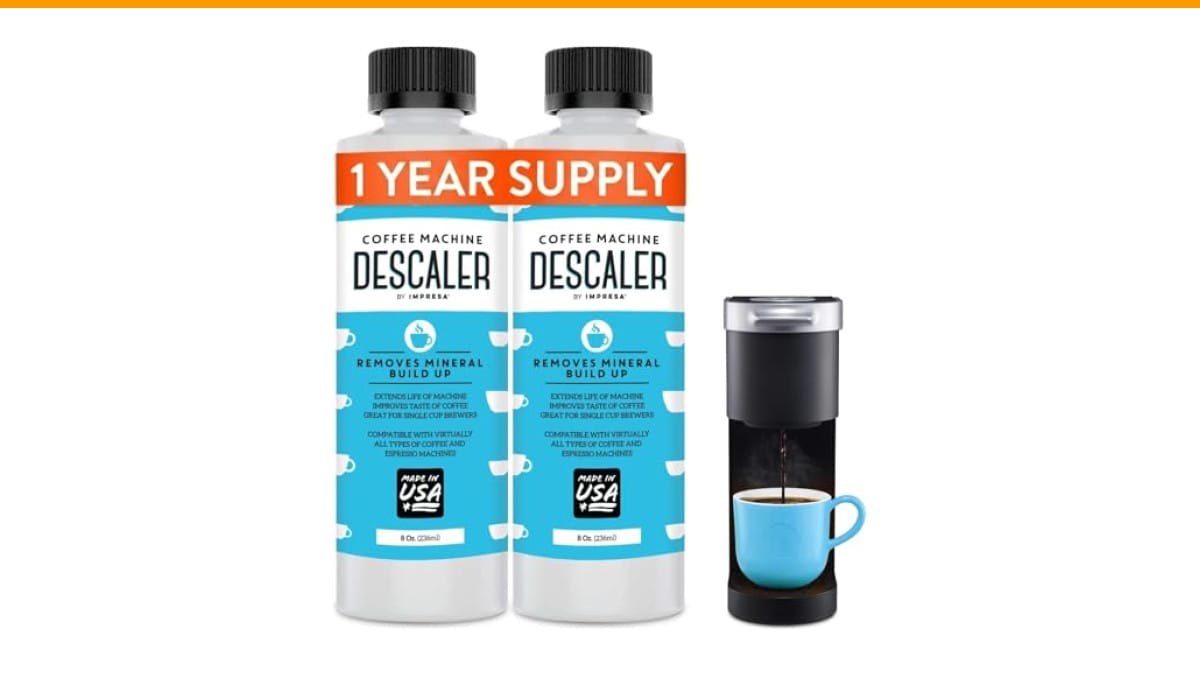
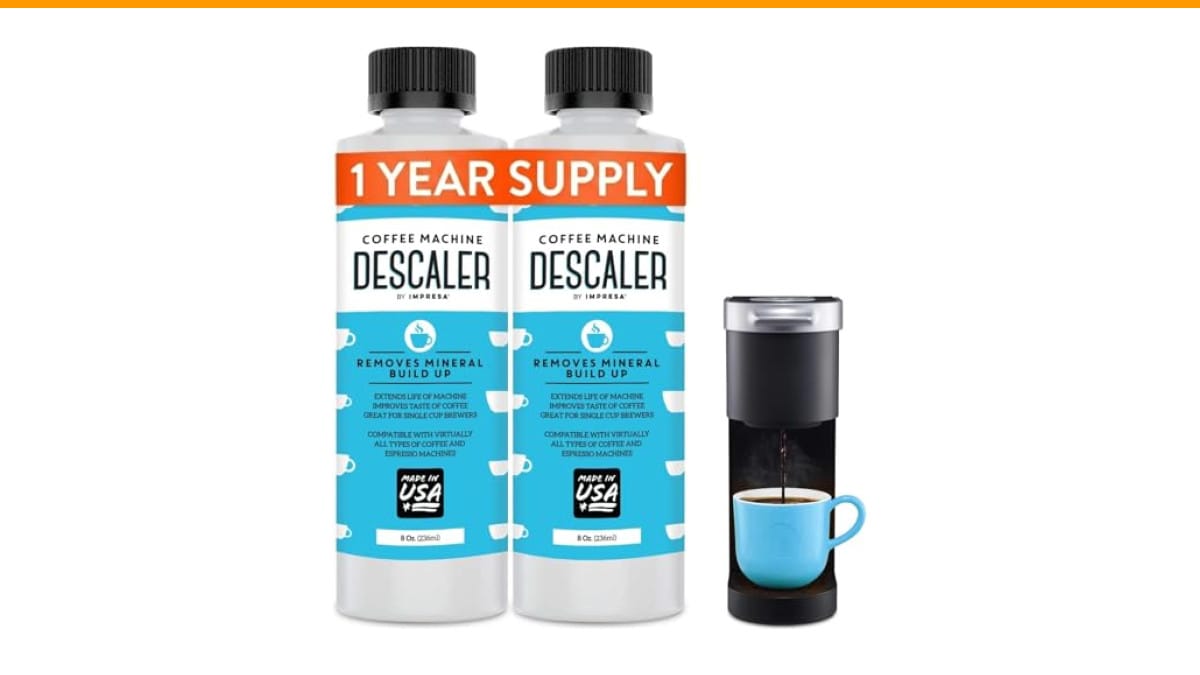
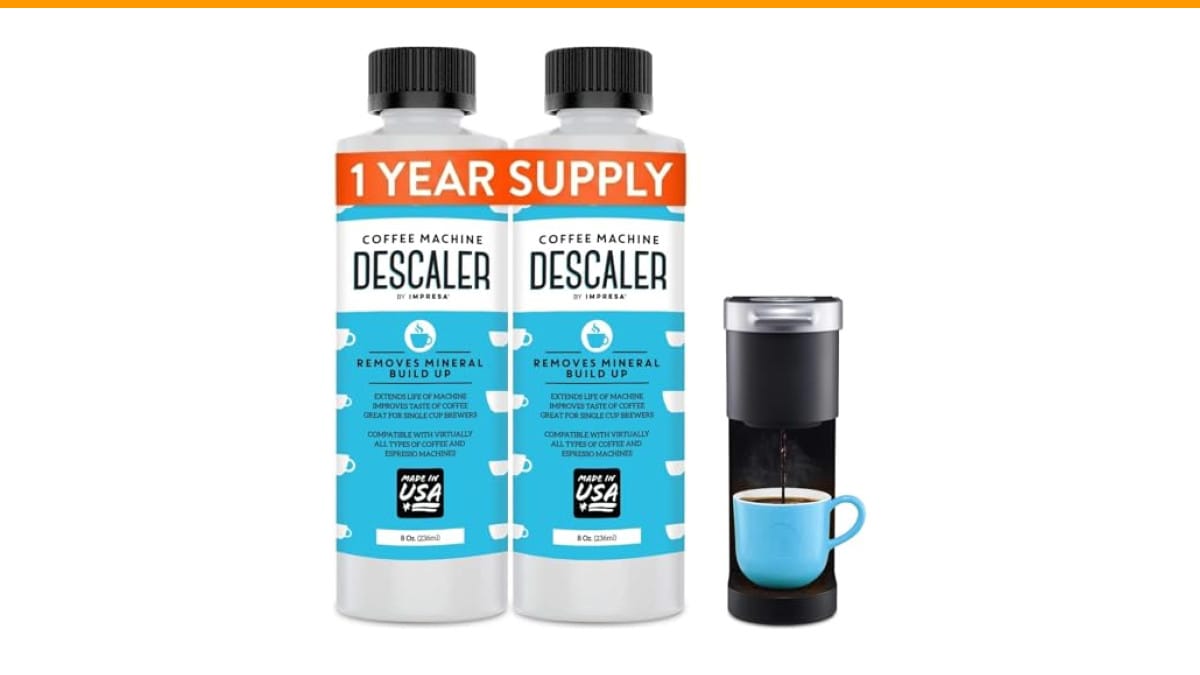
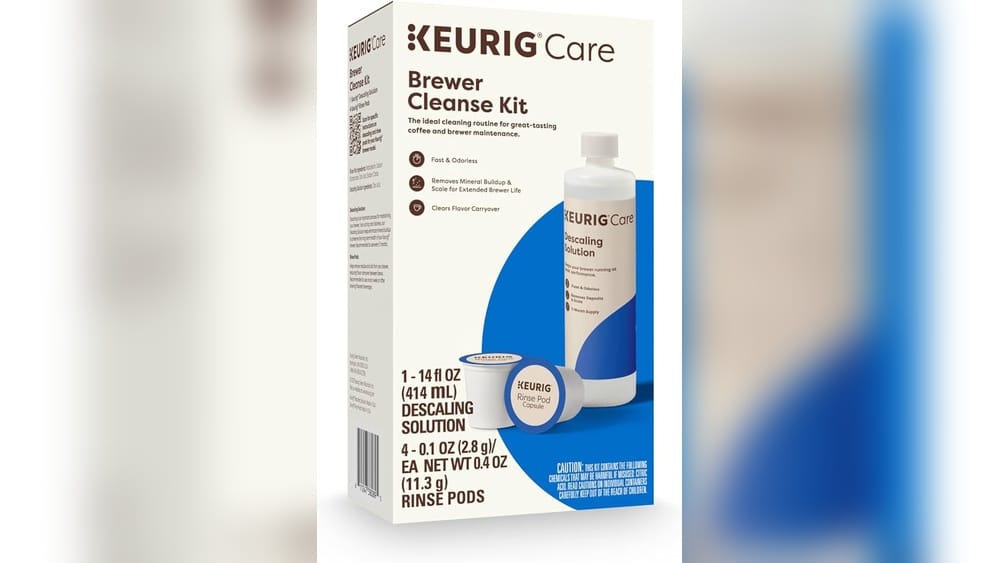
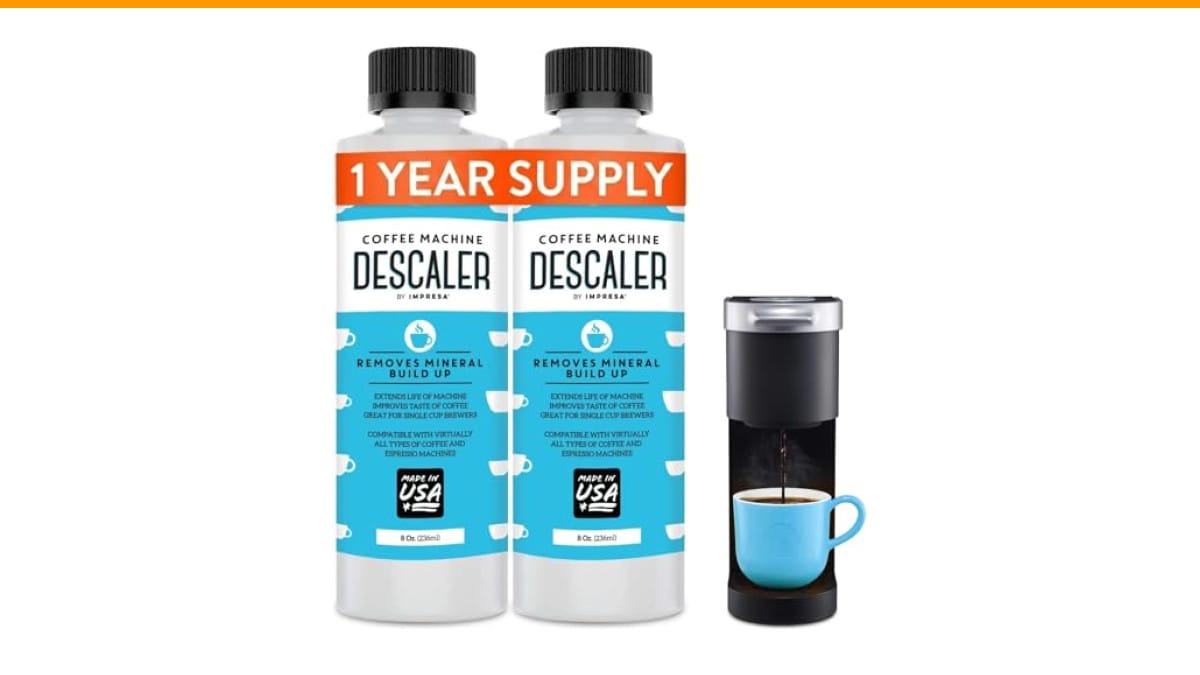
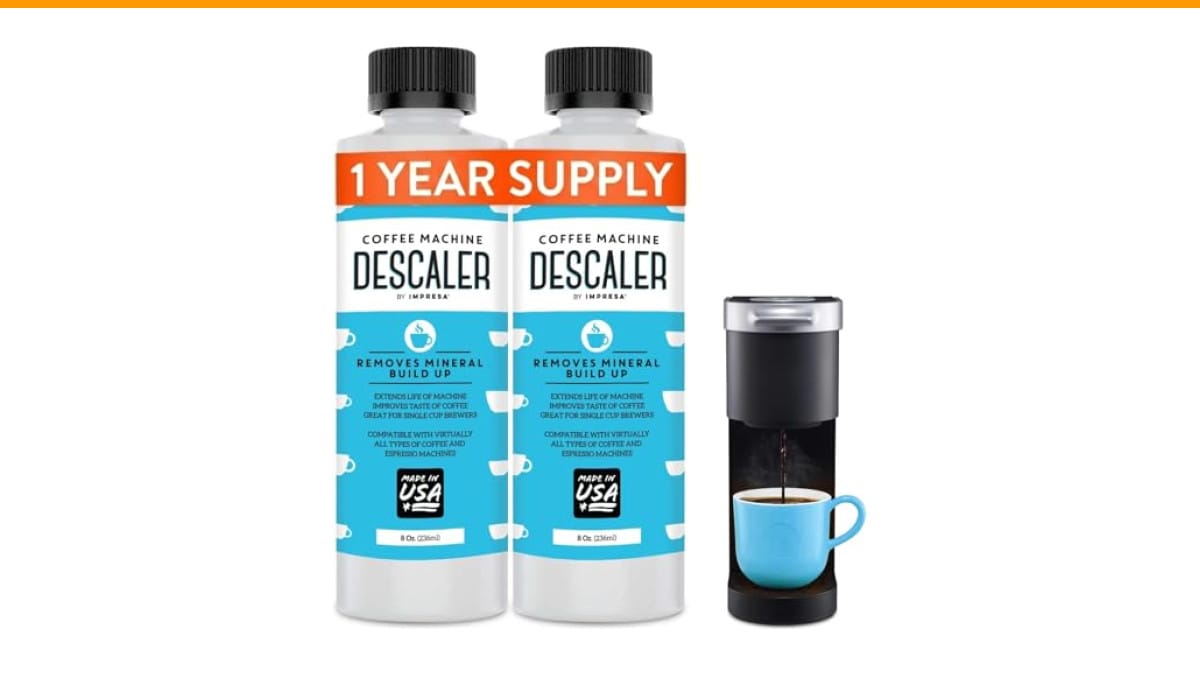
If you need a reliable descaling solution right now, the Check Price on Amazon is a solid two-pack that covers about four sessions. It works with most single-serve and espresso machines, and each 8-ounce bottle handles two cleanings at 4 ounces per cycle. Check the current price on Amazon if you want to stock up.
What Descaling Actually Does (And Why It Matters)
Descaling removes mineral deposits, mostly calcium carbonate, that build up on heating elements and internal pipes. Every time water heats up, dissolved minerals precipitate out and stick to surfaces. Over months, this scale acts like an insulator. Your machine has to work harder to heat water, which shortens its lifespan and degrades extraction temperature.
A 1/8-inch layer of scale can reduce heating efficiency by up to 15 percent. That means your machine runs longer cycles and uses more electricity. Worse, the scale flakes off into your brew, adding a chalky, bitter note that ruins a good bean.
Descaling solution dissolves these deposits chemically. Most commercial descalers use sulfamic or citric acid, which breaks down calcium without attacking the rubber seals and plastic tubing inside your machine. That’s why you shouldn’t just use any acid — vinegar works, but it’s harsher on internal components over time.
The Core Rule: How Often to Descale by Water Hardness
Water hardness is the single biggest factor. Hard water has more dissolved calcium and magnesium, so it creates scale faster. The general rule of thumb used by most manufacturers:
- Soft water (0-60 ppm): Descale every 6 months
- Moderately hard water (61-120 ppm): Descale every 3 months
- Hard water (121-180 ppm): Descale every 6 weeks
- Very hard water (180+ ppm): Descale monthly
These numbers assume you brew 2-4 cups per day. Adjust upward or downward based on usage, which we cover in the next section.
How to Test Your Water Hardness at Home
You don’t need a lab kit. Grab a simple water hardness test strip from any hardware store or online retailer. They cost about $10 for a pack of 50 and give you a reading in under a minute.
- Fill a clean glass with tap water at room temperature.
- Dip the strip for 2 seconds, then remove it.
- Wait 30 seconds and compare the color change to the chart on the package.
- Note the ppm (parts per million) reading. If the chart shows grains per gallon (gpg), multiply by 17.1 to get ppm.
Test your water twice — once in the morning and once in the evening. Municipal water supplies can vary slightly. If both readings fall in different categories, use the higher one for your schedule.
Pro tip: If you have a water softener installed, test the water at the tap you actually use for coffee. Softened water can still have elevated sodium levels, which affects taste and scale differently.
Adjusting Frequency Based on Usage (Cups Per Day)
The hardness schedule assumes average use. If you’re a heavy user, scale builds faster because more water flows through the system. Here’s the adjustment:
- 1 cup per day or less: Extend the interval by 50 percent. Soft water becomes 9 months, hard water becomes 2 months.
- 2-4 cups per day: Stick with the standard schedule above.
- 5-8 cups per day: Shorten the interval by 25 percent. Hard water becomes monthly, moderate becomes every 2 months.
- 9+ cups per day (office or heavy home use): Shorten by 50 percent. Very hard water becomes every 2 weeks.
If you rarely use your machine — say, only on weekends — you can stretch the interval further. A machine that sits idle doesn’t accumulate scale because no water is heating. But you still need to descale before first use after a long idle period, because standing water in the reservoir can develop mineral deposits and bacteria.
For rarely used machines, aim for at least once every 4 months regardless of water hardness. Stale water and dried residue can clog lines even without heavy scale buildup. The cleaning schedule for coffee makers differs from descaling, so make sure you’re doing both.
6 Signs Your Machine Needs Descaling Right Now
Schedules are helpful, but your machine will tell you when it’s struggling. Watch for these six signs:
- Longer brew time. If a full pot takes 30-40 percent longer than when new, scale is restricting water flow.
- Loud or unusual noises. A rumbling or hissing sound during heating means the element is overheating due to scale insulation.
- Weak or bitter coffee. Scale changes extraction temperature, which affects flavor balance.
- Visible white flakes in your cup. That’s scale breaking off and landing in your brew.
- Descaling indicator light. Most modern machines have one. Don’t ignore it — it’s calibrated to your specific model.
- Steam wand sputters. On espresso machines, a clogged wand is often a sign of mineral buildup deeper inside.
If you notice any of these, descale immediately, even if you’re not due. Waiting another week only makes the cleaning harder and risks permanent damage.
Step-by-Step: How to Descale Any Coffee Machine
The exact steps vary by machine, but the general process is the same. Always check your manufacturer’s manual first — some machines have a dedicated descaling mode that cycles the solution automatically.
Drip Coffee Makers
- Empty the carafe and remove the filter basket.
- Fill the reservoir with equal parts descaling solution and water. Check your solution’s label for the correct ratio — most commercial ones use 4 ounces per 16 ounces of water.
- Start a brew cycle without coffee grounds.
- When the cycle finishes, let the machine sit for 15 minutes to let the solution work on internal deposits.
- Run 2-3 more cycles with fresh water only to rinse thoroughly.
- Wipe down the warming plate and carafe.
Pro tip: Run the rinse cycles until you can’t smell any vinegar or citrus solution in the steam. Residual acid will ruin your next pot.
Single-Serve (Keurig/Nespresso)
- Remove the water reservoir and empty it.
- Add the descaling solution directly to the reservoir, then fill with water to the max line.
- Place a large mug or carafe on the drip tray.
- Run a brew cycle without a pod. Discard the liquid.
- Repeat until the reservoir is empty. Some machines have a descaling mode that does this automatically.
- Fill the reservoir with fresh water and run 3-4 more cycles to rinse.
- Clean the needle and pod holder with a paper clip or cleaning brush while you’re at it.
Nespresso machines are picky. Use only the solution recommended by the manufacturer or a universal one that explicitly lists Nespresso compatibility. The home descaling guide covers more model-specific tips.
Espresso Machines (Manual & Super-Automatic)
Espresso machines have more components — group heads, steam wands, and internal pumps — so they need a more thorough approach.
- Empty the drip tray and remove the water tank.
- Fill the tank with descaling solution and water per the label instructions.
- Place a container under the group head and start the descaling cycle (if available) or run water through the group head manually.
- After the group head, open the steam wand and let solution run through it for 30 seconds. Close it.
- Repeat the group head and steam wand process until the tank is empty.
- Refill with fresh water and run the same process 3-4 times to rinse all components.
- Remove and clean the shower screen and gasket if accessible.
For super-automatic machines with a built-in grinder, the descaling process is the same, but you also need to clean the brew unit separately. Most super-autos have a removable brew unit — check your manual. Soak it in warm water with a mild detergent, rinse, and let it dry completely before reinserting. The comparison of automatic vs. semi-automatic machines explains why these maintenance tasks differ.
What Happens If You Descale Too Often? (The Over-Descaling Problem)
More isn’t better. Descaling too frequently exposes internal seals, gaskets, and plastic tubing to acid more often than necessary. Over time, this can degrade rubber components and cause leaks.
Signs of over-descaling:
- Rubber gaskets become brittle or cracked
- Plastic parts develop a white, chalky residue (from the descaler itself)
- A lingering chemical taste even after multiple rinses
- Leaks around the water tank connection
Stick to the schedule. If your water is very soft, descaling every 6 months is plenty. Your machine will last longer with less acid exposure.
Cost Comparison: Commercial Descaler vs. Citric Acid vs. Vinegar
You have three main options. Here’s how they stack up on cost and effectiveness:
| Method | Cost Per Session | Effectiveness | Risk to Machine | Rinse Cycles Needed |
|---|---|---|---|---|
| Commercial descaler (e.g., IMPRESA) | $2.50 – $4.00 | High — formulated for coffee machines | Low — pH balanced for internal parts | 2-3 |
| Citric acid powder | $0.50 – $1.00 | High — dissolves scale quickly | Medium — can be harsh if over-concentrated | 3-4 |
| White vinegar (5% acetic acid) | $0.25 – $0.50 | Medium — slower acting, weaker on thick scale | High — acetic acid can degrade rubber seals | 4-5 |
Commercial descalers cost more per session, but they’re formulated to be safe for your specific machine. Citric acid is a good middle ground — buy food-grade powder, mix 2 tablespoons per 16 ounces of water. Vinegar is cheapest but leaves a lingering smell and can damage seals with repeated use. I’ve seen more than one Keurig with a cracked gasket that was cleaned exclusively with vinegar.
If you use a vinegar cleaning method, limit it to once or twice a year and always do extra rinse cycles.
How to Extend Time Between Descaling Sessions (Filters, Water Choice)
The best way to descale less often is to prevent scale in the first place. A water filter pitcher like Brita or Pur removes some hardness minerals, but not all of them. Activated carbon filters primarily improve taste and chlorine removal — they don’t soften water significantly.
For meaningful hardness reduction, you need an ion-exchange filter or a reverse osmosis system. A simple test: if your tap water is 150 ppm, a standard Brita filter might drop it to 120 ppm. That’s enough to move you from the 6-week category to the 3-month category.
Options ranked by effectiveness:
- Reverse osmosis (RO) system: Removes 90-95 percent of minerals. Best option, but expensive to install.
- Ion-exchange water softener: Removes calcium and magnesium entirely. Great for the machine, but softened water can taste flat.
- Filtered water pitcher with ion-exchange resin: Removes 30-50 percent of hardness. A reasonable middle ground.
- Bottled spring water: Varies wildly by brand. Check the label for mineral content.
If you use filtered water, you can extend your descaling interval by 30-50 percent. Just remember that filtered water doesn’t eliminate the need entirely — you still get some mineral buildup, just slower.
Troubleshooting: When the Descaling Cycle Goes Wrong
Sometimes the machine gets stuck mid-cycle. Here’s what to do for the most common issues.
Machine stops pumping water. The descaling solution may have dislodged a large chunk of scale that’s now blocking the pump. Turn off the machine, unplug it, and let it sit for 30 minutes. The scale may soften and pass. If not, you’ll need to run a rinse cycle with hot water to push it through. If that fails, the pump may need professional servicing.
Descaling error message won’t clear. Many machines have a sensor that detects when the descaling cycle is complete. If you interrupted the cycle or didn’t run enough rinse water, the error persists. Run a full rinse cycle with fresh water, then turn the machine off and on. Some models require you to hold the descaling button for 5 seconds to reset the counter.
Solution leaking from the bottom. This usually means the reservoir isn’t seated properly, or a seal is damaged. Check the O-ring on the reservoir connection. If it’s cracked, replace it. Don’t run the machine until it’s fixed — liquid and electronics don’t mix.
Bitter taste after descaling. You didn’t rinse enough. Run 2-3 more cycles with fresh water. If the taste persists, remove the water tank and wash it with dish soap, then rinse thoroughly. Residual descaler can cling to the tank walls.
For more persistent issues, the long-term maintenance guide covers deeper cleaning and part replacement.
FAQ: Quick Answers to Common Descaling Questions
Can I use vinegar instead of commercial descaler?
Yes, but not as a regular habit. Vinegar is effective at dissolving scale, but acetic acid is harsher on rubber seals and plastic tubing. Use it occasionally if you’re out of commercial solution, but never more than once every 3 months. Always do extra rinse cycles to remove the vinegar smell.
Does descaling remove coffee oil buildup?
Not really. Descaler targets mineral deposits. Coffee oils and residue need a different cleaning approach — usually a mild detergent or a specialized coffee cleaner. For a thorough clean, you should do both: descale for minerals and clean for oils. The deep cleaning guide explains the difference.
My machine has a descaling light. Can I ignore it?
You can, but you shouldn’t. The light is triggered by a counter based on the number of brew cycles, not an actual sensor. It’s a reminder, not a diagnostic. If your water is very soft, the light may come on before you actually need to descale. If your water is hard, it might come on too late. Use the light as a starting point, not the final word.
Is bottled water better for my machine?
Only if it’s low in minerals. Check the label for total dissolved solids (TDS). Spring water can be high in calcium. Distilled or purified water has almost no minerals — that’s ideal for scale prevention, but some people find it makes coffee taste flat because it doesn’t extract as well. A good compromise is using filtered tap water.
What happens if I never descale?
Eventually, your machine will fail. The heating element will overheat and burn out, the pump will clog, or the internal lines will block completely. You’ll notice a steady decline in brew temperature, longer brewing times, and increasingly bitter coffee. A $15 bottle of descaler is much cheaper than a $500 replacement machine.
Final Verdict: Your Simple Descaling Schedule
Here’s the short version you can act on today:
- Test your water hardness once — it takes 60 seconds and eliminates all guesswork.
- Soft water (under 60 ppm): descale every 6 months.
- Moderately hard water (60-120 ppm): descale every 3 months.
- Hard water (120+ ppm): descale every 6 weeks or monthly.
- Brew more than 5 cups a day? Shorten the interval by 25-50 percent.
- Use a water filter pitcher? Extend the interval by 30 percent.
- If your machine shows any of the 6 warning signs, descale immediately regardless of schedule.
Write the next descaling date on a sticky note and put it on the machine. That’s it — you’ll never have to guess again.
Products related to this article
Sponsored / affiliate links. As an Amazon Associate I earn from qualifying purchases. I may earn additional commission from eligible campaigns.
 Coffee Espresso Machine Handle Replacement Parts, Cafe Bracket Handle for Lidl Silvercrest CM4621 CM4218 KF5002 KF500S Barista (for 51mm Portafilter Basket - Not included)
 Joy Ultra Dishwashing Liquid Dish Soap, Lemon, 12.6 fl oz
 Alliance Chemical Citric Acid Monohydrate - USP Food Grade - 4 Pack (8 lb) Powder