You bought good beans, a gooseneck kettle, and a fancy dripper. You followed the instructions, yet your coffee still tastes flat, bitter, or sour. The culprit is almost always the grind size. It is the single biggest variable between a decent cup and a great one.
This guide teaches you a simple diagnostic system. You will learn what medium-fine actually looks like, why your dripper shape matters, and how to use brew time and water temperature to fix your grind in real-time. You will walk away knowing exactly how to hit the sweet spot, no matter what gear you own.
BLACK+DECKER
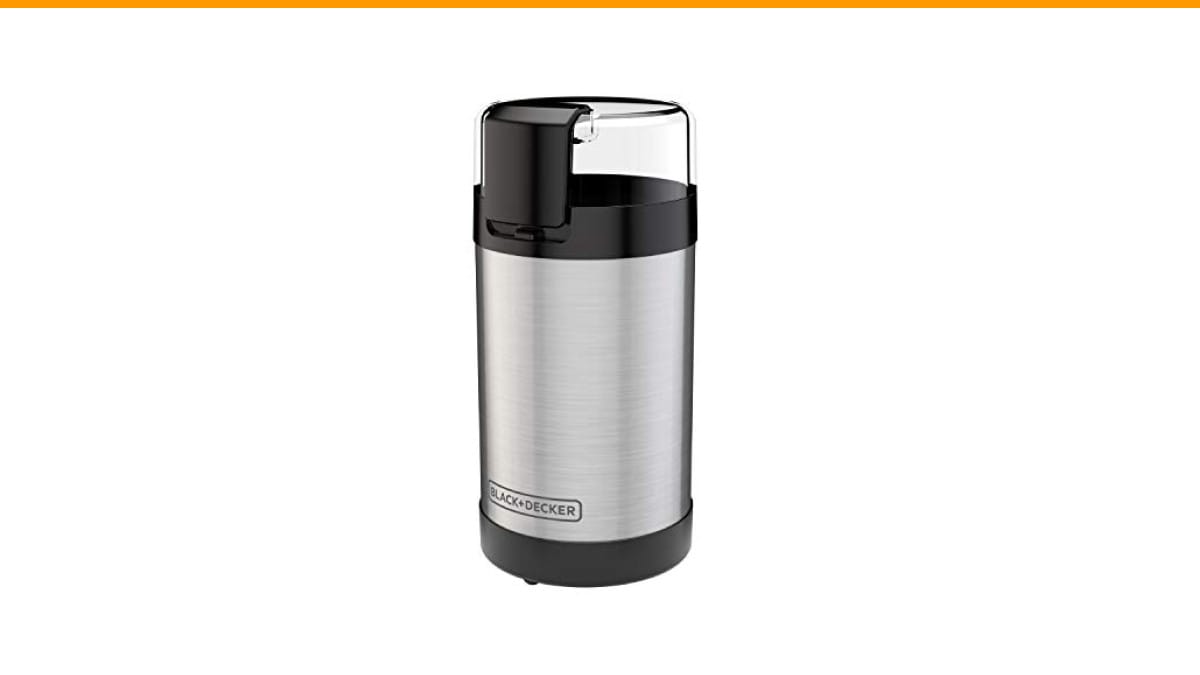
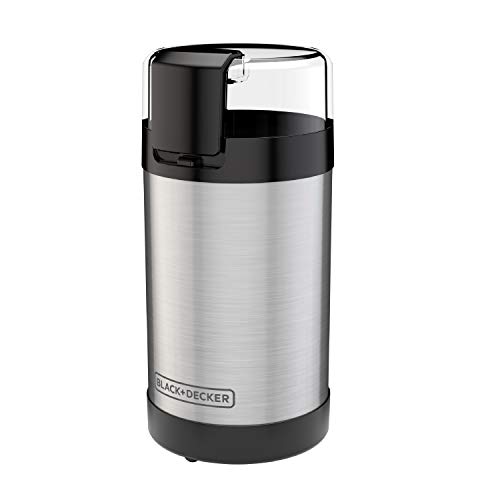
BLACK+DECKER One Touch Coffee Grinder, 2/3 Cup…
- STAINLESS STEEL BLADES AND BOWL - The sharp blades and durable grinding bowl are built to last, delivering uniform grinds with eve…
- GRIND YOUR FAVORITES! - Stainless steel blades quickly grind your favorite coffee beans, herbs, spices, grains, and more
- ONE TOUCH PUSH-BUTTON CONTROL - Intuitive push-button control lets you easily customize the grind consistency, from coarse to fine
As an Amazon Associate I earn from qualifying purchases.
If you are starting with a blade grinder, the BLACK+DECKER One-Touch Coffee & Spice Grinder is a solid entry point. Its stainless steel blades and one-touch control let you pulse for a range of consistencies. It is not a commercial burr grinder, but it gets you close enough to start dialing in your pour over today.
The Short Answer: Start at Medium-Fine
For most pour over brewers, the best starting point is a medium-fine grind. Think of table salt with a few slightly larger grains mixed in. This size works for the V60, Kalita Wave, and Chemex. It allows for a brew time between 2:30 and 3:30 minutes, which extracts the right amount of flavor.
If your coffee tastes sour and weak, your grind is likely too coarse. If it tastes bitter and harsh, your grind is too fine. These two flavor profiles are your main diagnostic tools. You will use them to adjust your next batch.
Remember, grind size is not a fixed setting. It changes with your beans, your dripper, and even the weather. Start at medium-fine, then adjust based on what you taste.
What Medium-Fine Looks, Feels, and Measures Like
Visual guides are helpful, but texture is more reliable. Medium-fine should feel like kosher salt or slightly damp sand. If you rub it between your fingers, it should feel gritty, not powdery. It should not clump together like flour.
For the numbers crowd, medium-fine is roughly 600 to 800 microns. That is about the width of a standard paperclip wire. You do not need a micron sieve at home, but knowing the range helps when you compare grinders or read online forums.
Here is a quick texture comparison:
- Extra Fine: Like powdered sugar or flour. Used for espresso or Turkish coffee.
- Fine: Like fine table salt. Good for moka pots or some flat-bottom drippers.
- Medium-Fine: Like kosher salt or coarse sand. The pour over starting point.
- Medium: Like regular sand or cornmeal. Good for drip machines and some Chemex brews.
- Coarse: Like sea salt or breadcrumbs. Used for French press or cold brew.
One honest caveat: blade grinders produce a mix of sizes. You will get some fine dust and some boulders. This inconsistency can cause a muddy, bitter cup even if your average setting looks right. If you are using a blade grinder like the BLACK+DECKER, shake it gently while grinding to improve consistency, and always pulse rather than holding the button down.
Why Your Dripper Shape Changes the Grind
Not all pour over drippers behave the same. The shape of the brewer controls water flow, which changes how long the water touches the coffee. You need to adjust your grind to match that flow.
V60 (Conical): The large hole at the bottom means water passes through quickly. You need a finer grind to slow down the flow and extract enough flavor. Start at medium-fine and go slightly finer if your brew finishes too fast.
Kalita Wave (Flat Bottom): The flat bed and three small holes create a more even extraction with a slower flow. You can use a slightly coarser grind here, closer to a medium. This brewer is more forgiving than the V60.
Chemex (Thick Paper Filter): The thick bonded paper filters out more oils and fines. This slows the flow considerably. You need a coarser grind, closer to medium, to avoid a bitter, over-extracted cup. A medium-coarse works well for most Chemex recipes.
So, the same bag of beans needs different grind settings depending on which brewer you use. That is normal. Your V60 grind will be finer than your Chemex grind.
The 3-Step Dial-In Process (Taste, Time, and Texture)
This is the core of the diagnostic system. Forget static charts. Instead, use your brew time and taste to confirm your grind is correct. This process takes two or three cups to master.
Step 1: Check the Drawdown Time
Drawdown time is the period from when you start pouring water until the last drop falls through the filter. For a single-cup V60 with a medium-fine grind, aim for 2:30 to 3:30 total brew time. The Kalita Wave usually finishes around the same mark. The Chemex runs longer, often 4:00 to 4:30.
Start your timer when you pour the first water. If the brewer drains in under 2 minutes, your grind is too coarse. If it takes over 4 minutes and the slurry looks muddy, your grind is too fine.
Step 2: Adjust by Taste (Sour vs. Bitter)
Taste is the final judge. Sour, sharp, or salty flavors mean under-extraction. The water moved through the coffee too fast, pulling out only the bright acids. Make your grind finer.
Bitter, dry, or ashy flavors mean over-extraction. The water pulled out too many harsh compounds. Make your grind coarser.
Make one adjustment at a time. Change the grind by one or two clicks on a burr grinder. On a blade grinder, reduce the pulse time by one second. Brew another cup and taste again.
Step 3: Use Water Temperature to Fine-Tune
Water temperature is your secret weapon. The ideal range is 195°F to 205°F. Water right off a boil is too hot for most beans, especially light roasts.
If your grind is slightly off, temperature can compensate. For a light roast, use hotter water (205°F) to extract more sweetness. For a dark roast, use cooler water (195°F) to avoid bitterness.
Here is the trick: if your coffee is slightly bitter, lower the water temperature by 5°F before changing the grind. If it is slightly sour, raise the temperature. This fine-tuning lets you fix a cup without chasing your grinder settings.
How Roast Level and Batch Size Shift the Target
Roast level changes how easily coffee dissolves. Light roasts are dense and require a finer grind to extract fully. Dark roasts are brittle and porous, so they extract quickly. Use a coarser grind for dark roasts to avoid bitterness.
Batch size matters too. A single cup (15 grams of coffee) needs a finer grind than a four-cup batch (60 grams). A larger bed of coffee creates more resistance, slowing the flow naturally. If you brew a big batch with a fine grind, the water will stall and over-extract. Go coarser as you scale up.
For example, if you brew 15 grams at a medium-fine setting, try a medium setting for 30 grams. You will keep the brew time in the same range.
The Grinder Quality Trap: Burrs, Fines, and Blade Grinders
Here is the uncomfortable truth: your grinder matters more than your dripper. A $200 burr grinder with a $20 dripper beats a $20 grinder with a $200 dripper, every time.
Burr grinders crush beans between two surfaces, producing uniform particles. Blade grinders chop beans randomly, creating a wide range of sizes. That inconsistency is the main reason your pour over tastes muddy or sour.
Fines are the tiny dust particles that clog the filter. Even good burr grinders produce some fines, but misaligned burrs produce excessive amounts. If your coffee always tastes bitter regardless of your grind setting, check your burr alignment. A quick cleaning and re-seating of the burrs often fixes the problem.
If you are stuck with a blade grinder, use the pulse method. Press the button for one second, shake the grinder, and repeat. This moves the beans around and produces a more even grind. It is not perfect, but it is workable.
You can learn more about keeping your equipment clean in our coffee maker cleaning guide.
Troubleshooting: When Grind Size Isn’t the Problem
Sometimes you adjust the grind, the time is perfect, and the coffee still tastes wrong. Before you blame your grinder, check these three things.
Water quality: If your tap water is hard or chlorinated, it ruins the flavor. Use filtered water. It makes a surprising difference.
Coffee freshness: Beans that are more than three weeks old taste flat. They lose their volatile oils and carbon dioxide. Buy whole beans and grind them right before brewing.
Ratio: The standard pour over ratio is 1:16 (coffee to water). That is 15 grams of coffee for 240 grams of water. If your ratio is off, the coffee will taste weak or syrupy. Use a scale, not a scoop.
If you are using a drip machine rather than a manual pour over, check out this guide on Cuisinart coffee maker lights flashing for a different troubleshooting angle.
Pour Over Grind Size Cheat Sheet (Settings Table)
Here is a practical reference for your next brew. Use this as a starting point, then adjust using the diagnostic steps above.
| Brewer | Grind Size | Texture Reference | Target Brew Time |
|---|---|---|---|
| Hario V60 | Medium-Fine | Kosher salt | 2:30 – 3:30 |
| Kalita Wave | Medium | Coarse sand | 2:30 – 3:30 |
| Chemex | Medium-Coarse | Sea salt | 4:00 – 4:30 |
| Melitta / Bee House | Medium | Coarse sand | 3:00 – 4:00 |
These times assume a 1:16 ratio and a water temperature around 200°F. If your brew finishes faster, go finer. If it stalls, go coarser.
FAQ: Quick Answers for Common Grind Questions
Can I use pre-ground coffee for pour over?
You can, but it will not taste as good. Pre-ground coffee is usually ground for drip machines, which is coarser than what most pour over brewers need. It also goes stale within days of grinding. Whole beans stay fresh for weeks.
How often should I clean my grinder?
Clean a burr grinder every two weeks. Run a half cup of dry rice through it to absorb oils, then wipe the burrs with a dry brush. For a blade grinder, wipe the bowl after every use to prevent old coffee oils from going rancid.
Does the paper filter affect grind size?
Yes. Thicker filters like the Chemex paper slow the flow, so you need a coarser grind. Thinner V60 filters allow faster flow, so you need a finer grind. Always match your grind to the filter you use.
Why does my pour over coffee taste watery?
Watery coffee usually means your grind is too coarse or your ratio is too weak. Try a finer grind first. If that does not fix it, increase your coffee dose from 15 grams to 17 grams per 240 grams of water.
Is a blade grinder good enough for pour over?
It works in a pinch, but it produces inconsistent particles that cause uneven extraction. If you are serious about pour over, save up for a burr grinder. Until then, use the pulse-and-shake method with a blade grinder to minimize the damage.
What To Do With What You Just Learned
- Start every pour over at a medium-fine grind, about the texture of kosher salt.
- Use your brew time as a diagnostic: under 2:30 minutes means go finer, over 4:00 minutes means go coarser.
- Adjust water temperature (195°F–205°F) to compensate for minor grind mistakes before changing the grind.
- Match your grind to your dripper: finer for V60, medium for Kalita, coarser for Chemex.
- Go coarser for dark roasts and larger batch sizes, finer for light roasts and single cups.
- If your coffee always tastes bitter, check your grinder burrs for misalignment or excessive fines.
- Buy whole beans and grind them fresh. It is the cheapest upgrade you can make.
For more brewing fundamentals, take a look at our coffee maker cleaning frequency guide to keep your gear in top shape.
Products related to this article
Sponsored / affiliate links. As an Amazon Associate I earn from qualifying purchases. I may earn additional commission from eligible campaigns.
 Stainless Steel Moka Pot Pressed Powder Tool for 2 4 6 9 Cup Espresso Coffee Brewer(6 Cups)
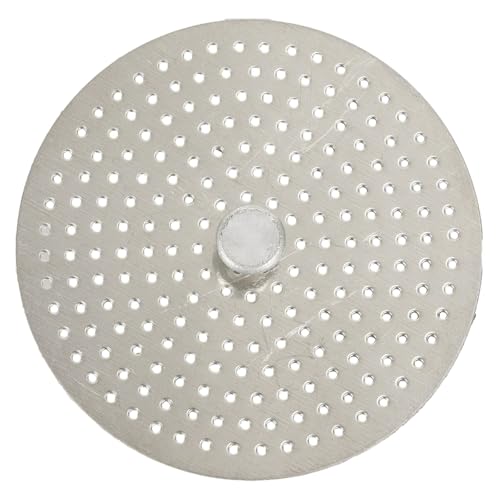 Stainless Steel Moka Pot Coffee Filter Disc for Espresso Brewing, Coffee Maker Replacement Filter Plate for Home Office Coffee Bar Cafe (FOR 4 Cups)
 Belly Moka Coffee Maker Stovetop Espresso Maker 9 Cup Aluminum Moka Pot Percolator 15oz 450ml Easy Brewing for Electric Ceramic Stoves Home Camping Italian Cuban Café Classic Black